


 SHARE:
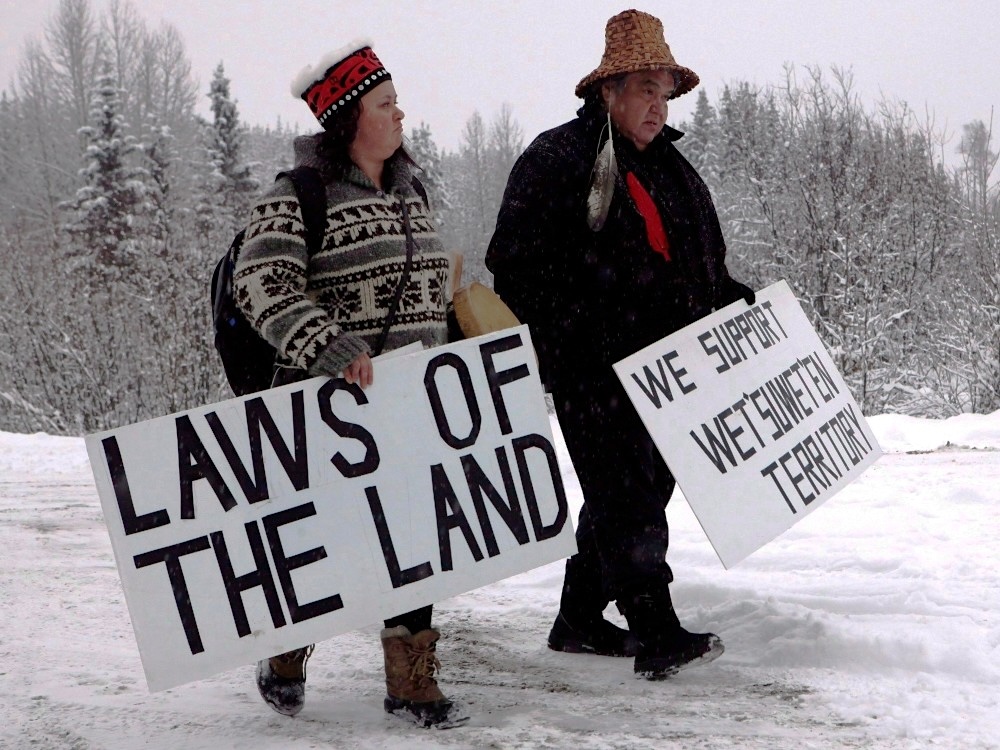
In early 2020, you couldn’t flip on the evening news without hearing about the “rule of law.”
On Dec. 31, 2019, the B.C. Supreme Court had issued an injunction to Coastal GasLink that barred anyone from blocking access to the company’s proposed pipeline route.
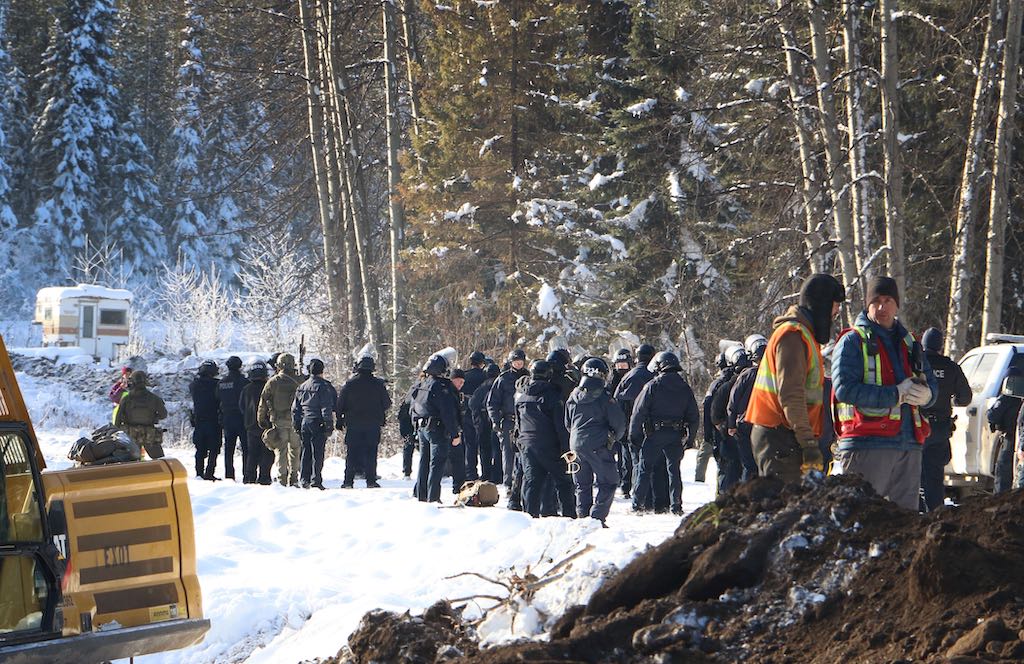
Wet’suwet’en hereditary leaders opposing pipeline construction through their traditional territory responded by blocking a road leading to the pipeline corridor. The RCMP began amassing forces on the remote northern B.C. back road as solidarity blockades erupted across the country.
“Rule of law” became the mantra urging police to shut them down.
The phrase was used by politicians, pundits and industry backers. The courts had sided with the pipeline company, they all said, and there was nothing to do but proceed with police enforcement against anyone who stood in the way.
Politicians of the day — including B.C. Premier John Horgan, Prime Minister Justin Trudeau and federal Opposition Leader Andrew Scheer — all echoed the refrain. The Indigenous satirical news site Walking Eagle News repeatedly poked fun at the rising chorus, tweeting at one point, “Introducing the rule of law dancers!”
Fast-forward six years. In the wake of two recent B.C. court decisions upholding Indigenous rights, politicians appear to have abandoned their favourite line in favour of something more equivocal — the suggestion that the law is not so much a rule, but something to be altered and manipulated.
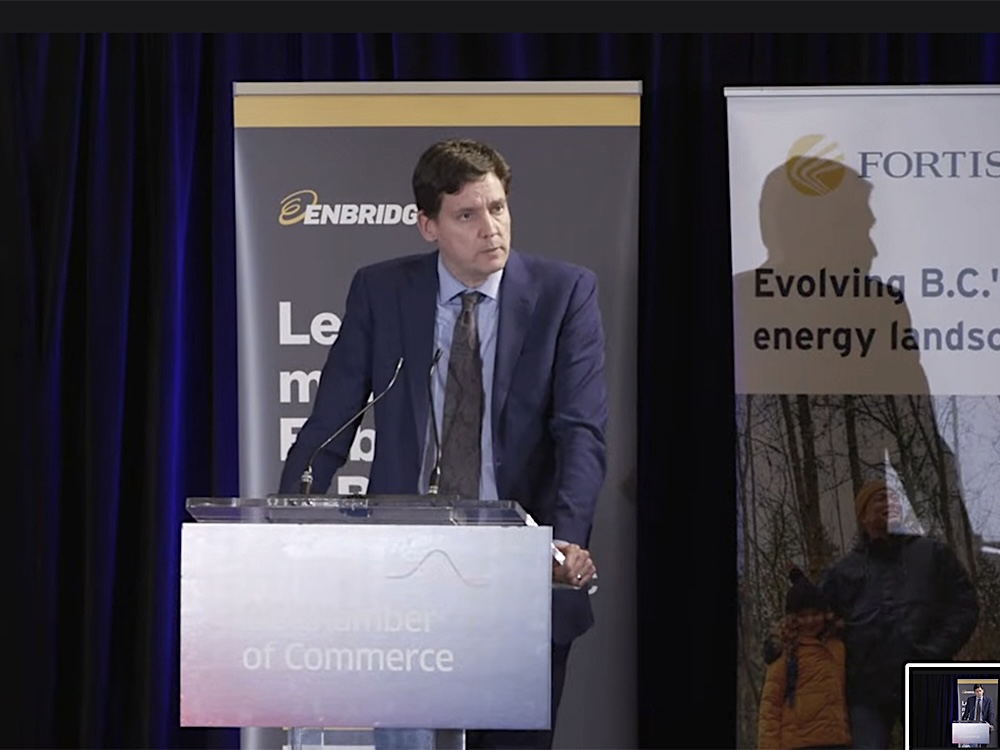
“We will fix this,” Premier David Eby told a British Columbia Chamber of Commerce luncheon last month, referring to the B.C. Supreme Court decision that determined the Cowichan Nation’s Aboriginal title rights extend to some private properties. The court directed the province to negotiate a solution with the nation. The nation insisted that “the ruling does not erase private property.” Instead, Aboriginal title exists alongside private ownership.
But rather than defer to the rule of law, Eby pushed back.
“The uncertainty this case creates is toxic to the work we have to do with First Nations and businesses and the economy that we have to grow,” he told the chamber gathering.
In search of ‘certainty’
Eby was courting the business community by promising to improve economic “certainty” — the conditions meant to attract investment. But different people have very different ideas about how B.C. might achieve certainty when it comes to its relationships with First Nations. Over the last year, the need for certainty has been cited as a reason to both enshrine Indigenous rights in law and toss those laws altogether.
That debate has focused on B.C.’s Declaration on the Rights of Indigenous Peoples Act, or DRIPA, legislation that passed unanimously in 2019 and is meant to provide a framework for bringing existing laws in line with Indigenous rights.
In early December, the B.C. Court of Appeal ruled that DRIPA is legally enforceable. In siding with the Gitxaala and Ehattesaht First Nations, it found that the province’s mineral tenure staking system is “inconsistent” with DRIPA. One advocacy group has described the Mineral Tenure Act as being “rooted in a 19th century gold rush-era approach” because it gives priority to mining companies over other land rights. The DRIPA legislation, meanwhile, requires consent from First Nations prior to approving projects, including mineral extraction, on their territories.
An obvious solution would be to update the Mineral Tenure Act and bring it into the 21st century. Instead, Eby took aim at DRIPA, telling the business community that his government has already begun working on amendments to the legislation, with plans to introduce changes in the spring.
Eby went further. He took aim at the ruling itself, describing it as “dramatic, overreaching and unhelpful” and “deeply troubling.”
“The work we do in reconciliation is to empower people, Indigenous and non-Indigenous alike, not to empower the courts,” Eby said while flanked by banners promoting the event’s sponsors, gas companies Enbridge and FortisBC.
“British Columbians — all British Columbians, not judges — have to decide our path forward. There are no judicial shortcuts to this work. Court decisions inevitably point back to governments and First Nations to work it out.”
The comments stood in stark contrast to reaction to Coastal GasLink’s injunction six years earlier, when “rule of law” became a mantra that belied the long and complex legal history leading up to the pipeline dispute. It allowed politicians to gloss over the courts’ repeated direction to negotiate with First Nations over land disputes — negotiations that were often slow and unsuccessful.
Negotiation or injunction?
More than 20 years earlier, when the Supreme Court of Canada determined that Wet’suwet’en title had never been extinguished, it urged the parties to negotiate — rather than continue to litigate — the outstanding title claim. The Crown had a “moral, if not a legal, duty to enter into and conduct those negotiations in good faith,” the Delgamuukw v. British Columbia decision said.
But those discussions soon fell off. According to one lawyer who represented the nations at the bargaining table, the province continually took the “most ungenerous” interpretation of the Delgamuukw decision during the negotiations.
When the B.C. Supreme Court granted Coastal GasLink’s injunction, it gave only passing mention to the landmark decision, saying only that “the Aboriginal title claims of the Wet’suwet’en remain outstanding and have not been resolved either by litigation or negotiation, despite the urging of the Supreme Court of Canada in Delgamuukw.”
Coastal GasLink had “all necessary permits” to proceed, while the Wet’suwet’en had “no legal right to blockade” access to their territory, B.C. Supreme Court Justice Marguerite Church wrote as she granted the pipeline company an interlocutory injunction — a legal tool meant to uphold the status quo as a dispute makes its way through the courts — and an enforcement order giving police authority to shut down the blockades.
In the years that followed, dozens were arrested under that court injunction. Faced with criticism over the heavy-handed police response — which the court would later find was, at times, unconstitutional — politicians shrugged. It wasn’t their place, they said, to criticize the justice system or direct police.
They declined to offer a whiff of a suggestion that police should temper their response or avoid arresting members of the media.
B.C. Supreme Court Justice Michael Tammen took that history into account when sentencing those found guilty of criminal contempt of court for defying Coastal GasLink’s injunction.
Referencing the repeated failures of the B.C. and federal governments to settle the claims and the “frustration” of Wet’suwet’en leaders, he declined to impose jail terms, instead sentencing Wet’suwet’en Hereditary Chief Dsta’hyl, who also goes by Adam Gagnon, to two months’ house arrest and suspending the sentences of three others arrested along the pipeline route.
‘Undermining’ the justice system
Eby’s recent comments drew a wave of criticism from legal professionals.
The Trial Lawyers Association of British Columbia accused Eby of “undermining public confidence in the justice system” and “eroding public trust in the administration of justice.”
“While the Premier is entitled to disagree with a court ruling — and to appeal it — he is not entitled to use his platform to attack judges who cannot respond publicly,” the association said in a statement. “He is actively undermining the rule of law that we all depend on to protect our fundamental freedoms, solve disputes, and hold government to account.”
The Canadian Bar Association issued a similar statement, saying Eby’s comments “can undermine the rule of law and threaten the independence of the judiciary.”
“Judges make impartial decisions free from political and public pressure,” wrote Patricia Blair, president of the Canadian Bar Association B.C. branch. “It’s hard to overstate the damage that can be done by exerting political pressure on judges to align their rulings with the government of the day.”
In a Dec. 22 statement, dozens of First Nations and Indigenous rights groups called on the province to uphold DRIPA. They pushed back against a “negative narrative” that “wrongly blames First Nations for uncertainty while ignoring the historical reality that British Columbia was largely settled without treaties.”
“Recent calls to amend the Declaration Act or appeal court rulings are rooted in this fear-based response,” said the joint statement, which was signed by the BC Assembly of First Nations, First Nations Summit, Union of BC Indian Chiefs and dozens of First Nations governments. “These actions would not create certainty — they would slow progress, increase litigation, and grind projects to a halt as First Nations are once again forced to defend our rights and interests through the courts.”
In an interview with The Tyee last month, Eby defended his statements against the courts.
“The idea that the premier should not comment, should not indicate any position on the court decisions, is patently absurd,” he said. “I will continue to point out that I think the decisions are unhelpful.”
But therein lies the catch.
When the courts side with industry over First Nations, provincial leaders throw up their hands and defer to the rule of law. When the court sides with First Nations, they roll up their sleeves and promise to “fix this.” ![[Tyee]](/design-article.thetyee.ca/ui/img/yellowblob.png)
Read more: Indigenous, Rights + Justice









Notice about commenting changes
The Tyee’s commenting system will be moving to a new platform on Nov. 12. If you’re already a Tyee commenter you must register with the new system on or after Nov. 12 with your preferred username.More information can be found here.