


 SHARE:
Mingyang Sun was looking for answers to a scientific puzzle when he saw a photograph of a movie star covered in bees. He didn’t really know what to make of it, but the image turns out to have been a good omen.
Sun was co-founder of a company called Nature Recombined Sciences with Guan Lim, Leonard Sarna and Russ Crawford. The team was trying to make a natural alternative to chemical-based disinfectants that grew in popularity during the COVID-19 pandemic. All four had worked in the cannabis sector. They were intrigued by the “very strong antimicrobial properties” of hops — a plant in the same botanical family as cannabis. Their tests revealed that a hop-based extract was effective against biofilm, a defence layer produced by bacteria to ward off antibiotics.
That held promise, said Sun. Still, “We didn’t know what industry this would be good for.”
Around that time, Sun “saw a poster of Angelina Jolie having bees on her,” he said. “I knew the bees were being talked about in the media and the population was declining. To what extent? None of us knew.”
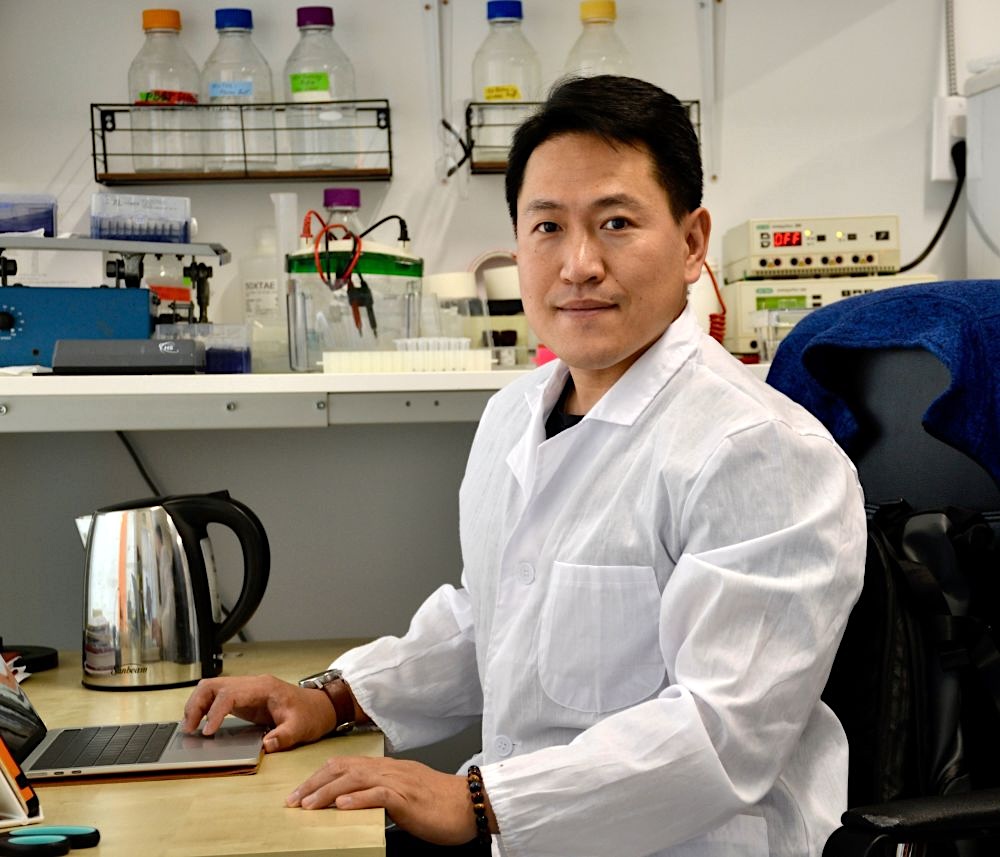
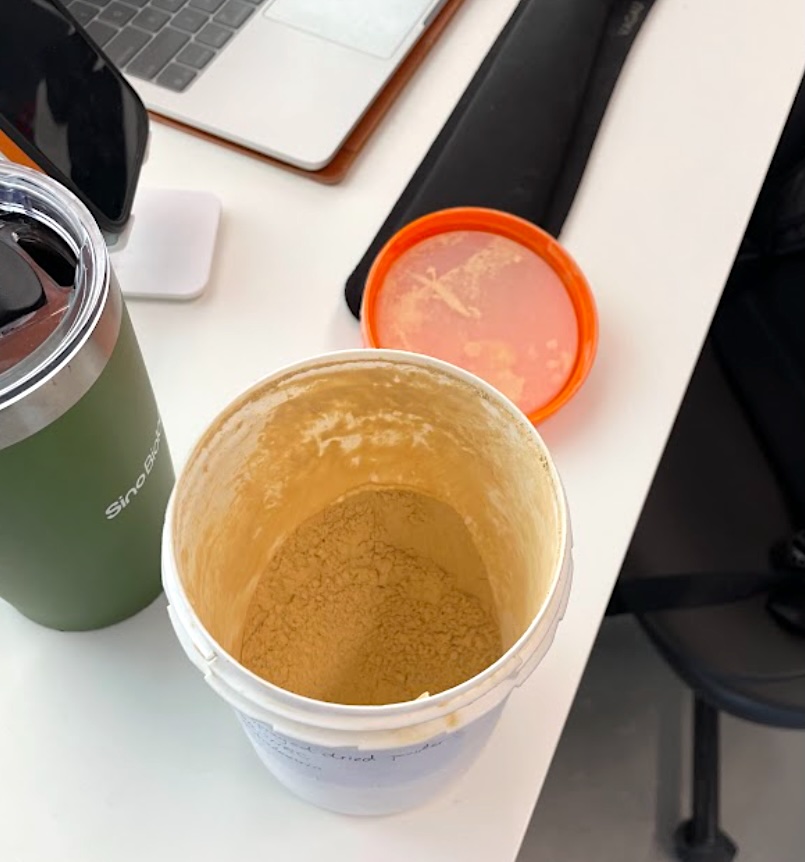
Five years after Jolie posed for National Geographic to mark World Bee Day, Sun opens a freezer in his Burnaby laboratory and pulls out a white tub. He unscrews the lid, revealing a brownish powder that looks like it was scraped off the surface of Mars.
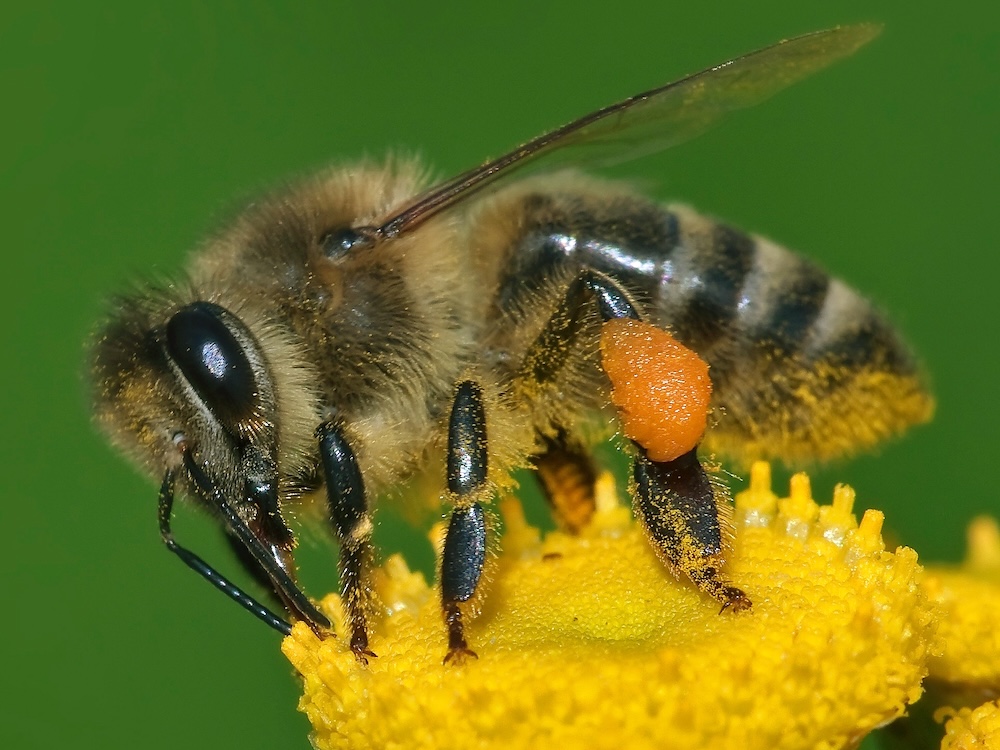
This stuff, Sun explains, is meant to be new ammunition in the fight to reverse the decline of honeybee populations in Canada and beyond. ApiSave, as the company Sun co-founded is now named, folds a hop-derived extract into pollen patties, creating a food supplement that helps honeybees fight diseases and pests.
Honeybees can use all the help they can get. Mass numbers fall sick from American and European foulbrood, which are caused by spore and non-spore forming bacteria.
And then there are varroa mites, parasites that attach and feed off developing and adult honeybees.
“It’s a two-pronged attack,” said Daryl Wright, a retired beekeeper based in Manitoba, adding that the mites can infect bees as early as the larva stage and often hitch rides to infect other colonies.
The United States recently reported its largest honeybee die-off on record, with beekeepers losing over 60 per cent of their colonies on average, according to a survey that gathered 702 responses from beekeepers across the country.
The situation isn’t much better north of the border.
Roughly a third of B.C.’s bee colonies died over a winter four years ago, following responses to a voluntary survey published that year — a devastating blow, considering bees have a hand in everything from global food production to the ecosystem.
Deaths in the winter are far from uncommon. In the cold winter months, bees living in an apiary are stuck in confined spaces without many flowers to pollinate or get nutrition from, making it easier for pests and diseases to spread.
Countrywide, the annual winter bee death rate hovers somewhere between 32 and 45 per cent.
“The last three years have become increasingly challenging,” said Scott Gordon, a commercial beekeeper based in Pitt Meadows who trialled ApiSave at apiaries in B.C. and Mexico, where he also manages a group of colonies. Before it was a powder, ApiSave’s extract came in a liquid form. Gordon blended the liquid extract with medicated dust and icing sugar in those early tests, yielding promising results.
“The colonies in the test group, even with fairly high levels of varroa infestation, continued to be productive and maintain colony health,” Gordon said.
ApiSave claims its plant-based product can mitigate impacts from both diseases and mites. Results prove that it kills mites on contact and weakens bacterium walls in both American and European foulbrood, according to Sun. The concoction has not yet proven it’s effective against the spores that spread American foulbrood, though.
Since varroa mites were introduced to the United States in the late 1980s, the best defence is ensuring bees are well fed, Gordon said. Pollen patties, a food supplement placed on top of hives, filled with ApiSave add another layer of defence.
“If we can improve colony health with the addition of an ApiSave product, that gives us an advantage,” Gordon said.
ApiSave’s hop-based powder received Health Canada approval to be used as a “veterinary health product” last year and officially launched this spring. The hop-infused pollen patties retail for about $4 each. ApiSave can also be added to icing sugar, syrup and other sugar-based feeds.
Since receiving the federal OK, ApiSave has sold 10,000 patties to beekeepers across Canada, according to Sun, generating $40,000 in revenue.
Getting here was no straight flight. Sun and his partners first pitched their extract to businesses in the mushroom industry — a sector that has battled multiple listeria outbreaks in recent years. But mushroom growers didn’t seem to show enough interest to sustain a business.
Then Sarna, currently the chief science officer, read a report about American and European foulbrood developing resistance towards antibiotics. The team decided to test whether the product was effective against honeybee diseases.
The results were positive. And “that is where the bee story started,” said Sun, explaining the company renamed itself ApiSave to represent its sole focus on bee health.
Some experts suggest the product can play an important role in limiting the spread of both diseases and varroa mites.
“I think that it shows it’s a good alternative to a chemical product,” said Kouadio Bedie, a research associate at the National Bee Diagnostic Centre near Grande Prairie, Alberta.
Bedie led a study in 2024 that confirmed ApiSave’s effectiveness against Melissococcus plutonius, the bacterium that causes European foulbrood. About three-quarters of bee larvae infected with the bacterium survived when treated with ApiSave after four days. Untreated larvae had a four per cent survival rate in that time. It’s an important finding, considering the overuse of antibiotics can eventually lead to the bacteria developing a resistance to the drugs, he said.
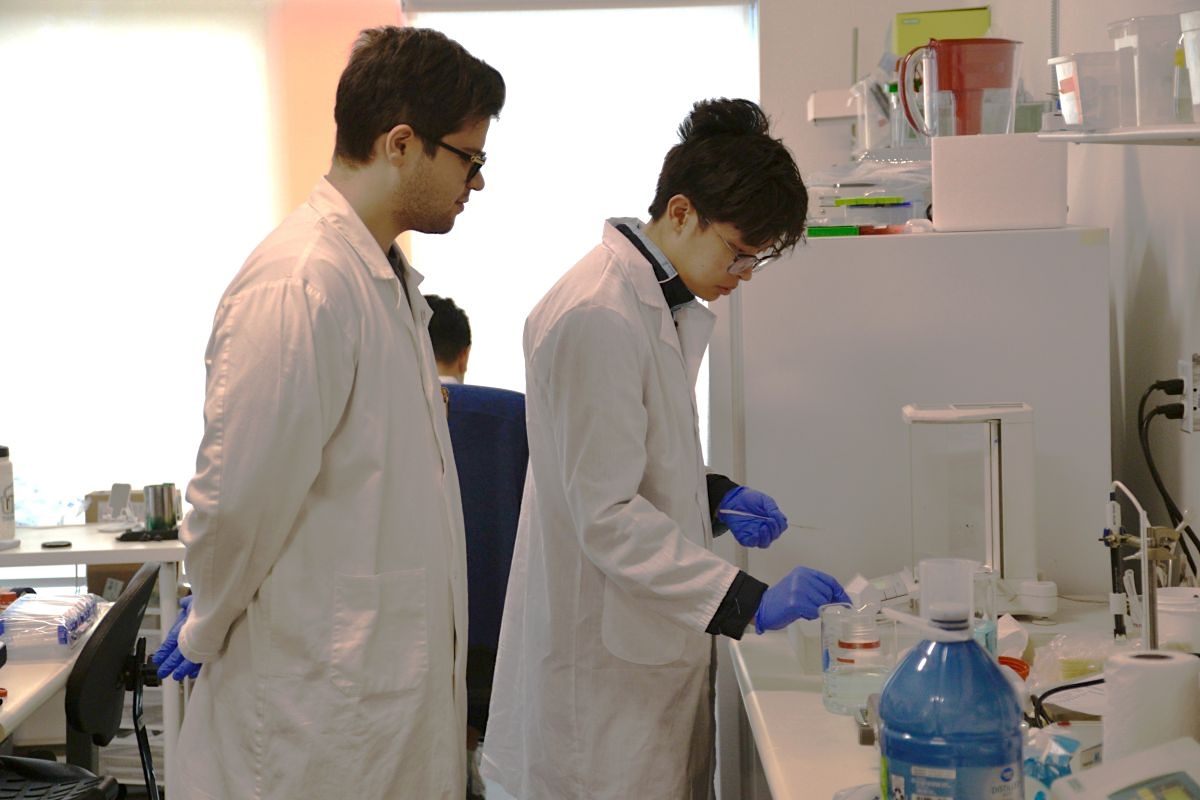
However, ApiSave’s effectiveness wore off after four days. Bedie said more experiments need to be done if the company wants to say its product is antibacterial or antimicrobial, meaning it kills bacteria, viruses and fungi. The extract should make sure bees don’t die or get infected within six days, the period when larvae are most susceptible to diseases, he added.
Veterinary health products, a category that includes ApiSave’s extract, are “low-risk drugs” that maintain or promote the health of food-producing animals, according to Health Canada. They are not specifically designed to treat, prevent or cure diseases. Bedie said ApiSave’s veterinary product is a good start and suggests the team work on improving the extract’s potency so it can claim it is antimicrobial.
Rod Scarlett, executive director of the Canadian Honey Council, believes ApiSave can serve as another tool in a beekeeper’s ever-decreasing tool kit due to building resistance of other drugs.
“It’s certainly not a cure-all, it’s not a silver bullet, but it’s another product that will contribute to bee health,” he said.
To date, ApiSave has secured over $2 million from investors and federal government grants, according to Sun.
ApiSave has high hopes to expand its customer base beyond Canada. Sun recently toured an apiary in Australia, where varroa mites pose “a significant threat” to the country’s bee and pollen industry, according to the New South Wales government. Beekeepers there are keen to try a new antidote.
But making the product legal in other countries presents no easy hurdle. Even though the extract is permitted as a veterinary supplement in Canada, it remains to be seen whether the Australian government views it as such too. ApiSave has run into similar problems trying to bring the product to the United States.
For now, Sun is looking to get the hops-fuelled extract in front of more Canadian beekeepers, collecting feedback and giving a plant-based tool to a species in need.
“Science is science,” he said. “We first wanted to demonstrate that this thing actually works.”
This article runs in a section of The Tyee called ‘What Works: The Business of a Healthy Bioregion,’ where you’ll find profiles of people creating the low-carbon, regenerative economy we need from Alaska to central California. Find out more about this project and its funders, Magic Canoe and the Salmon Nation Trust. ![[Tyee]](/design-article.thetyee.ca/ui/img/yellowblob.png)
Read more: Environment










Tyee Commenting Guidelines
Please note that email notifications for replies are not currently working due to a software issue which may be resolved in a future update.
Comments that violate guidelines risk being deleted, and violations may result in a temporary or permanent user ban. Maintain the spirit of good conversation to stay in the discussion and be patient with moderators. Comments are reviewed regularly but not in real time.
Do:
Do not: