


 SHARE:
[Editor’s note: This article contains descriptions of sexual assault and information related to missing and deceased Indigenous women and youth. It may be triggering to some readers.]
As Natasha Harrison searched for her missing 20-year-old daughter in the summer of 2022, police arrived at her house one day in August to give her the worst news: her daughter Tatyanna’s body had been found on a yacht in Richmond.
As she learned more disturbing details, she kept seeking one vital piece of information — definitive evidence that her daughter hadn’t been assaulted and killed.
“I’m thinking my daughter was drugged, raped, and I’m worried about hot shots at this point with the way it looks,” she said during her testimony on the first day of a coroner’s inquest. (Hot shots are when someone deliberately gives an overdose to a drug user.)
“I need them to tell me that that didn’t happen, so I need you to perform a sexual assault kit and give me the proof my daughter wasn’t assaulted. Give me the proof.
“That’s what I’m looking for at this point, because now I have my worst fears on the table, and I need you to take those fears off the table.”
But the police and the coroner have never processed a sexual assault kit that was belatedly collected from Tatayanna’s body. And the inquest that ran from July 2 to 8 revealed what advocates allege were huge missteps in the police and the coroners service investigations.
“This case has just highlighted an egregious, horrifying level of appalling system failures,” said Angela Marie MacDougall, the executive director of Battered Women’s Support Services.
“It is shocking and enraging and distressing on every kind of level.”
Coroner’s inquests are fact-finding, formal proceedings that seek to determine the facts of a death and recommend changes that could prevent similar deaths.
The inquest heard that police passed Tatyanna’s missing person file between several different jurisdictions; that Vancouver police failed to identify her case as high risk; and that neither the Richmond RCMP or the scene coroner assessed marks on her body as possible evidence of a crime.
The inquest also heard that the investigating coroner told Natasha her daughter had died of an overdose, despite low levels of fentanyl being found in her body that would normally not cause death.
The inquest also heard that a Richmond RCMP police officer was told by the BC Coroners Service on two separate occasions not to share information about the low level of fentanyl found in Tatyanna’s body.
And the inquest heard from an independent forensic pathologist who said he would have handled the case differently and treated injuries on Tatyanna’s hips and pubic area as indications a sexual assault may have taken place.
There were troubling gaps in testimony at the inquest: the coroner who attended the scene of death was not called to testify. The coroners service’s chief medical officer at the time of Tatyanna’s death — who is now the chief coroner — also did not testify.
Cynthia Hogan, the investigating coroner, was added to the witness list days after the inquest had started.
While on the stand, Hogan revealed the shocking information that she had sent Tatyanna’s body to the Ministry of Social Development after Natasha did not make arrangements for a funeral. The burial was done in 2023 without Natasha Harrison’s knowledge or consent.
It was only through repeated questioning by Natasha’s lawyer that Hogan revealed the location of Tatyanna’s grave at Surrey Centre Cemetery.
“It’s been well-documented that the mother was very clear that she wanted her daughter’s remains to be available for the purposes of highlighting systemic failures, and that she had been very much focused on securing her daughter’s remains for the purposes of that process,” MacDougall said. “So, it’s sickening on so many levels.”
Tatyanna Harrison was one of three Indigenous women and youth whose remains were discovered in a six-month period in 2022, after they had previously been reported missing.
The families of Chelsea Poorman and Noelle O’Soup have also called for coroner’s inquests — but have yet to hear whether inquests will happen.
Tatyanna’s early life and teen struggles
Natasha told the inquest Tatyanna, her only child, was a bright, bubbly girl who loved to read and wear pretty dresses — dresses the tomboy would promptly get dirty by “running wild” outside.
Natasha told the inquest Tatyanna started to struggle after they had to flee a bad situation and ended up in a transition house for women. Then, when Tatyanna was 12, she was sexually assaulted while at a friend’s house.
By the time she was 14, she was regularly disappearing from home and had started to drink and use marijuana. Her substance use would come to include opioids, cocaine and crystal meth. And at one point, when Tatyanna was around 15 and once again went missing, Natasha found her daughter at the home of an older man who she believes was grooming Tatyanna for sexual exploitation.
During this period, Natasha said, she made so many missing person reports to Surrey RCMP that Tatyanna’s case was moved to a special section for youth who often went missing.
Despite her struggles with mental health and addiction, Natasha and one of Tatyanna’s social workers testified that she was a smart, outgoing girl who was passionate about advocating for others and generous even when she had limited means.
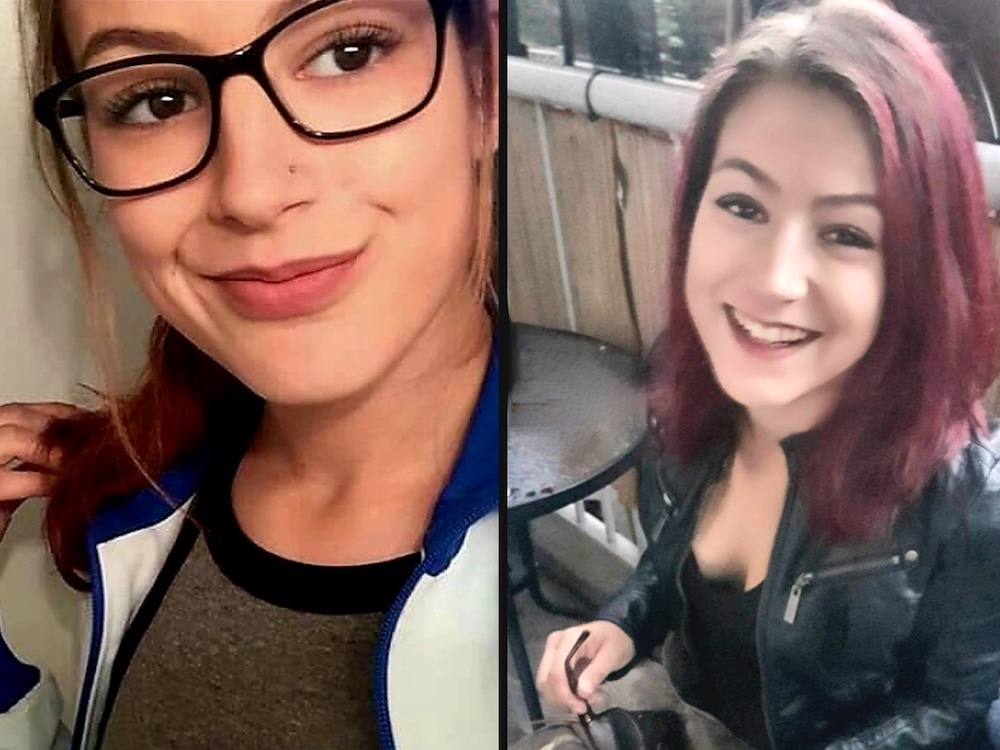
Greg Lee, a social worker who worked with Tatyanna in Surrey during her late teens, told the inquest that she couldn’t bear to see injustice. In one instance, he said, Tatyanna lectured police who were ticketing some other teen girls. He recalled coming across her buying Subway sandwiches for needy people and remembered how she “set the record” for finding housing on her own when she charmed a prospective landlord by speaking a bit of Punjabi.
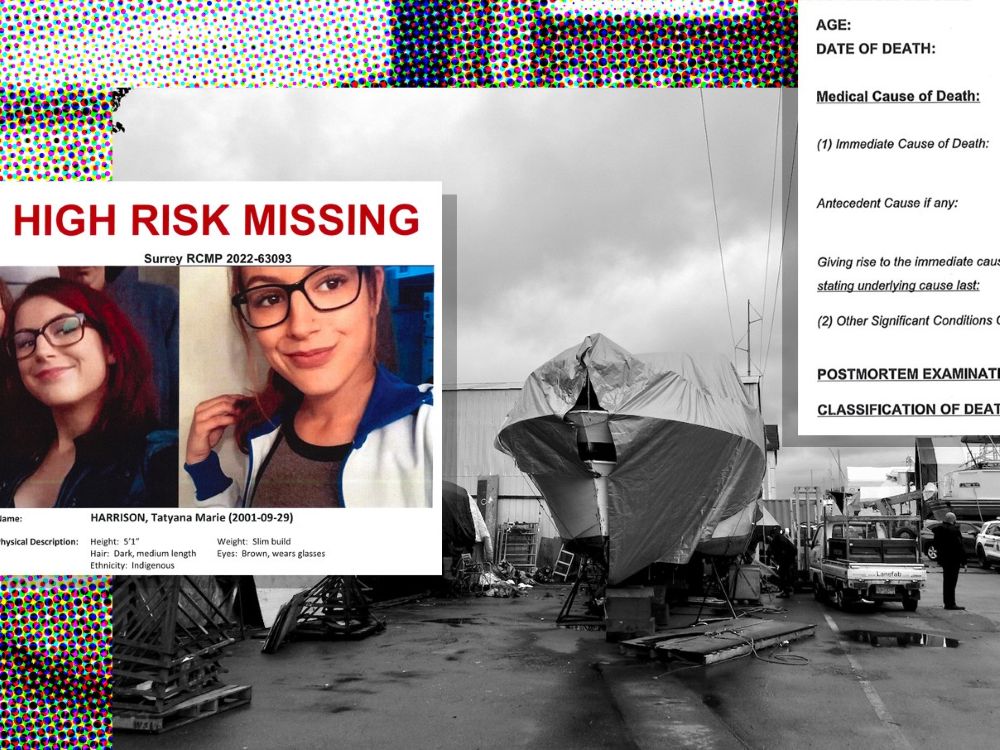
Tatyanna was found dead on board a boat in drydock at a Richmond marina on May 1, 2022. But a positive identification wasn’t made until Aug. 5.
Initially told her daughter’s death was caused by a fentanyl overdose, Natasha was later told the death had been caused by sepsis, when the body reacts to an infection in a destructive way.
Natasha was alarmed and confused when police told her Tatyanna’s death had never been viewed as suspicious, even though her body had been found bruised and naked from the waist down on a boat known to be used for transient drug use and possible sex work.
A forensic sexual assault test, also known as a rape kit, was done months after the autopsy and only after Natasha had repeatedly pushed the coroner and police to complete the exam. The results still remain unprocessed. The RCMP say they can’t analyze it without evidence a crime took place.
Natasha and advocates for murdered and missing Indigenous women pushed for a coroner’s inquest to try to answer the many unresolved questions in the case.
But they also asked a forensic pathologist who does not work for the BC Coroners Service to review the case. Dr. Matthew Orde found there wasn’t enough evidence to make a definitive conclusion about how Tatyanna had died.
And he raised concerns about injuries that were found on both of Tatyanna’s hips and pubic area, telling the inquest those marks would have led him to push to complete a full sexual assault examination, including collecting any possible semen, saliva and hairs.
Last known sighting
In 2019, Tatyanna was finally doing well after struggling with mental health and addiction throughout her teen years. She was sober and living on her own, finishing high school and in frequent contact with her mom and her social worker. Tatyanna, who was Cree and Métis through her father, had made a special relationship with an Elder and was connecting with her Indigenous culture. Lee said Tatyanna wanted to become a social worker.
But then the COVID-19 pandemic hit, a disruption in routines and services that especially affected vulnerable people. Tatyanna started to show signs she had slid back into addiction, Natasha recalled. It was harder to get in touch with her and Natasha lost track of where her daughter was living.
In August 2021, Tatyanna approached Chris Ellis at a Walmart in Surrey, started chatting with him and told him she’d just been evicted. Ellis, who testified at the inquest, offered her a temporary place to live in a Surrey house he owned that needed to be renovated after the previous tenants had done major damage.
After that work was done in November, Ellis offered to house Tatyanna in a trailer at his Richmond home. He told the inquest he knew she was a frequent drug user, and he took steps to keep that part of her life separate from his home, often driving her to meet her dealer rather than have people who were involved with drugs come to his property.
But every month Tatyanna disappeared for an extended period after she collected her disability cheque. Ellis’ mother, who also lived on the property, couldn’t get the COVID-19 vaccine because of other health issues and was anxious about Tatyanna bringing the virus back with her. In early 2022, Ellis told Tatyanna she had to leave.
Tatyanna ended up on Vancouver’s Downtown Eastside, living for a time at a homeless shelter at 875 Terminal Ave. and connecting with a female friend Natasha would later come to know as Tatyanna’s “street sister.”
Later, Natasha and police would trace her last known movements: video showed her visiting a bank to pick up her disability cheque on March 23, accompanied by a man who has never been identified.
Her street sister is the last known person to see her alive in the Grand Union Hotel, an SRO located on West Hastings Street, on April 22.
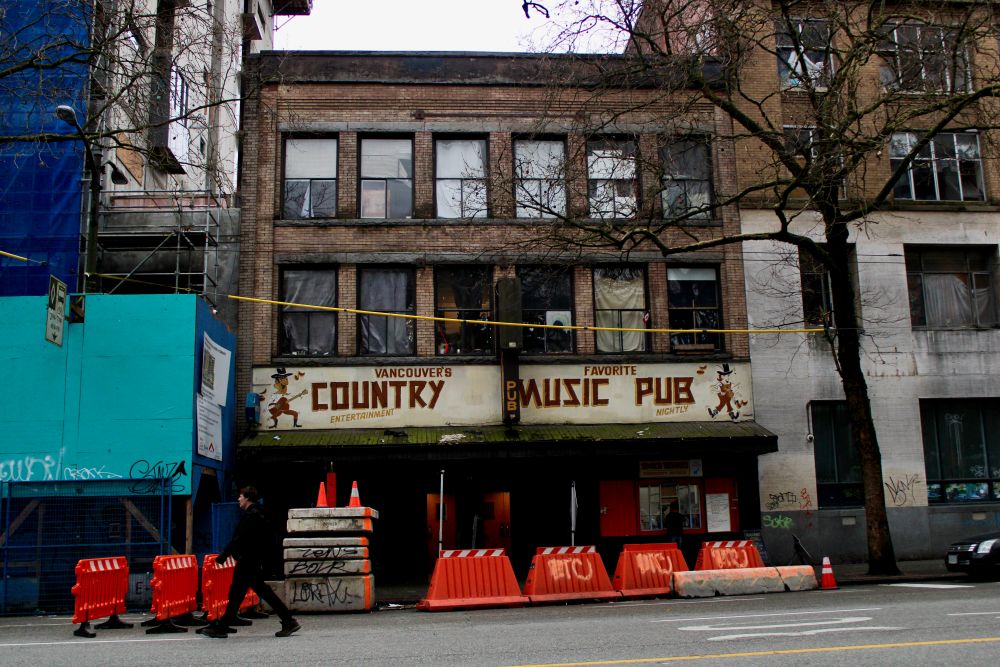
Vancouver police detective Blain Christian told the inquest that, according to interviews with witnesses, Tatyanna arrived looking “very sleepy, possibly high, and stayed in the fellow’s room for a few hours, and then left alone.” Christian said police also reviewed video from the hotel, which confirmed that “nobody seemed to be in distress” entering or leaving the hotel the day Tatyanna was there.
“After that, we were unable to locate any further people, video, or records of her being alive,” Christian said.
After trying to contact Tatyanna repeatedly, Natasha reported her missing to Vancouver police on May 3. The inquest heard that it’s police policy that officers in the jurisdiction where the person was last seen investigate missing persons cases. So because Natsha didn’t have proof that Tatyanna was living in Vancouver, the VPD sent the case to Surrey RCMP, which investigated the missing persons case until Natasha discovered Tatyanna had stayed at a homeless shelter on Terminal Avenue in Vancouver.
Natasha told police about the shelter sighting on May 9 and Vancouver police took the case back on May 24.
Natasha continued to search for Tatyanna throughout the summer, often travelling from her home in Surrey to put up posters in the Downtown Eastside and find people who knew her daughter.
Natasha later learned that Tatyanna’s body had been found two days before she reported her missing.
The boat at Shelter Island
On May 1, a man named Travis Dempsey would later tell police, he’d travelled from Vancouver to a large boat that was up on stilts on a paved lot in an industrial part of Richmond on the Fraser River. The owner of the boat was a man named Russ who police say had connections to the Downtown Eastside. Dempsey told police he’d been hired by Russ to fix a door on the boat that had been damaged by another visitor.
Dempsey told police he was supposed to arrive at the Shelter Island Marina during the day, but was delayed and ended up arriving around 10 p.m. A few hours later, he told a nurse at the safe injection site InSite in the Downtown Eastside that he’d found a body on a boat in a marina. When police tracked him down, he agreed to be interviewed, although an RCMP officer who testified at the inquest indicated he didn’t entirely believe Dempsey’s account.
While the coroner’s inquest lawyer, Rolf Warburton, told the inquest he had tried to get Dempsey to testify at the inquest, he had ultimately been unable to find the man.
When Vancouver and then Richmond police tracked down the vague tip from InSite and finally found the right marina and the right boat, they discovered red tulips and other flowers strewn around the vessel, with some placed more deliberately on the back deck of the boat.
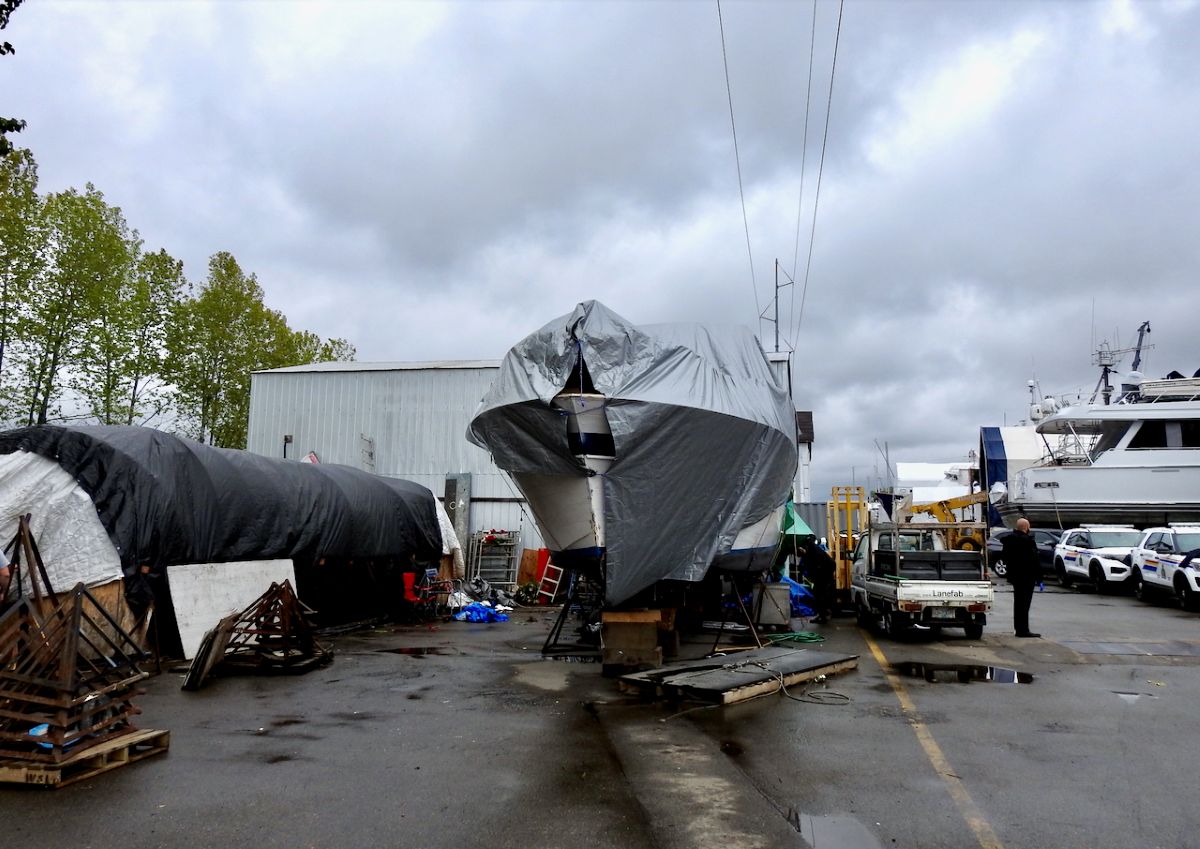
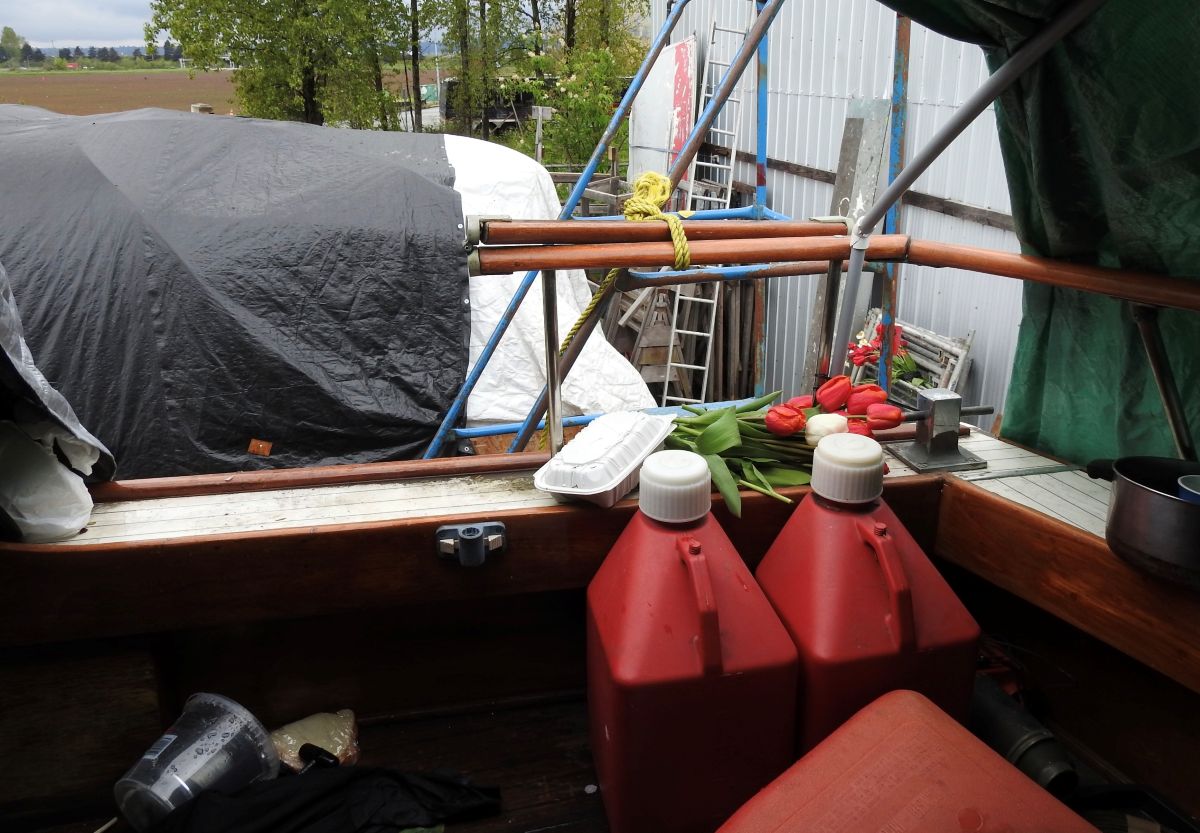
Inside the vessel, they found a woman’s body lying at the bottom of the stairwell into the living area, her head at the base of the staircase and her feet pointing towards the bedroom door. There was an empty Bacardi bottle beside her, and in the small bedroom there was a bed with two glass pipes that had burned craters into the mattress. Her hands were covered in feces, which were also smeared on her legs, a cushion beside her, and filled the boat’s toilet.
Dempsey told police he didn’t know who the woman was and that he’d collected the flowers as a way to placate his girlfriend for being home late. Christian testified that video surveillance at the marina appears to show a man bringing a wagon full of flowers into the yard around the time Dempsey told police he arrived, and leaving a short time later without the wagon.
Dylan Cornett, a shipwright who works at Shelter Island Marina, told the inquest what he saw around the boat, which was right next to his worksite. Cornett said the owner of the boat was an older man who used a mobility scooter and who sometimes smoked what Cornett assumed to be crack from a glass pipe. Cornett said he also saw other people around the boat and said he understood that the owner intended to fix up the boat with the help of friends.
Cornett also testified that he saw two young women around the boat, both with blond hair and wearing sweatpants and hoodies. He said he heard from other marina residents that the two women had been soliciting for sex work. (Tatyanna did not have blond hair in the photographs Natasha provided to police, or in the sketch police provided to media to help identify her body.)
On May 2, Cornett said he arrived at work to see police on the boat.
“There was nobody there for a week before that, that I saw in the daytime,” he told the inquest, adding that he assumed people were staying on the boat overnight.
“But the week before that, the last time I saw [the boat’s owner], I saw him coming over the boat and get on a scooter and leave, and I could hear a girl's voice inside saying something. I didn't know what she said. She never came out, and I never saw her.”
Police and coroner determine death was not criminal
Four RCMP officers and a scene coroner arrived at the boat on May 2. After police took photos of the body and the interior of the boat, the coroner decided to move the woman’s body out of the cramped hold to the deck of the boat. Hogan, the investigating coroner, would later determine that Tatyanna had likely died around 24 hours before police discovered her.
RCMP Const. Josh Wilkinson testified that he and other officers made rough estimates of the woman’s height and weight, guessing she was around five feet eight inches tall and 100 pounds. While these measurements were inaccurate — her correct measurements were five feet one inch and 90 pounds — they were initially the description police used to try to identify her.
The woman was emaciated and had a deep bruise on her pubic area and two more injuries on each hip. But Wilkinson told the inquest there were no other signs of trauma, a struggle or violence, and there was nothing at the scene that showed evidence of a crime. The woman was wearing a purple sweater with gold threads and nothing else. Beside the body was a pair of jeans, laid out as if to dry, Wilkinson said.
Inside a woman’s purse, Wilkinson said he found two wet pairs of jeans, which he checked to try to find identification in the pockets. The purse also held a package of around five unused condoms, a bar of soap and a Naloxone kit with the overdose-reversing medication missing. To Wilkinson, the collection of items led him to believe the unidentified woman may have been involved in sex work.
After consulting with Richmond RCMP’s serious crimes unit, Wilkinson and the other officers determined the death wasn’t criminal in nature.
That changed how they treated the area: the scene wasn’t locked down to prevent people from accessing it and no evidence was preserved.
Asked whether the injuries on the woman’s hips and pubic bone raised any concerns of sexual assault, Wilkinson said the injuries appeared old and scabbed over to him, so he didn’t think they were relevant. He also said he relied on the “medical expertise” of the scene coroner.
The scene coroner did not testify at the inquest and the BC Coroner Service refused to tell The Tyee the employee’s name or details of their educational background. There is no requirement that coroners in B.C. have medical degrees or specialized medical training.
Dr. Eric Bol, the forensic pathologist who did the autopsy for the BC Coroners Service, told the inquest the injuries had dried after death, part of the post-mortem process, and can look to the untrained eye like older injuries.
Fentanyl found, but in low levels
The case was then transferred to an investigating coroner, Cynthia Hogan, who ordered an expedited toxicology test and then an autopsy, which took place on May 6. Hogan is a former police officer and counsellor who has worked as a coroner since 2010.
“I thought that was really important, especially given the marks on her hips and the circumstances in general, to rule out any injury, trauma, any concerns of foul play, regardless that the police had none at the scene,” Hogan told the inquest about her decision to order an autopsy.
Hogan got the expedited toxicology testing back as well as preliminary autopsy results. The toxicology testing revealed no alcohol and low levels of fentanyl in the still unidentified woman’s blood and urine. The autopsy didn’t find any injuries or disease.
Although fentanyl was found in a “therapeutic” amount, meaning the low level seen when fentanyl is prescribed for pain management, Hogan’s working theory was that the woman’s death had been caused by a fentanyl overdose.
Hogan told the inquest that there is no safe level of fentanyl. Dr. Aaron Shapiro, who did the toxicology testing, told the inquest that “in general, a therapeutic range would be a safe level” and would not cause an overdose. But, he said, if someone is in ill health, it’s possible that “even a small dose might be harmful to them.”
Wilkinson, the Richmond RCMP constable, testified that because the coroner told police the cause of death was likely an overdose and police decided there was no evidence of a crime at the scene, the sudden death was not considered criminal. That meant police were not present at the autopsy.
Wilkinson also said that on Aug. 16, 2022, he received an email from the coroner that contained information about the autopsy and toxicology results.
But, he told the inquest, the coroner instructed him not to share the information about the low level of fentanyl that was found with Tatyanna’s family. He told the inquest he didn’t know why the coroners service did not want the information shared with the family.
Wilkinson said those instructions were repeated in a subsequent conversation he had with Dr. Jatinder Baidwan, who at the time was the chief medical officer for the BC Coroners Service.
Baidwan became chief coroner in 2024. He did not testify at the inquest.
DNA match used to identify body
Although police and coroners had considered whether the unidentified body could be Tatyanna Harrison, both teams ruled that out when they compared the photographs they had of Tatyanna and photographs of the deceased woman. They all believed the emaciated woman, who they estimated was 30 to 40 years of age, bore no resemblance to the photos they had of Tatyanna Harrison.
Tatyanna’s body wasn’t identified until Aug. 5, when DNA comparison with samples Natasha had given police showed a match.
On Aug. 8, Hogan — the investigating coroner — spoke to Natasha by phone and told her that Tatyanna had almost certainly died of a fentanyl overdose. On Aug. 6, Vancouver police had also released a media release announcing Tatyanna’s body had been found. The release said the cause of death was fentanyl toxicity.
Natasha told the inquest that she only learned that Tatyanna had been found naked from the waist down when she asked Hogan repeated questions about what her daughter had been wearing when she was found dead in the boat.
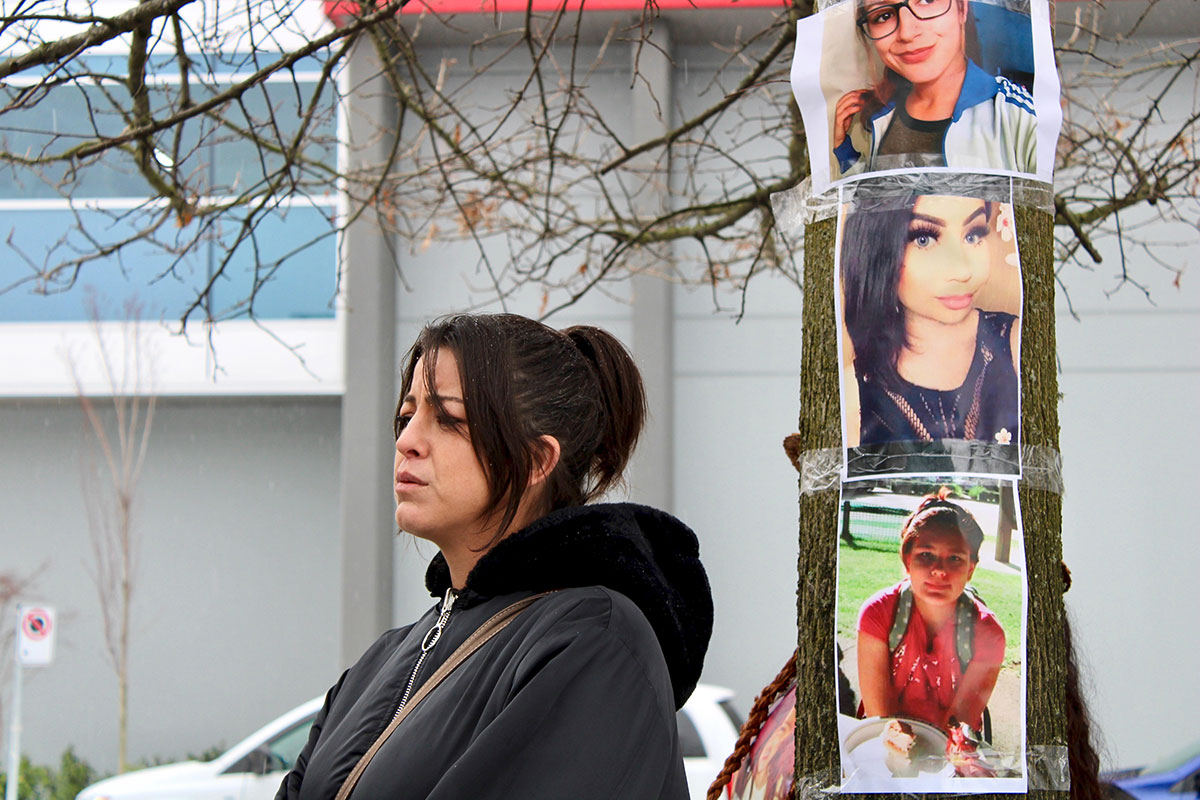
That’s when she started asking about sexual assault testing.
“I asked, ‘Was the sexual assault kit performed on my daughter?’ and I was told an autopsy was performed on my daughter. And I said, ‘OK, was there a sexual assault kit performed on my daughter?’ and then I was told, there was an autopsy performed on my daughter,” Natasha told the inquest.
“And I said, ‘This is the last time I’m going to ask you, and I need you to answer me, yes or no. Was there a sexual assault kit performed on my daughter?’ And she said, ‘No, because a sexual assault kit and an autopsy are not the same thing.’”
Pathologists disagree on cause of death
When Bol did the May 6 autopsy he couldn’t find any evidence of injuries or disease and he found no evidence of injuries to the genitals or anus that would indicate a sexual assault. Bol told the inquest he also examined the neck and didn’t find any evidence of strangulation.
Bol also took samples of the heart and brain to examine under a microscope and it was then that Bol says he found clusters of white blood cells, or neutrophils, which fight infection in the body. Bol said the number and location of white blood cells he saw led him to concluded that Tatyanna Harrison had a blood infection, or sepsis, at the time of her death.
After consulting with other pathologists, he determined Tatyanna’s death had been caused by sepsis, combined with her emaciated state and years of substance use.
Bol said he didn’t collect swabs from the genitals in this case because he didn’t see any evidence of injuries when he examined the genitals and vaginal and anal canals.
“If I was doing a routine case and I saw evidence of sexual assault that I was concerned about, I would immediately stop the exam, call the coroner and get direction from that point on,” he said. Bol added that any collection of biological samples also needs to be approved by the coroner.
Natasha Harrison was told about the changed cause of death in November, after Bol had concluded his analysis. After Natasha repeatedly asked BCCS to complete a sexual assault exam on her daughter’s body, Bol was instructed to complete the exam in October.
Dr. Matthew Orde is a forensic pathologist who has practised in B.C., Saskatchewan and Alberta. He was hired by Natasha Harrison to do a review of Bol’s autopsy findings and completed a detailed report.
Orde testified that he does not agree the clusters of white blood cells that Bol saw under a microscope are an indication that Tatyanna had sepsis or that it caused her death.
“The feature described by Dr. Bol is that of localized collections of white blood cells in some of the blood vessels…. There is no suggestion of neutrophils being increased in abundance anywhere else in the body or even in the heart and lung, heart and brain, throughout those structures,” he explained.
“It’s only in a localized handful of small vessels where this feature is visible. So, the lack of the gross findings, the lack of a source of infection… the microscopic pattern of disease suggests to me that the diagnosis of sepsis is spurious.”
Orde said he believes the white blood cell clusters Bol observed “are most likely explained by simple normal postmortem changes.”
Orde and Bol said it was normal for pathologists to come to different conclusions and both said they respect the others’ work.
Pathologists had different responses to injuries
Bol said the abrasions on Tatyanna’s hips and pubis could be explained by possible falls or stumbling into furniture.
But Orde did not agree. He said the front of the pelvis was unlikely to come into contact with the floor or another object in the case of fall or stumbling against something.
Orde said he would have been concerned by those injuries because they could have been caused by the front of Tatyanna’s body being pushed against a hard surface during sex.
Orde acknowledged he has the benefit of hindsight, but told the inquest that he would have done a thorough examination to look for any injuries caused by a possible sexual assault.
And, he said, that would have included a sexual assault examination that included collecting biological samples from the vagina, anus, breasts and mouth.
“I’d take some swabs… to try and assess the possibility of other persons’ bodily fluids or hairs or whatever it is being present at that site,” he said.
When asked by the presiding coroner if he would have done the sexual assault swabs even when police did not believe a sexual assault had occurred, Orde said he would have pushed to get permission to do the tests.
“Looking at the scene findings, looking at these autopsy findings, looking at these injuries… it’s difficult to say how concerned I would have been, but I would have been somewhat concerned,” Orde said.
“So, yes, I would have flagged this with the police, with the coroners, and sought their permission to take the necessary steps.” ![[Tyee]](/design-article.thetyee.ca/ui/img/yellowblob.png)
Read more: Rights + Justice







Tyee Commenting Guidelines
Please note that email notifications for replies are not currently working due to a software issue which may be resolved in a future update.
Comments that violate guidelines risk being deleted, and violations may result in a temporary or permanent user ban. Maintain the spirit of good conversation to stay in the discussion and be patient with moderators. Comments are reviewed regularly but not in real time.
Do:
Do not: