


 SHARE:

[Editor’s note: This story was produced in partnership with the Rocky Mountain Goat, a community newspaper based in Valemount.]
The purchase of dozens of farm properties by two U.S. billionaires has prompted a small B.C. community to call for restrictions on foreign ownership of agricultural land.
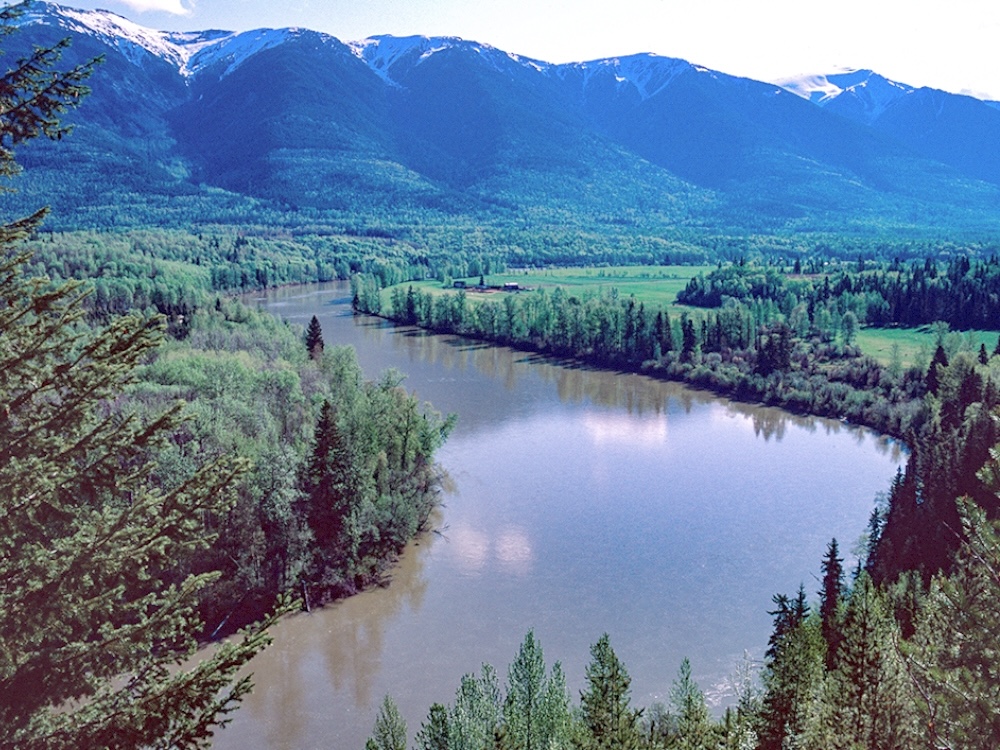
Since 2008, a company co-owned by American billionaires Bobby Patton Jr. and Mark Walter has bought 25 properties in Dunster, an unincorporated community of approximately 240 people located 40 minutes north of Valemount.
The properties, which were bought through a company registered in Canada called Fraser River Landholdings Ltd., include 16 homes, almost all of which are now vacant. Locals say the purchases have significantly affected Dunster, with the already small community losing residents while houses are left empty.
Patton Jr. and Walter are co-owners of the Los Angeles Dodgers through their company Guggenheim Baseball Management, and were estimated to have a combined net worth of more than $5 billion in 2020. By contrast, the average household income for those living in the Dunster area is about $60,000 per year.
All but one of the properties bought by Fraser River Landholdings are in the Agricultural Land Reserve, or ALR, and the company has installed locks, gates and security cameras on the land it acquired, alarming residents who have historically known their neighbours and consider Dunster to be a community with a high level of mutual trust between residents.
The company’s arrival first drew attention more than a decade ago, with more than 1,000 acres having been acquired by 2014. Fraser River Landholdings has continued purchasing land in the years since, with the most recent acquisition completed last fall. That property, valued by BC Assessment at $676,000, contains a two-storey house on about 139 acres of land.
Today, the company owns about 3,500 acres of land in Dunster.
Unlike many other provinces, British Columbia has no restrictions on foreign ownership of agricultural land.
But Dunster residents are asking the provincial government to change that. They want B.C. to restrict the foreign ownership of agricultural land — and redefine what it means to be a Canadian company in the province.

The neighbours who aren’t there
Nancy Taylor and Loretta Simpson have lived in the Dunster area since the 1970s. Since 2008, the pair have watched the population of their community fall from 350 to 240, a decline they attribute to the many homes that now sit vacant on properties acquired by Fraser River Landholdings.
Information on Fraser River Landholdings is limited; The Tyee attempted to contact Patton Jr. and Walter through Guggenheim Partners, one of their other companies, but did not hear back by press time.
The impacts go beyond simply the lack of occupants of 25 properties, say the women, who are both members of the Dunster Community Association.
“There’s ripple effects, right? No people, no neighbours, no succession planning that's going to benefit the community,” Taylor said. “When the only succession is Fraser River Landholdings buying places, the community's going to completely die.”
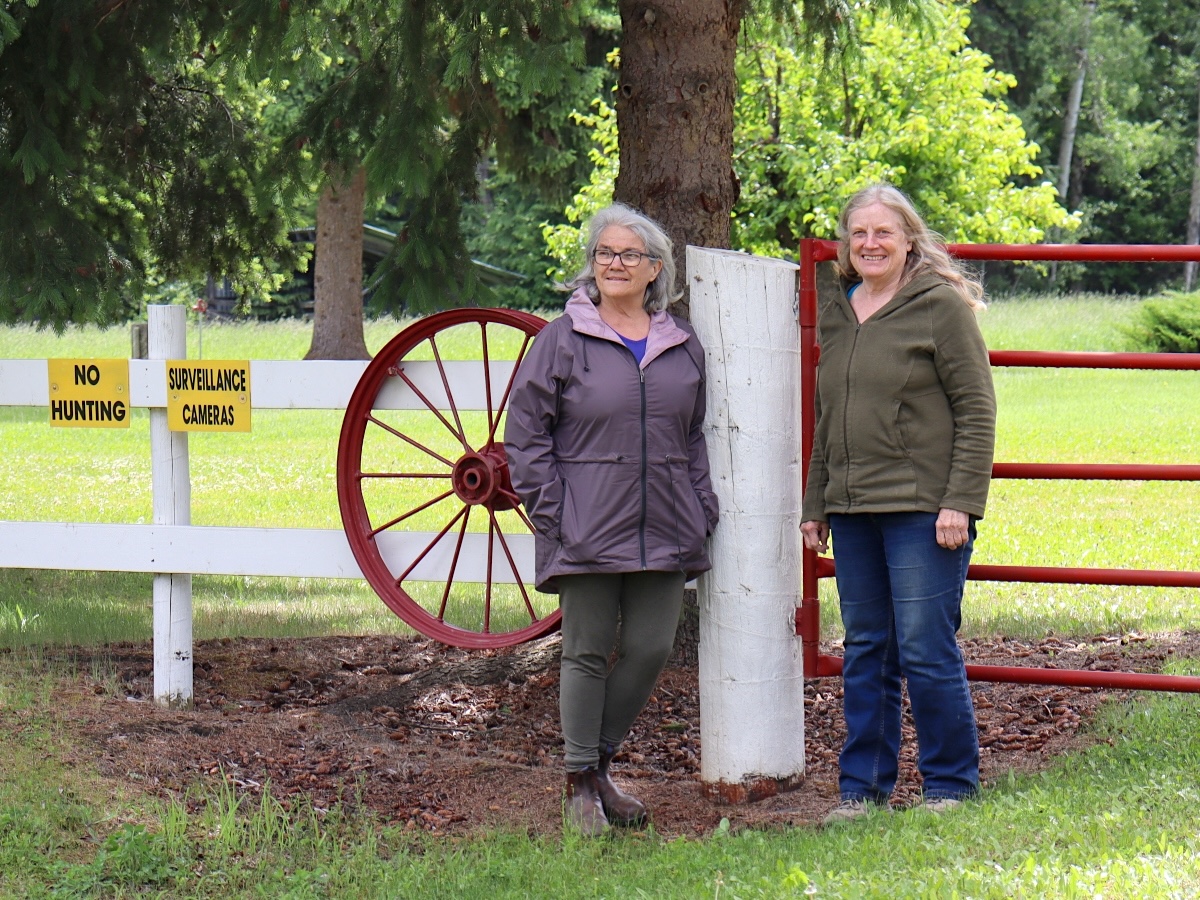
Despite its size, Dunster has a vibrant non-profit sector. But without new neighbours bringing new energy to the organizations, the capacity to plan and host community events is dwindling.
“We're all aging,” Taylor said. “You come to any meeting and you'll see all grey hair. I'm getting so that I'm just tired of volunteering all the time and there's nobody stepping up.”
Simpson estimated that about one-quarter of the land in Dunster has been purchased by the company.
The concern is that the company not only is outbidding would-be buyers who might be interested in moving to town, but is also holding on to the land indefinitely.
“When these farms are being bought up, there’s not a real opportunity for new people to move in,” Simpson said.
The company’s land purchases have been facilitated by Vince Lorenz, a longtime Dunster resident, according to Country Life in BC. Lorenz also works as a guide outfitter for Fraser River Partners, which arranges hunting and wildlife viewings on properties owned by the company.
Lorenz didn’t reply to The Tyee’s emails, but in an interview with Country Life in BC, he disagreed the company is preventing potential newcomers from purchasing property in Dunster. Lorenz said most of the properties were too expensive for other buyers and had been on the market for quite some time.
He told The Tyee that he wouldn’t be bothered if the province restricted foreign purchase of farmland, as the company is not buying much more property in the area.
Lorenz also pushed back on claims made by some locals that a minimal amount of farming is being done on the land now owned by the company. He told the publication that some of the properties are used to grow hay, which is then either sold to other residents or used as bait for elk.
The legacy of a financial crisis
University of Northern British Columbia professor David Connell says speculative purchases of farmland accelerated during the 2008 global financial crisis.
“Traditional avenues for financial investments kind of lost their lustre, and people started turning to agricultural land as this longer-term, much safer investment vehicle,” Connell said.
The process, known as financialization, has had significant negative impacts on farmers and on Canadian society in general, Connell said.
Farmland in B.C. is scarce. Less than five per cent of land in the province is farmable, with only 0.06 per cent classified as highly productive, according to a policy brief Connell recently wrote.
Connell said speculative ownership leads to land consolidation and shifts the ownership of land to wealthier entities. The demand from investors pushes up prices. Farmers who can buy property have to take on more debt, making them more vulnerable to market and interest rate fluctuations. Those who can’t afford to buy land are forced to consider leasing properties, which comes with short-term contracts and less security and can hinder key investments in their farming operations. More competition for farmland also makes it harder for multi-generational farming families to transfer land to the next generation.
Speculative investors buying up agricultural land can accelerate rural decline as communities lose their small farms and, with them, their residents, Connell said.
But although the speculative purchase of farmland is often framed as being caused solely by foreign ownership, Connell said non-Canadian investors are just one group of buyers affecting B.C.’s supply of agricultural land.
“What we are facing in B.C., and across Canada, is the purchase of agricultural land by different types of speculative buyers,” he wrote. “Investors include people, private corporations, investment companies and pension funds, including both Canadian (resident) and foreign (non-resident) buyers.”
No restrictions on BC farmland ownership
As the Dunster Community Association’s members have sought to bring awareness of what is happening to their community, they have found an ally in BC Green Party Leader Emily Lowan.
After connecting with the community association and doing further research, the Greens identified several other areas in the province, including Kamloops and Pemberton, where wealthy, foreign interests have been acquiring land.
In May, the party launched a petition calling on the province to restrict the ownership of farmland by investment firms and non-residents. The petition also called for municipal and regional governments to tax unused farmland purchased for speculation.
“It just seems like a really natural issue for the Greens to champion, specifically on the concern about protecting local ownership, protecting our food security and ensuring we have the safeguards in place to protect our farmland,” Lowan said.
Lowan cited Stan Kroenke, the owner of the National Hockey League’s Colorado Avalanche, as an example of a wealthy American who has bought up B.C. farmland. Since 2003, Kroenke has purchased several historic B.C. ranches, including Alkali Lake, Riske Creek, Gang, and Douglas Lake ranches. The latter, near Merritt, is Canada’s largest working cattle ranch; in total, Kroenke’s ranches control more than 1.8 million acres of farmland.
The Tyee attempted to contact Kroenke through Douglas Lake Ranch but did not hear back by press time.
BC Assessment reported that just one per cent of B.C.’s farmland is foreign owned, but Lowan said the Greens’ own calculations suggest the figure is likely much higher.
“Stan Kroenke owns or controls 13 per cent, including the grazing permits — that's huge [amounts] of farmland,” she said.
Lowan puts the blame on the fact that B.C. is one of five provinces in Canada with no policies in place restricting the ownership of farmland by foreign entities. The other provinces with no foreign ownership restrictions are Ontario, New Brunswick, Nova Scotia, and Newfoundland and Labrador.
Regional District of Fraser-Fort George director Dannielle Alan, who represents Dunster residents, echoed Lowan.
“We have foreign interests who are controlling large amounts of agricultural land, and they're not doing so for the benefit of the people who live in B.C. or even Canadians,” she said, echoing the call for stricter land ownership rules.
Lowan, Alan and the Dunster residents are hardly the first to call for the province to restrict foreign farmland ownership.
In 2018, a panel appointed by the Ministry of Agriculture recommended the province consider adopting land ownership policies similar to those of other jurisdictions in Canada.
The committee cited concerns about the “unlimited demand” of foreign buyers for B.C.’s limited protected agricultural land and questioned whether foreign ownership of land in the ALR is in the long-term interest of the province’s agricultural industry. The panel said residents were concerned that foreign ownership of farmland could cause higher land prices and jeopardize the security and sustainability of B.C.’s food production. It suggested the province review the restrictions imposed by other municipalities and study the impact of foreign investment on B.C. farmland prices.
At the 2024 Union of BC Municipalities convention, local politicians from around the province endorsed a resolution brought forth by the Regional District of Fraser-Fort George to support the 2018 recommendation and calling on the province to restrict foreign ownership in the ALR.
For this year’s Union of BC Municipalities convention, the regional district has asked delegates to ask the province to provide an update on how it has responded to the 2024 resolution.
In an emailed statement to The Tyee, a spokesperson for the province’s Ministry of Agriculture wrote: “We share the concerns around land use and affordability in the ALR and have been clear that land in the ALR should be used for farming as it remains the foundation of our province’s food security.”
The statement did not answer questions about whether the province plans to restrict foreign ownership of farmland, or what it might do to protect the province’s farmland from corporate interests. Instead, the statement said that farmland owners must follow provincial laws and Agricultural Land Commission rules.
Quebec: A potential model for BC?
Other provinces regulate foreign farmland ownership differently.
In Alberta, foreign citizens and foreign-controlled corporations can own up to two parcels, totalling 20 acres. Corporations are not eligible to own farmland if foreigners control at least 50 per cent of the company.
Alan, Lowan and Taylor all point to recent legislation enacted by Quebec’s provincial government as a potential model for how British Columbia could address speculative farmland purchases.
In March 2025, Quebec passed a bill that restricts foreign ownership of farmland to four hectares and expands the powers of the Quebec land commission to review purchases of agricultural land made by non-farmers. Buyers will need to convince the commission they intend to work the land, instead of using it for investment.
The bill also allows municipalities to impose a tax on agricultural land that isn’t being actively farmed.
Although restricting foreign ownership of land in other provinces has met with success, Lenore Newman, the director of the University of the Fraser Valley’s Food and Agriculture Institute and a member of the 2018 B.C. panel, says the issue isn’t as straightforward as it appears.
Newman said the worldwide acquisition of farmland by pension funds presents the question of which entities can effectively manage farms. Many of the funds have time frames of 100 years and are satisfied with small returns on investment, she said.
“They are content with smaller steady returns around four per cent annually, and can achieve meaningful farm and environment improvements through scale,” Newman said in an email. “We could limit land sales of this sort to Canadian funds. Really it's philosophical: Do we believe farming can only be done by owner-operators? Then what about land trusts? Co-ops?”
The issue is complex and requires policies informed by more information, she said.
“It is likely one tool won't fit all situations,” Newman wrote. “I would want to see firm provincial-level data before committing to a course of action.”
Much of that data is elusive, however. Connell said information about who owns agricultural land isn’t readily accessible and can be difficult to confirm, making it hard to know the extent of the issue and the effect of any potential policy change.
Dunster’s advocacy continues
At a regional district board meeting in June, Dunster Community Association members told local politicians their voices are finally being heard.
Rashmi Narayan, the co-ordinator of the group’s farm hub project, said provincial officials have committed to reviewing land records to examine ownership trends and how they are affecting communities.
“That's been a big achievement for us,” Narayan said.
Simpson and Taylor said they’ve felt shy and aware they may be labelled as radical for speaking out about an issue they feel has significantly eroded the population of Dunster. But it hasn’t stopped them.
“We're trying to protect our community and make changes that everyone will benefit from in the end,” said Taylor. ![[Tyee]](/design-article.thetyee.ca/ui/img/yellowblob.png)
Read more: Food, Housing, Environment







Tyee Commenting Guidelines
Please note that email notifications for replies are not currently working due to a software issue which may be resolved in a future update.
Comments that violate guidelines risk being deleted, and violations may result in a temporary or permanent user ban. Maintain the spirit of good conversation to stay in the discussion and be patient with moderators. Comments are reviewed regularly but not in real time.
Do:
Do not: