

 SHARE:
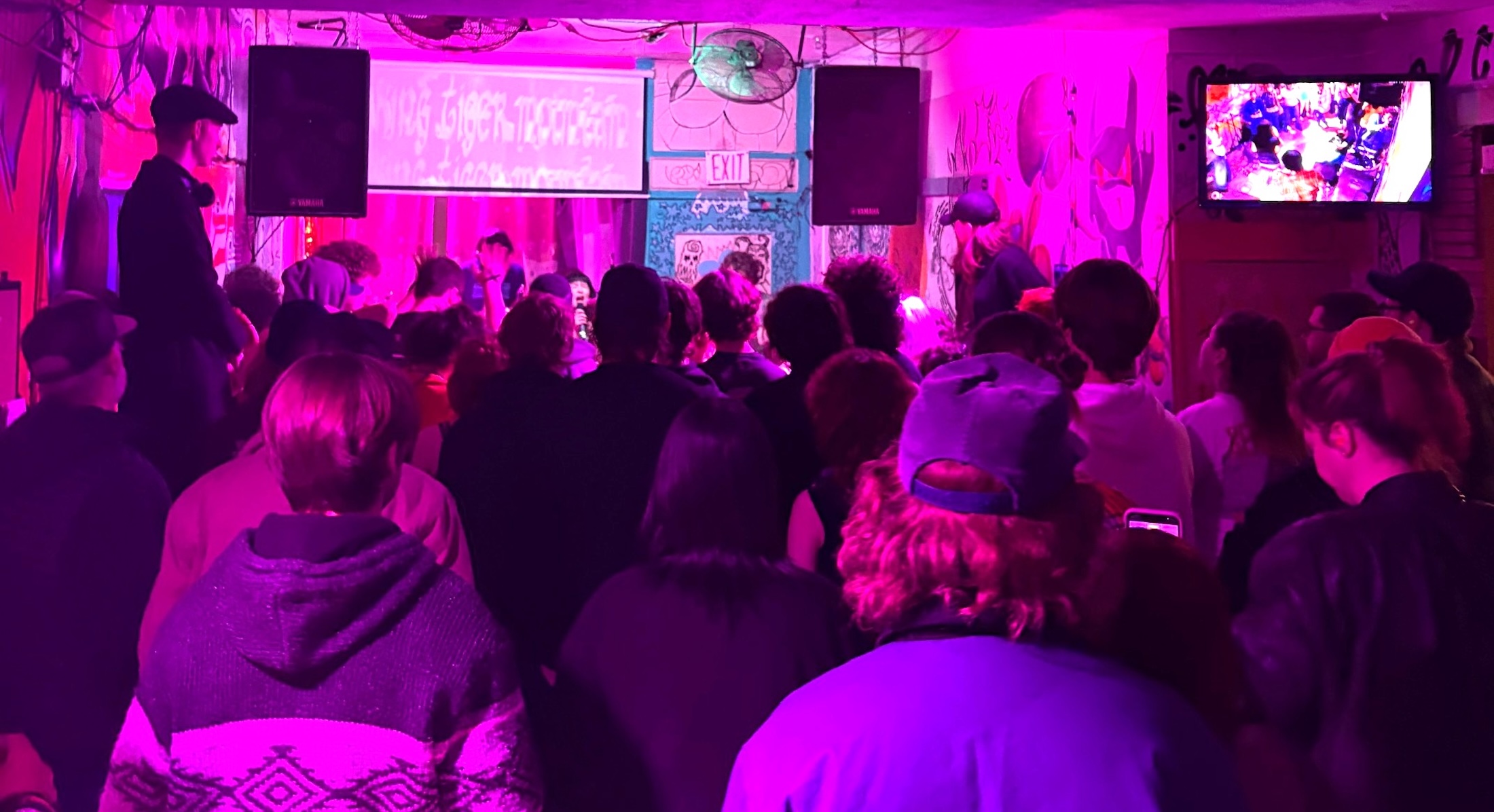
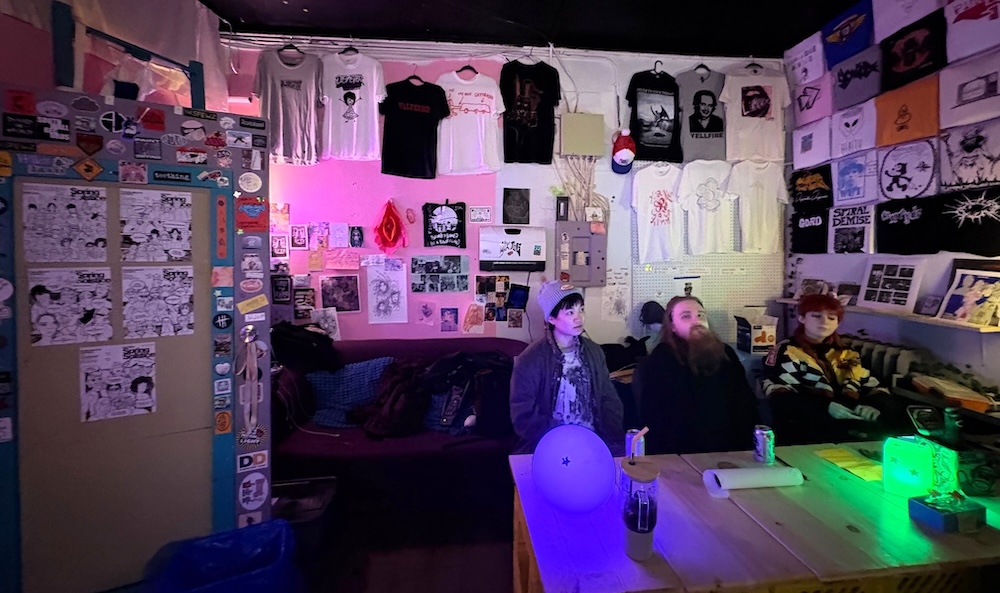
The walls of Take Your Time Back, a “community art space for DIY underground culture” in an old brick building on Kingsway in Vancouver, were playfully covered in electric pink and blue graffiti. The venue hosted art markets, film screenings, and other community events, but the draw for many was the music.
The shows held at Take Your Time Back were all-ages, pay-what-you-can. Whether hardcore punk, soft folk, experimental jazz, or indie rock, the venue welcomed musicians of all genres and experience levels. On any given Thursday, Friday, Saturday or Sunday night, you could find a diverse group of people moshing, nodding along or intently listening to whatever artist happened to be playing.
When Take Your Time Back shut down in March, among the regulars mourning its loss was OneCity mayoral candidate William Azeroff because it was “where my son’s two bands played countless times and we’d never miss a show.” On the campaign trail, he told an applauding audience, “We need to take underused and underutilized spaces and open them up” so they can be “incubating spaces for artists.”
Instead, over the past year, city inspectors and fire officials have cracked down on underground night spots, squeezing them on safety and licensing regulations. Another well-loved DIY spot, Greylab on Pender Street, shut down last August. The venue has shifted to a nomadic approach, hosting occasional shows and festivals at venues like the Hollywood Theatre.
Proprietors of the queer venue the Birdhouse say it’s not enough that they operate with a valid temporary liquor permit and a special events licence. Teams of inspectors have shown up without warning, videotaping patrons and causing them to leave.
What’s behind the crackdown? Safety concerns are real, according to Vancouver fire department officials. Lobbying by owners of more established night spots may be part of the reason, according to a report by the Investigative Journalism Foundation and Vancity Lookout. Some also have linked the city’s actions to preparations for hosting FIFA World Cup soccer matches.
There’s a better way, argues Jarrett Hagglund of DMS Vancouver, a LGBTQ2S+ community organization. Writing in the Daily Hive, he said a solution requires “clear, achievable pathways for venues to operate responsibly. It means proportional enforcement that distinguishes between genuine life-safety risks and administrative non-compliance. It also means building relationships, not just issuing tickets.”
Caught up in it all is Luis Gonzalez, who co-founded Take Your Time Back with Anne Duong and Dayton Bowen in September of 2024 after finding the listing for 648 Kingsway on Craigslist. That address had long history serving as an underground arts space.
Gonzalez wanted to carry on the tradition, he says, after he’d become disillusioned with the music industry after working as an EDM, or electronic dance music, distributor.
Take Your Time Back “was really the most accessible venue in Vancouver” says Julian, who volunteered there, “The lack of judgment that I felt at shows was refreshing.”
But Gonzalez, Duong and Bowen aren’t giving up on Take Your Time Back. Using the unit next door to the previous Take Your Time Back space, the team is working towards opening Take Your Time Front, a sister community arts space.
On a sunny April afternoon, I met with Gonzalez and Duong in the graffiti-covered Take Your Time Front. Gonzalez and I discussed organizing without hierarchy, DIY ethos, “no-working spaces” and the future of Take Your Time Back.
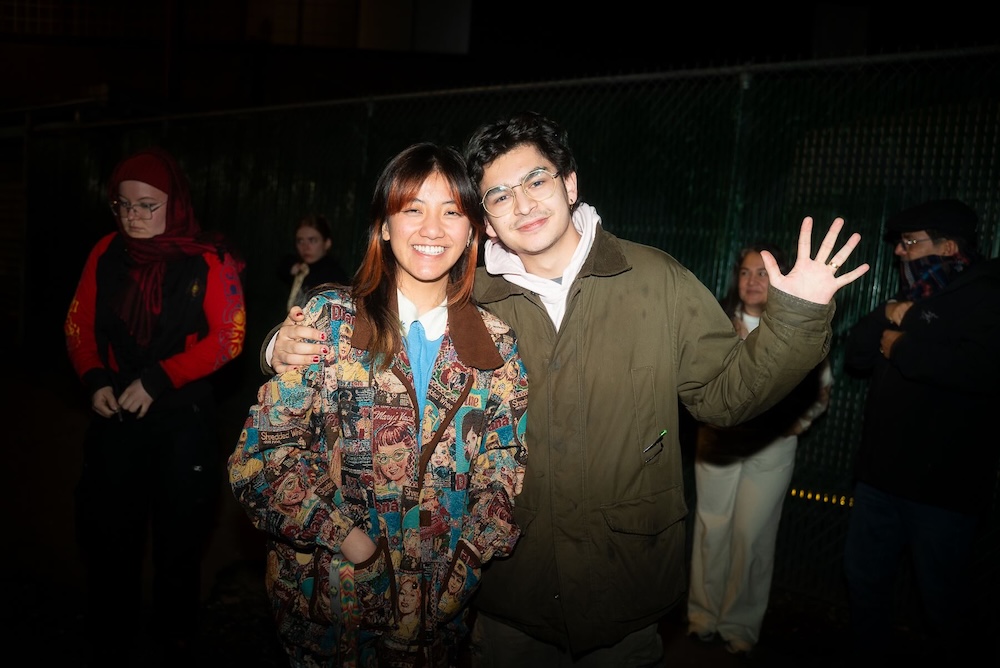
The Tyee: What inspired you to found Take Your Time Back?
Luis Gonzalez: The priority was to create what we call a no-working space, which is a space to collaborate with an anti-capitalist ethos, to work together and to build things together. We were looking for a place to do that.
The space was up on Craigslist. Walking into that bathroom and seeing the anarchist, trans rights, [and] Land Back graffiti. I felt like if I [was] going to do entertainment as a job, I’d rather work for these people than for anybody else.
Did you always know you wanted Take Your Time Back to be a music space?
When I was growing up, it was sort of my dream to run a venue or an art space. I had grown up doing basement shows and underground stuff and local organizing.
Going to shows as a teenager, it was a very transformative part of my life. So, I wanted to make sure that was available.
What guides your work at Take Your Time Back?
To me, the real focus [of Take Your Time Back] was on the political and ethical values of punk and underground organizing. DIY ethos, anybody can do anything, don't wait for permission, empowering people.
Once you had the space and the venue running, how was it functioning?
It was all volunteer-based. There’s like three of us that actively lose money. [laughs]
We have what’s called a do-mocracy, which means you do whatever you want. And watching people start to understand that and get more involved and having to do less and less myself. But things also got more and more stressful because the stakes went up.
What do you think are the main benefits of having accessible music spaces and community spaces like Take Your Time Back in Vancouver?
The benefits we try to offer are mutual support, shared resources, community space and radical education.
We’ve been lucky enough to get some credit for developing new bands and acts. And I am proud of that. I love being the place where people play their first shows. And I love being a part of that story for people.
But for me, it’s not really about where people go afterwards. Success happens within the night when people show up and they feel free for a few hours … I want to offer a force field where you can rest and connect with others and not have that underlying sense of competition and observation.
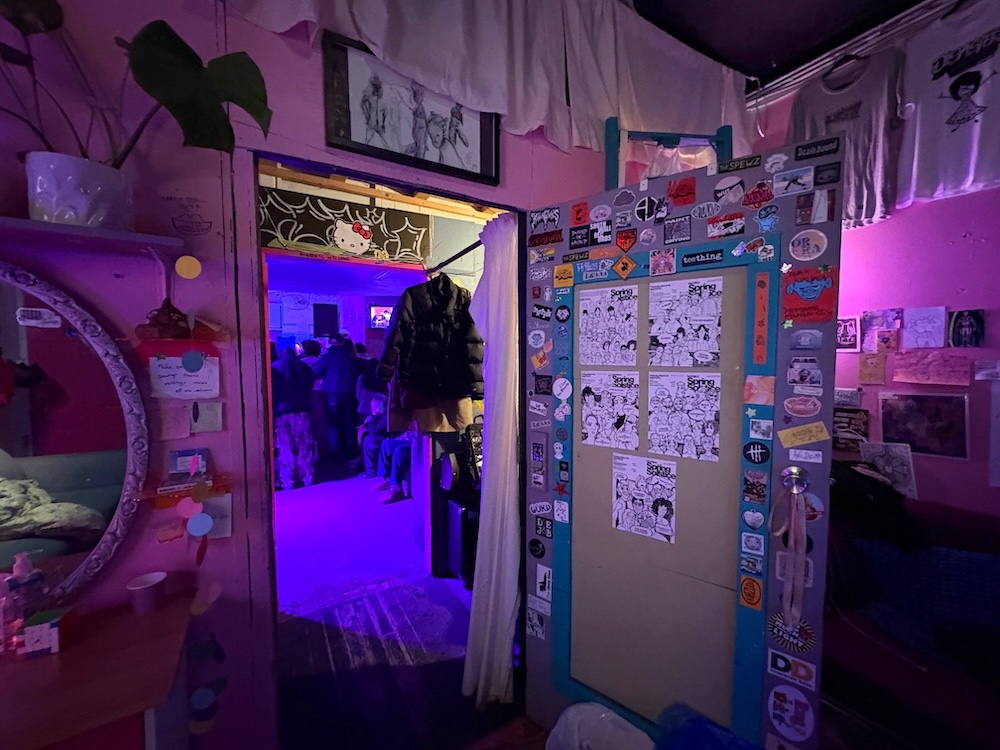
How do you think Take Your Time Back was different than other underground venues on the Vancouver music scene?
We try to be a more accessible place, you know. It can be really intimidating to engage with the underground. And a lot of that comes from the underground itself having this sort of defense mechanism where it’s constantly worried about people calling police or worried about outsiders. So, it leads to this almost cliquey-ness.
But we really wanted to combat that. And, you know, we’re very pink. We’re very cute. We’re not trying to be cool. We’re not trying to be edgy. But [we] can be a gateway into people finding other subcultures that they enjoy. [laughs]
What were some of the barriers you faced while running Take Your Time Back?
I think the most obvious place to start is financial. My parents happen to be supportive, both financially, but also in that they understand the mission and care about it. But even with that support the financial stress is definitely the most tangible thing.
Other than that, it’s a lot of interpersonal dynamics. Organizing without hierarchy, I think, is worth doing. It’s also very time-consuming and you have to deal with each person individually.
And then just the exhaustion of four shows a week was really getting to us by the end of it. It’s hard to put yourself in a long-term mindset, running an underground space, because you’re just constantly [worried that] somebody’s gonna shut us down any moment.
Recently Take Your Time Back was shut down. What was that process like?
We had a city inspector who slowly started giving us heads up that he knew about us and whatnot. And he was actually very slow in his correspondence. But eventually he did set up a site visit.
He didn’t seem too interested in handing out consequences, but it does seem like the city is just no longer putting up with this for whatever reason. So, we just preemptively shut it down and got rid of all the music gear and painted all the walls and made it look like we were never there. We kind of nailed the dismount.
When you announced that Take Your Time Back would be shutting down, what was the reaction from the community like?
People were really sad. It was kind of overwhelming. I didn’t realize that so many people cared. It was a very bittersweet moment. I think people appreciate what we did for the city and that feels good.
It was sad because we understand that it was a loss of the community. It was a safe space for a lot of youth. We also had a lot of neurodivergent people coming in and working together and we figured out a dynamic that really accommodated that.
What is next for Take Your Time Back?
It’s always hard to exactly predict what things are going to look like, since we don’t like to operate hierarchically.
The goal is to be open [at Take Your Time Front] and to just hold the space, create that force field, and let people come here to rest, to connect, to share with each other. We’ll have workshops (…) book clubs and film clubs and drag shows and introduction to socialism courses.
We just have to figure out how to use what we have, which happens to be like a couple rooms, and make it serve the mission. Mostly we want to be here to continue to empower people to create offerings for each other, workshops, art.
It’s always hard to exactly predict what things are going to look like, since we don’t like to operate hierarchically.
Do you have worries going into this new chapter with Take Your Time Front?
I’m a little worried that people won’t be as interested without the live music component, but the live music was never essential to our mission, which is mutual support, shared resources, community space and radical education.
Where do you think the Vancouver underground music scene is heading from here?
I understand that when the city shuts down one underground venue, another one will pop up. It will keep happening. If anything, we set some kind of precedent for what could be done in the city. And hopefully that will affect some policy making.
But we’re just going to keep doing our thing and keep involving the community. ![[Tyee]](/design-article.thetyee.ca/ui/img/yellowblob.png)
Read more: Art




Tyee Commenting Guidelines
Please note that email notifications for replies are not currently working due to a software issue which may be resolved in a future update.
Comments that violate guidelines risk being deleted, and violations may result in a temporary or permanent user ban. Maintain the spirit of good conversation to stay in the discussion and be patient with moderators. Comments are reviewed regularly but not in real time.
Do:
Do not: