


 SHARE:
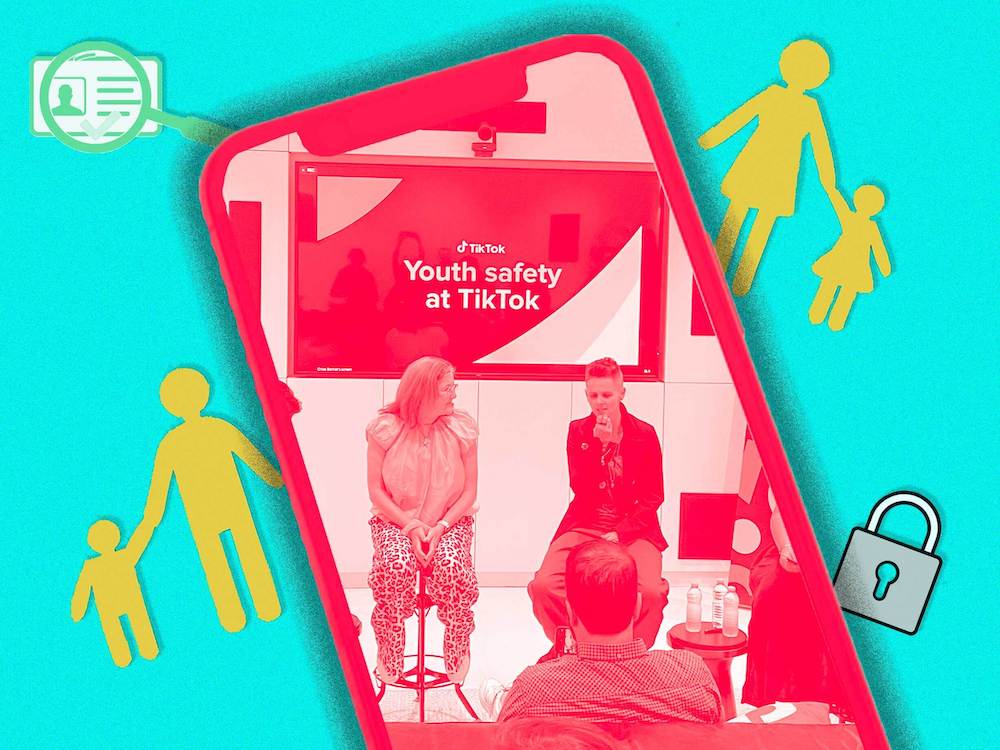
In the absence of federal or provincial legislation to protect users from online exploitation and abuse, TikTok Canada is telling parents youth safety on its app is one of its top priorities.
But the social media company’s armour has holes, says University of British Columbia associate education professor Jillianne Code — such as relying on young people to tell the truth about their age.
Theoretically, TikTok Canada doesn’t allow users under 13 to have accounts. But according to MediaSmarts, a Canadian non-profit dedicated to media literacy education, TikTok is the second most popular social media app for young people in grades 4 to 11 — signalling that kids as young as nine are in fact accessing the app. (YouTube ranks first overall for students in grades 4 to 11.)
“I do recognize the challenge, that moderating something this huge isn’t always easy,” Code said. “But if they’re going to provide this kind of platform, they have to have the guardrails in place.”
Last month, TikTok Canada invited journalists to presentations in Vancouver and Toronto highlighting TikTok’s youth safety protocols.
TikTok is “where people come to watch and learn about new videos on a range of different topics: everything from your favourite cat video through to furniture repairs,” Tara Wadhwa, global head of regional product policy for TikTok, told the audience at the Vancouver event.
“Our diverse user base is only able to create the content and be as open as they are when they do feel safe on the platform to authentically be themselves,” said Wadhwa.
The Tyee attended the Toronto and Vancouver sessions. Our article about TikTok’s efforts to combat disinformation includes information on the platform’s content moderation strategies, the issue of “filter bubbles” and its tendency to boost content from some conservative communities while suppressing content from other, marginalized ones.
But what about the app’s additional safety measures for users under 18?
Content depicting graphic violence, nudity and animal abuse is banned for everyone. But account holders 17 and under experience additional restrictions for viewing or creating their own content related to sexuality; diet, weight loss and plastic surgery results; glorification of gambling; and alcohol, tobacco and drugs.
TikTok works with over 100 independent organizations worldwide to ensure user safety. That includes Kids Help Phone and MediaSmarts, Wadhwa said, and it has established its own global youth council to solicit young people’s feedback on the app.
But TikTok has a message for parents and guardians of young TikTok users: the best way to ensure their safety is monitoring their TikTok accounts and usage.
It’s difficult for parents to monitor their children’s social media use, said Code, whose academic research specializes in social media, youth and mental health. But it is worth the effort, especially given the prevalence of anxiety and depression among young social media users.
This effort can include parents using app tools to monitor their kids' accounts, as well as parents and kids viewing TikTok together.
Viewing social media content together “can also open up a dialogue between the parent and the child about responsible use, digital literacy and understanding what it is the app is doing,” Code added.
When’s your birthday?
To open a TikTok account in Canada, you must be 13 years old; 14 if you live in Quebec.
This is different from the United States, where TikTok users under 13 can see a limited selection of TikTok videos but cannot create their own profiles.
The Canadian age limit isn’t mentioned on TikTok’s sign-up page, which opens with a birth date request.
If a user’s birth date puts them under 13, they are unable to open an account and are prevented from trying again with another date. But UBC’s Code is not convinced that will keep kids off TikTok. “Young people are pretty savvy at getting around any potential age restriction or account measures,” she said.
Between October 2023 and June 2024, TikTok claims to have removed over 25 million accounts worldwide because users were underage.
Moderators are trained to recognize signs users are underage, Wadhwa said. “You’d be surprised how many younger people decide to put the grade that they’re entering, or create a video about their birthday.”

Code applauds TikTok’s efforts. But, she added, “it reveals to me that there’s a significant prevalence of underage users attempting to access the platform.”
For teens honest about their age, accounts are automatically private for users 13 to 15 years old. Only TikTok accounts they permit can view their account, and anything they like or comment on is visible only to those accounts. Direct messaging is disabled on these accounts.
Users 16 to 17 years old can choose to keep their accounts private or go public, with every video they post, like or comment on made visible to any TikTok user. They can access direct messaging.
Users under 18 aren't recommended to other users as accounts to follow by default, although they can turn this feature on in their account’s privacy settings. Their content will not show up on TikTok’s user-specific main page, also known as the For You feed, which suggests a steady stream of videos based on the user’s engagement.
Users under 18 are limited to one hour of app use daily — though that limit can be adjusted in the app’s settings — and they can’t go live or give “gifts” on the app.
Human moderators are key
TikTok uses a combination of AI and human moderation to ensure content on a young person’s For You feed is age appropriate.
Any video that AI determines with “high confidence” to violate TikTok’s community guidelines is immediately removed, Wadhwa said.
But it is not foolproof.
“Technology is very good at identifying some things. For example, it’s great at identifying blood,” said Wadhwa. “But one of the places it struggles is to differentiate whether the blood is from a fictional movie like Jaws, or it’s actually part of a scary makeup tutorial.”
Last month the Canadian Anti-Hate Network published a report on a neo-Nazi accelerationist group of mainly teenagers that had been sharing racist content on TikTok as recently as June this year. It is not clear whether the teenagers had age-restricted accounts.
In an emailed statement, a TikTok Canada spokesperson said they remove 98 per cent of content like this before it’s even reported.
“We block searches for terms related to hate or hateful ideologies and redirect the search to our Community Guidelines to educate our community about our policies against hateful expression,” the spokesperson’s statement read, adding that posts cited by the Canadian Anti-Hate Network that violated their guidelines have since been removed.
In addition to continually working to improve content moderation, Wadhwa said, TikTok has been taking steps to avoid what they call the “filter bubble”: the algorithm feeding users the same kinds of videos on repeat.
The algorithm ranks videos based on the user’s actions: the interests expressed when signing up for an account, then adjusted over time based on viewing habits. Interactions and preferences on the app, including “liking” a video or whom users follow, signal viewing habits.
“All of these factors are then processed by the recommendation system and weighed based on their value to a user,” Wadhwa said. A strong value signal is finishing a long video, while a weaker signal is sharing a home country with another user, she added.
If users are repeatedly watching the same content, the algorithm will introduce new content it thinks they will like. It will also add new-to-you videos in your For You feed that the algorithm suspects you might like.
Certain content, such as dangerous viral challenges, nudity, sexual content, violence, and restrictive or extreme weight loss, diet, workout or body modification themes, are also “safeguarded” from viewers under 18.
This is a step in the right direction, Code said, for a social media platform whose algorithm “has been particularly malicious” in creating filter bubbles in the past.
Code said she would additionally like to see the app maintain and improve transparency with youth, parents and educators, including broader releases of the transparency reports TikTok publishes. These reports should be advertised more widely, she said.
Bolstering social media literacy
TikTok created its youth account guidelines using advice from outside organizations, including the Digital Wellness Lab at Boston Children’s Hospital.
But when it came to creating a guide parents could understand, TikTok Canada turned to media literacy non-profit MediaSmarts.
MediaSmarts, which receives government, university and corporate funding, creates media literacy resources for kids, parents and teachers. The organization has worked with universities and media corporations since the mid-1990s, including Bell Canada, Google, APTN and Meta.
TikTok Canada funded the creation of “Talking TikTok: A Family Guide,” said Matthew Johnson, MediaSmarts’ director of education and author of the guide. MediaSmarts has created similar guides in the past for Meta sites like Facebook and Instagram.
But TikTok didn’t compromise MediaSmarts’ standards for media literacy guides, he said.
The guide is designed to explain to parents and youth how TikTok works and what safety measures are in place for all users, but especially those under 18. It has been viewed online 1,972 times since it was uploaded on May 7 this year. TikTok Canada would not tell The Tyee how many Canadian account holders are under 18.
MediaSmarts and TikTok relied on surveys of youth and parents to determine what to include in the guide.
In addition to giving parents the rundown on how the app functions and its rules, TikTok also provides tools for monitoring their kids’ accounts.
The in-app feature Family Pairing, for example, allows parents to access the controls on their minor kids’ accounts. They can adjust a child’s allowed screen time and control who can message their teen and what videos they can see on the app.
TikTok does a better job of restricting content for certain audiences than, for example, Instagram does, Johnson said.
But “we know from our research, young people are not happy with the reporting process for reporting problematic content on any platform,” he said.
“They don’t have faith that reporting content is going to have any results.”
MediaSmarts has also heard criticism that all social media providers' algorithms are “down-ranking” content that expresses points of view or even account holders with larger bodies that don’t violate community guidelines. This limits how many users can see their content.
“It’s very difficult to study them because... in particular in the case of TikTok, the algorithm is proprietary,” Johnson said. At least 90 per cent of views on TikTok are recommended by the algorithm, he added, “higher than any other platform.”
Social media literacy is not currently part of the B.C. education curriculum, but MediaSmarts’ website says it should be.
“We think that’s an essential part of young people’s education,” said Johnson, adding media literacy education is mandatory in some other provinces. “We think it needs to be happening in home and in school.” ![[Tyee]](/design-article.thetyee.ca/ui/img/yellowblob.png)
Read more: Education, Media, Science + Tech












Tyee Commenting Guidelines
Comments that violate guidelines risk being deleted, and violations may result in a temporary or permanent user ban. Maintain the spirit of good conversation to stay in the discussion and be patient with moderators. Comments are reviewed regularly but not in real time.
Do:
Do not: