


 SHARE:
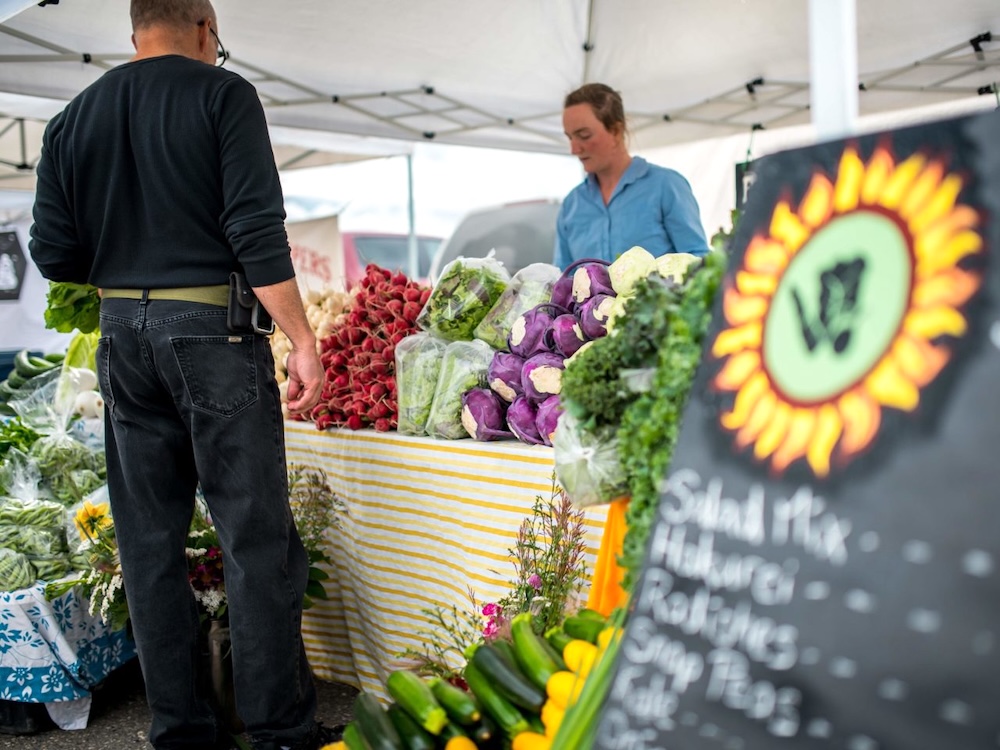
If you were to approach David Connell — an encounter likely to take place at a local farmers market in Prince George — and ask him to name one thing that would make the world a better place, his answer would be simple.
“It would be to change the food system, to make the food system more localized,” he says.
Connell studies farmers markets and local food systems as a professor at the University of Northern British Columbia. This week, he’ll be presenting his research at the Congress of the Humanities and Social Sciences, an academic conference in Toronto that attracts nearly 7,000 participants.
Farmers markets, he says, bring cascading economic benefits and also offer social cohesion and a sense of community.
Connell’s research shows that nearly half of all market goers spend at least 30 minutes at the market. At least half that time is spent talking to other people, he says.
“That experience contrasts sharply with one’s experience of going to a grocery store where it’s ‘in and out,’ maybe you talk to the cashier, you might ask them how their day is going,” he says.
When Connell presents his findings on Tuesday and Wednesday this week, he’ll draw from his 2023 research, undertaken in collaboration with the BC Association of Farmers’ Markets, which examined 70 markets across B.C. and engaged with more than 11,500 shoppers.
It found that B.C. residents spend more than $155 million annually at farmers markets. While that sounds like a lot, it represents only 0.5 per cent of an average family’s grocery budget — or just over $40 for each market goer per visit.
If each shopper were to double that amount, spending one per cent of their grocery budget on local market goods, it would double the benefits to local farmers and the community, he points out.
“It strengthens that local food system, it strengthens the social interaction, it increases the social dynamics,” he says. “The spillover benefits go well beyond just the benefit to the vendors.”
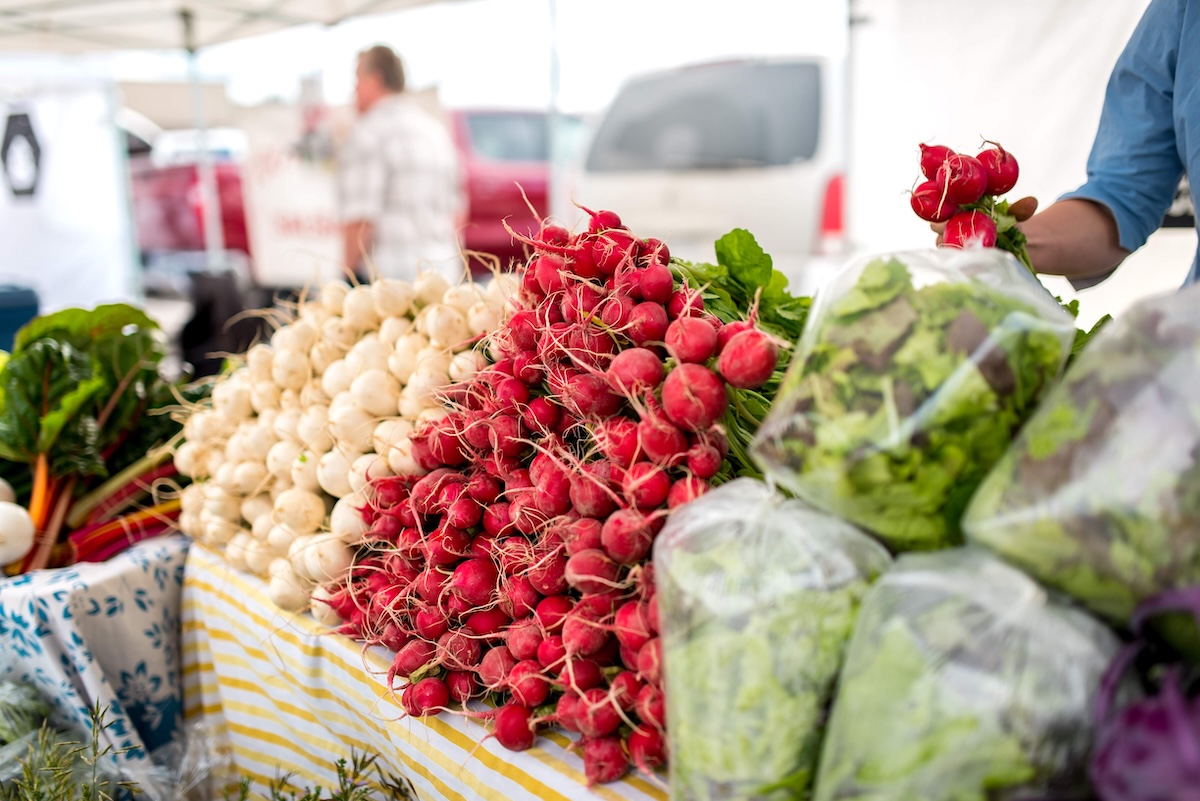
Connell also found that 87 per cent of surrounding businesses interviewed reported a positive effect from farmers markets, with market goers spending nearly $120 million at nearby businesses.
In addition to economic benefits, locally produced foods tend to be healthier for both the consumer and the environment, he adds.
But he acknowledges that local food production can meet only so much demand. As urban sprawl eats away at prime agricultural land, local food systems are becoming increasingly compromised, he says.
Connell’s presentation Tuesday builds on this previous research with new information taken from the BC Farmers’ Market Nutrition Coupon Program data.
The vouchers, which are sponsored by B.C.’s Ministry of Health and provide up to $27 a month in market coupons to lower-income families, pregnant people and seniors, are meant to increase food security.
They also benefit the vendors, Connell says, an aspect that hadn’t previously been studied.
“The farmers find that the coupons make a noticeable difference to their overall revenues,” he says. “They’re making a difference by being able to provide their food, which they’re passionate about, and to address food insecurity brings them a great deal of satisfaction.”
The program also provides intangible benefits by diversifying market attendance. Connell says farmers markets are often criticized for attracting a primarily white, upper-middle-class clientele.
The coupon program allows them to reach a broader segment of the community, he says.
“I think a healthy community is one where people across income spectrums and cultural groups interact,” he says. “Increasing the diversity of the customer base at farmers markets is just a good thing.”
He adds that buying local isn’t necessarily more expensive than shopping at the grocery store.
Recent research from Dalhousie University in Nova Scotia shows that, in a time of “greedflation,” farmers markets have seen smaller price increases than grocery stores.
At a time when Canadians are focused on the trade war with the United States and supporting local businesses, markets offer “a really positive avenue for people to feel good about their purchases,” Connell says.
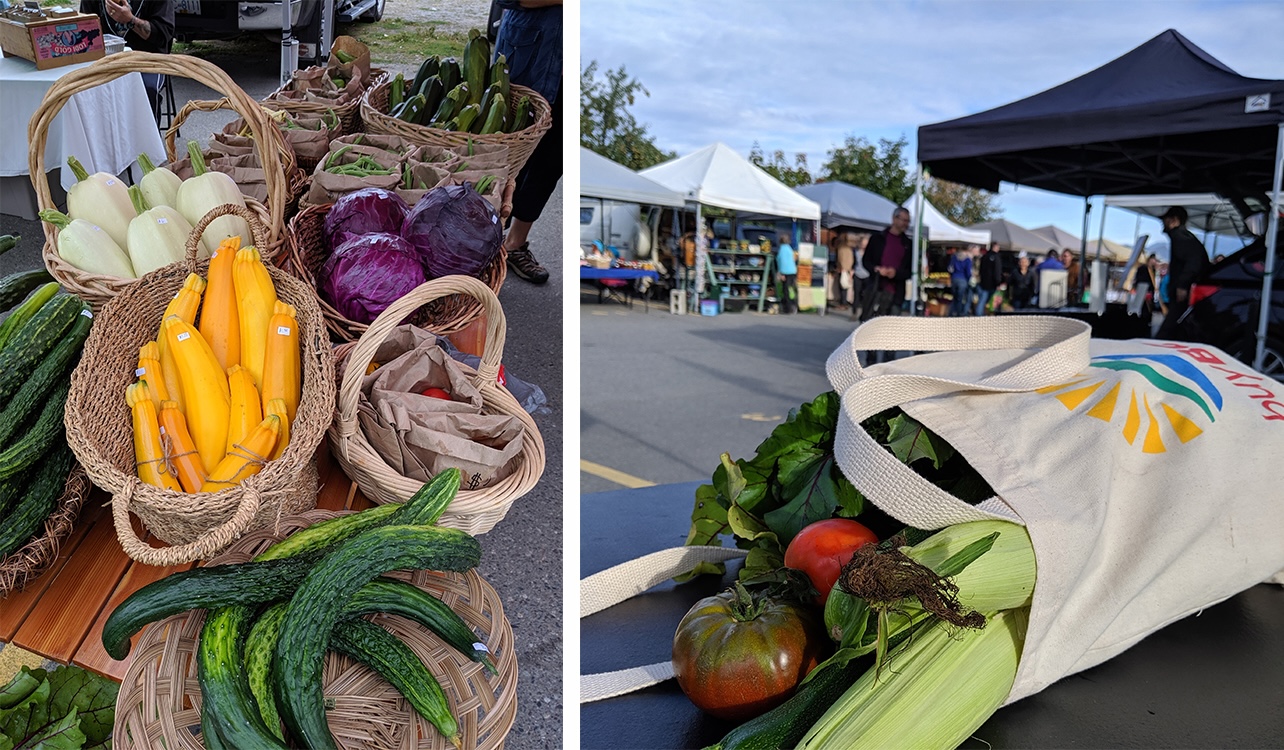
Connell’s 2023 research found that farmers markets had grown over the previous decade, despite challenges like the COVID-19 pandemic.
He says interest in local food began to climb about 20 years ago, when the 100-Mile Diet was gaining popularity and there was “a significant increase” in interest about farmers markets.
That growth began to level off in about 2012, he says. Then, in 2020, markets were briefly shut down due to the pandemic. By last year, they had finally fully recovered, he says.
Now, he sees U.S. tariffs and increased grocery costs driving a resurgence in interest in global food systems.
“It does get people concerned about their budgets, and the ripple effect is that it gets them thinking about where their food comes from,” he says. “That certainly spurs interest in alternatives such as farmers markets.”
Connell believes they offer an entry point into local food systems and an opportunity to support local farmers by connecting us “psychologically, emotionally and physically” to our surroundings.
“If you’re not growing your own food, buying food from a farmer you know — or get to know — is a psychological connection to the food, which is only one step away from the land itself,” he says.
Tuesday afternoon, Connell presents his research paper “British Columbia’s Farmers’ Market Nutrition Coupon Program: Toward a Shared Understanding of Cross-Sector Benefits.” On Wednesday, he presents the paper “Socio-Economic Significance and Limitations of Farmers Markets: Insights from a Province-Wide Study in British Columbia.”
Organized by the Federation for the Humanities and Social Sciences and hosted this year by George Brown College, Congress 2025 intends to “model togetherness by working across differences, questioning hierarchies, and bridging divides in knowledge and experience to tackle the world’s most persistent challenges,” according to a news release.
It continues until Friday. ![[Tyee]](/design-article.thetyee.ca/ui/img/yellowblob.png)
Read more: Local Economy, Food, Environment












Tyee Commenting Guidelines
Please note that email notifications for replies are not currently working due to a software issue which may be resolved in a future update.
Comments that violate guidelines risk being deleted, and violations may result in a temporary or permanent user ban. Maintain the spirit of good conversation to stay in the discussion and be patient with moderators. Comments are reviewed regularly but not in real time.
Do:
Do not: