



 SHARE:

[Content warning: This story contains far more swearing than you would expect in an article about municipal governance.]
Before the defamation lawsuits, investigations, secret recordings, code-of-conduct complaints and parade of lawyers, Reid Hamer-Jackson was a car dealer who wanted to reduce crime in the area surrounding his business.
Today, Hamer-Jackson could rightly be called B.C.’s most notorious local politician, whose string of scandals has helped inspire the province to consider rewriting the rule book for mayors and councillors.
Hamer-Jackson, a politician who generates head-shaking headlines, is easy to caricature.
And yet, in many ways, he is a fairly standard right-of-centre populist politician, with an everyman charisma and a seemingly genuine desire to see homeless people in Kamloops get help to improve their lives. The course of his mayoralty did not seem predetermined when he was elected three years ago.
But here we are, with Kamloops a national punchline, its taxpayers on the hook for (allegedly) millions in legal bills and severance payouts, its mayor told to work out of the basement of city hall, and the provincial government looking to strengthen rules specifically to deal with rogue municipal politicians like Hamer-Jackson.
To understand how it came to this, one needs to get to know Hamer-Jackson — and become familiar with the string of foes and grudges that he seems unable to resolve, even if doing so might be in his own best interest.
[Editor’s note: This story has been jointly written by Tyler Olsen of The Tyee and Kristen Holliday of Castanet. A note on disclosures: Although a city of 100,000, Kamloops can feel like a small town; its journalistic world is even smaller. Hamer-Jackson previously declared Castanet Kamloops news director Tim Petruk — Holliday’s boss and Olsen’s friend — an ‘enemy.’ But his conversations with Olsen and Holliday have been cordial and we have approached this story with an open mind and hope to be transparent throughout. The extended interviews with Hamer-Jackson for this story were conducted by Olsen, but Holliday has repeatedly spoken to him as well.]
1. Reid
Shaped a bit like a barrel with a flop of blond hair atop his head, Hamer-Jackson prefers checkered collared shirts to suits and is quick with a smile. He is an extrovert’s extrovert, with little filter and prone to long, winding statements.
Hamer-Jackson was born in North Vancouver, where he and his brothers won a reputation as some of the city’s top young boxers. In 1970, the Vancouver Sun wrote that the “promising Hamer-Jackson brothers” — 11-year-old Reid and his two younger brothers — had helped their club triumph at one event for the sixth straight year.
Not long after, Hamer-Jackson moved with his family to Kamloops. He has said that as a teen, he was kicked out of his house and made his way to Edmonton, where he found a job at a restaurant but not a home. He says he lived in half-built motels for a few months until a family friend offered him a job at a ranch in the B.C. Interior.
Today, he credits that outdoor gig for turning his life around by showing him the importance of work. He would eventually return to Kamloops and start selling cars. By the 1990s, he had started his own independent dealership called Tru Market, billed in newspaper ads as the no-hassle place to buy a car. Among his early clients was Dale Bass, a journalist who had recently moved to Kamloops from Ontario.
“I met him and we sort of hit it off,” said Bass, who is now a Kamloops city councillor — and one of Hamer-Jackson’s most prominent and long-standing antagonists. “He was an interesting guy and I have a keen interest in cars.... I wouldn’t say we were friends, but we knew each other, we would talk, and I thought he was personable.”
Kids and business success followed for Hamer-Jackson, but he showed little interest in politics until the late 2010s, when a new supportive-housing building was constructed near his business. Hamer-Jackson blamed the new facility for rising crime in the area and began pushing for the creation of abstinence-focused treatment facilities. His stance was hardline but not unsympathetic to those on the street, with whom he would speak and personally try to find space for at the same local shelters he criticized.
He reserved most of his ire for the operators of housing facilities that didn’t outright ban drug and alcohol consumption. In 2022, he decided to run for mayor.
The typical introduction to municipal politics would have been for Hamer-Jackson to seek a council seat first — if only to increase his odds of winning. The Kamloops election of 2022 was different, though.
Incumbent mayor Ken Christian decided not to seek re-election, clearing the way for a new leader. Four people who were currently serving on council or had done so previously decided that they had what it took to lead Kamloops. All four were well-known and allergic to dust-ups. Then there was Hamer-Jackson.

2. Kamloops
Kamloops has a well-earned reputation as a working-class, blue-collar town, but it’s also one of the most diverse mid-sized cities in Western Canada. Home to approximately 100,000 residents and one of the most compact and lively downtowns in B.C., it is the hub for a massive region — a shopping destination for tens of thousands in outlying rural communities and the home of myriad public services. Kamloops also has a sizable university, with 9,000 students and about 1,500 highly educated, mostly progressive employees.
Those factors have made the city a political battleground where sense and moderation have usually won out.
In the lead-up to the election, street disorder was increasingly visible in the wake of the pandemic, according to Dieter Dudy, a former Kamloops city councillor who was among those vying for the mayor’s seat in 2022. Business owners and residents were angry and frustrated and felt that council wasn’t doing enough to protect them, Dudy said. Many didn’t understand that most of the solutions they wanted were not in the jurisdiction of their municipal government.
Along came Hamer-Jackson, with a robust social network and his personally rooted message that crime was hurting business. The goals he listed on his website promised a little bit of everything to everyone, ranging from the need to increase home construction to creating a safer cycling network to building a new ice rink. Dudy said Hamer-Jackson was a new face with seemingly new solutions — even if some doubted he could accomplish everything he said he wanted to do.
“There was a particular wind that was blowing that was in Reid’s favour — he was able to capitalize on that,” Dudy said.
When voters went to the polls in 2022, more than two-thirds of ballots went to the four former councillors running for mayor. Hamer-Jackson received the rest — 31 per cent of the vote. That was all it took for him to become mayor.
The middle-of-the-road vote was split so thoroughly that Hamer-Jackson won while receiving fewer votes than all eight successful council candidates.
“Reid didn’t beat us. We beat ourselves,” Dudy said, pointing to the similarity of the campaigns of the more experienced would-be mayors. “It made it difficult for the public to choose.”

Kamloops had a new mayor, and that mayor had big hopes.
“I think I can make a big difference, and I think that we can get a safer community — I really believe it,” a victorious Hamer-Jackson said to a raucous crowd celebrating his election-night win.
"I've been working on it for four years and nobody's been listening,” he continued. “It’s like they say. You can't fight city hall. So you might as well help run it.”
3. Meet the Mayor
Things went off the rails immediately and irreparably as Kamloops got a first glimpse of its new mayor’s bull-in-a-china-shop mentality.
During the election campaign, Hamer-Jackson had been critical of council, the city’s bureaucracy and non-profits engaged in Kamloops’ supportive-housing sector. But heated rhetoric is common during elections. The powers of a British Columbia mayor are limited and all changes must be approved by a majority of council. So, usually, local politicians quickly realize they must work together and set aside grudges to achieve their common goals.
They also depend heavily on city staff, who are the ones left to plan and execute council’s vision.
Most mayors work closely with their city’s chief administrative officer to create council agendas, shape communications and otherwise bend a municipality to their will. The CAO is the only employee specifically hired by council. The rest of city staff report to the CAO, who runs the day-to-day operations of a municipality.
Hamer-Jackson had some common ground with several of his new colleagues. Coun. Bill Sarai joined multiple tours to an abstinence-focused treatment centre organized by Hamer-Jackson. And in his own campaign literature, Hamer-Jackson had encouraged his supporters to vote for four incumbent councillors.
That could have been the foundation for a successful term as mayor. Instead, a letter from an old foe and the new mayor’s confrontational approach sparked an immediate crisis that sent Kamloops’ municipal lawyers scrambling. Council’s subsequent response, in turn, left Hamer-Jackson feeling attacked by his new colleagues.
By 2025, there have been so many different controversies that it is impossible, and unnecessary, to explore each one, even relatively briefly. But this first meeting, its outcome and its initiating circumstances are key to everything that came after.
4. Lawyers’ Letters Fly
On Nov. 3, just two days after council was inaugurated, the lawyer for a prominent Kamloops social housing non-profit called ASK Wellness wrote to the city’s new mayor. Hamer-Jackson had frequently criticized ASK and its CEO, Bob Hughes, during the campaign.
Addressed to “Mayor Hamer-Jackson” and delivered to Kamloops City Hall, the letter was part olive branch, part warning.
“We can get more done and help more people if we use our hands to build something together rather than point fingers,” the non-profit’s lawyer, Scott Huyghebaert, wrote. But the letter also warned that Hamer-Jackson’s previous comments diminished the reputation of the organization and set out defamation. He wrote that ASK wasn’t planning to sue but said they do want to see “an end to these comments.”
Four days later, David McMillan, Hamer-Jackson’s then-personal lawyer, replied. Unlike Huyghebaert, McMillan skipped any discussion of co-operation, calling them “platitudes,” and directly addressed the threat of legal action.
The letter dared ASK to provide specifics and demanded an apology.
“The thinly veiled threat of a defamation action at some time in the future, if he continues to speak out on issues of public concern that involve your clients, is duly noted,” McMillan wrote. “I would suggest that a prompt, unequivocal retraction of your clients' allegations and apology for your letter would be more conducive to forging a constructive, co-operative relationship moving forward.”
Hamer-Jackson had officially been mayor for less than a week.
The following week, Hughes appeared before Kamloops council and said he would be fine with an independent review of its services. After the two letters were released to a local radio station by Hamer-Jackson, Hughes told the station that the letter wasn’t intended as a threat.
“Our letter was to simply say, Please, can we work together? Can you be careful with your language and how you’re using it in your role as the mayor of Kamloops?” he told the station.
But Hamer-Jackson’s lawyer took a different tack. In late November, McMillan sent a second letter to ASK taking further offence to its initial communiqué, while suggesting that Hamer-Jackson would initiate a review of operators like ASK “without influence from any parties with special interests.”
McMillan said ASK would be expected to “participate usefully in this process by providing candid and transparent information [about] operations and finances.”
The letters — particularly the fact that Hamer-Jackson’s personal lawyer was sending them — sent alarm bells ringing at Kamloops City Hall.
In early December, council met behind closed doors without Hamer-Jackson to discuss the legal risks the mayor seemed to be presenting to the city. That led to a letter in which council warned Hamer-Jackson he could put the city in legal jeopardy if he didn’t alter his approach and moderate his tone in relation to ASK Wellness.
The letter’s tone resembles that of an exasperated school teacher.
“Though you might not have intended it, your lawyer’s communications could be construed by a court as an improper threat to your legal adversaries amounting to an abuse of public office,” it says. In one paragraph, as council addressed Hamer-Jackson’s complaints about the appearance of an item on an agenda, it read, “You must understand that this is not how municipal government works.”
The letter concluded by saying council wanted to address the problems “confidentially as an act of good faith” and move on to more productive issues.
“We look forward to turning the page and working together for the benefit of all Kamloops citizens,” council wrote.
Three councillors — Sarai, Margot Middleton and Nancy Bepple — then walked into Hamer-Jackson’s office and read it out to him. Sarai had been friendly with Hamer-Jackson and was deputy mayor at the time, while Middleton and Bepple were and remain council’s least provocative figures.
Council then put out a press release explaining the purpose of the closed-door meetings and why Hamer-Jackson was excluded. Sarai told Castanet afterwards that he hoped the letter would mark a turning point and said he hoped the mayor didn’t perceive it as an attack.
“We’re moving on,” Sarai said. “As far as council is concerned, it’s in the rear-view mirror.”
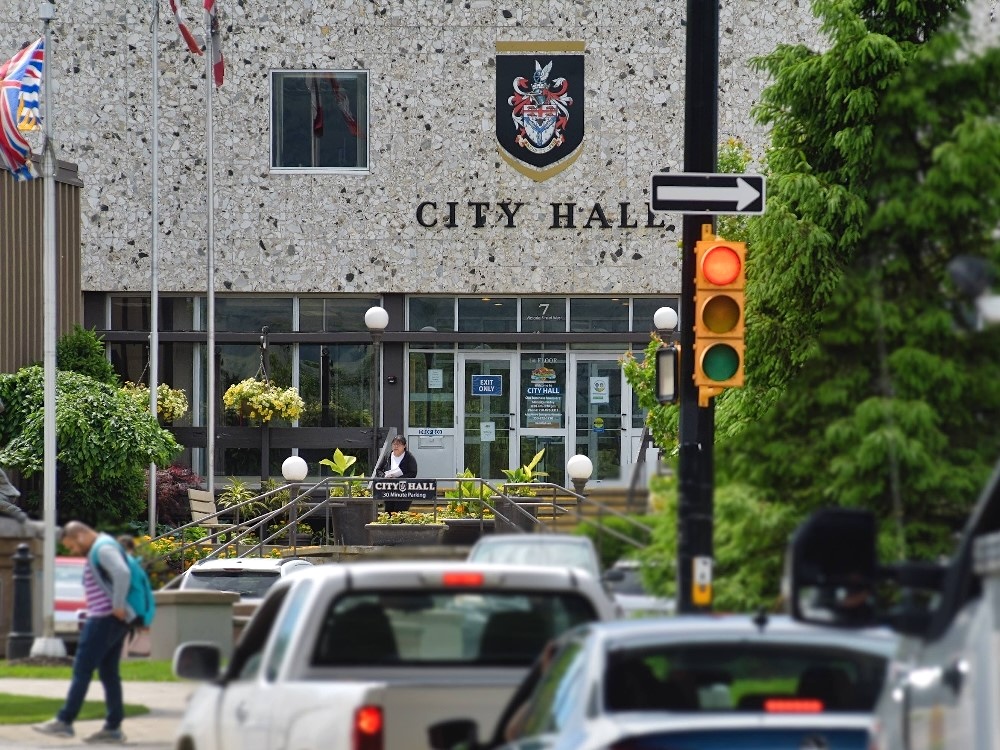
But if the intention had been to restart the relationship and educate a new mayor, the letter and conversation failed miserably. Just like when ASK Wellness sent its letter, Hamer-Jackson interpreted the intervention as a direct, full-force attack.
“It didn’t go very well at all,” the mayor said a few hours after the meeting. “They started reading out the letter and there’s a lot of innuendos in there.”
The letter sparked bitter feelings that continue to animate Hamer-Jackson’s actions to this day.
Even in 2025, when asked whether he has any regrets related to his time in office, he goes back to those early meetings.
“Here we are, Dec. 6, tell me, what could I have done differently here?” he told us. “They’re coming at me.”
At a subsequent council meeting, Hamer-Jackson didn’t just recuse himself from an item involving ASK Wellness; he abandoned the meeting altogether. The details of the letters wouldn’t be released for more than a year. But for onlookers like Dudy, the aftermath of the exchange was one of the first indications that things had gone sideways.
“It said to me that there was going to be a disregard for accountability. To my way of thinking it was ‘If you’re not going to play my game, I’m going to take my ball and I’m going to leave the field.’”
5. Early Conflict
Hamer-Jackson’s issues can generally be plunked into one of two buckets. There are the real and perceived conflicts of interest, as well as the resulting conflicts about those conflicts. And then there are the personal clashes and disputes — the moments when Hamer-Jackson has been perceived to behave poorly, causing discomfort to others, especially city staff and fellow councillors.
In his first few months in office, Hamer-Jackson repeatedly clashed with his top staff, including the city’s top bureaucrat, then-CAO David Trawin. Hamer-Jackson also found it difficult to avoid circumstances where it might appear he was using his office to advance his own personal interests or causes.
The conflicts and controversies played out behind closed doors, in open council meetings and in Kamloops’ local media.
Sometimes the confusion was understandable. Discussions about conflicts of interest frequently involve shades of grey and drawing lines can present legitimate challenges.
On one early occasion, Hamer-Jackson suggested the city relocate a facility it owned that provided services to the homeless. The site was down the street from Hamer-Jackson’s car dealership — about 450 metres away. When it was suggested that the mayor recuse himself, he said the site was relatively distant and that he had been told 100 metres was the threshold for a conflict of interest.
However, Coun. Katie Neustaeter called the situation a “textbook” conflict and Hamer-Jackson eventually recused himself — though only after Neustaeter brought up a provision of B.C.’s Community Charter that allows for citizens to petition a judge to remove a council member found to be in conflict, mayors included.
Staff noted that “each conflict of interest case is unique,” and Hamer-Jackson said he would seek legal advice. But Neustaeter’s suggestion that he could be ousted grated on the new mayor.
“We’re all on the same team, so I just found it a little confusing,” he said at the time. “I could see that some people had well documented on how to get somebody, what do you call it, expelled from office.”
The alleged conflicts of interest accumulated. In a world where politicians usually try to at least appear as if they are separating their personal and professional lives, Hamer-Jackson often does not.
Early in his term, he told a local security firm employed by the city to station employees either at his business or next door to it, depending on whom you believe.
City staff were worried that the move suggested he was wielding — and vastly overstepping — his new mayoral powers to protect his own personal business.
When asked about the mayor’s forced recusal from the December 2022 meeting, a city spokesperson cited the incident as an example of the need for council to speak to lawyers about the legal risks presented by the mayor.
But Hamer-Jackson said he was just looking out for the owners of the neighbouring business. To the mayor, the backlash was not a warning that he needed to be careful when it came to exercising his mayoral authority, but another sign of the forces against him.
In the most blatant case, Hamer-Jackson voted against a project tied to a local developer he is suing for defamation. The mayor removed himself from early discussions on the matter, only to un-recuse himself when it came time to vote.
A code-of-conduct complaint was filed regarding the vote and was later substantiated by a lawyer hired by the city to investigate. Afterwards, Hamer-Jackson filed his own complaint alleging the investigator, Reece Harding, was biased. Harding, who has investigated a series of code-of-conduct complaints for the City of Kamloops, including some initiated by Hamer-Jackson, examined the case himself and then dismissed it as unfounded.
6. Friends in High Places
Having criticized senior municipal staff during the campaign, Hamer-Jackson looked to his own supporters for potential allies at city hall.
Shortly after he took office, in the winter of 2022-23, he attempted to create a deputy CAO role for a woman who worked on his election campaign. In March 2023, he appointed nine members of the public — many friends and some supporters — to standing committees that provide advice and guidance to city staff and councillors. The changes included removing councillors as meeting chairs and replacing them with members of the public, including some who had donated to Hamer-Jackson’s election campaign, and two people who tried but failed to win a seat during the recent election.
The move was met with immediate backlash. The councillors held a joint press conference at city hall and said they were uncomfortable with the mayor’s appointment of committee members who had not gone through a proper application process.
The makeup of council committees is one of the clearest powers of the mayor. But as with most tools of municipal governance in B.C., that power can be severely crimped. In response to the mayor’s move, Kamloops councillors pulled levers of their own to dissolve the committees altogether.
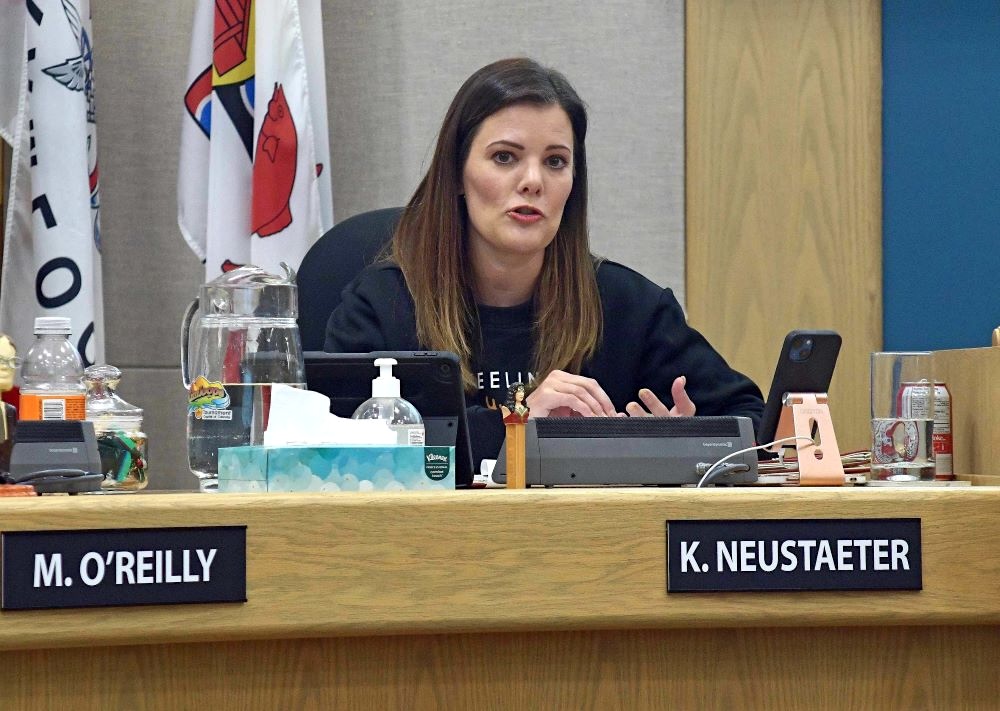
Reading a prepared statement aloud on behalf of all eight councillors, Neustaeter said the mayor had subjected councillors to “violations of personal and professional boundaries, belittling and consistently disruptive behaviour.”
“We must draw the line when this erratic behaviour directly obstructs our ability as your democratically elected representatives to do our job,” the statement read.
Hamer-Jackson later claimed the appointments were only a suggestion, and that he had hand-picked appointees based on their achievements alone.
The committees have since been revived in a form that gives council, not the mayor alone, the authority to choose appointments. But the clash over council’s statement continues to play out.
Three months after council made its stand, Hamer-Jackson filed a defamation lawsuit against Neustaeter, in part for reading the statement. In explaining why Neustaeter was singled out, McMillan told Kamloops This Week that people could infer the mayor might have engaged in sexual misconduct when a “young attractive-looking” councillor was the one suggesting personal boundaries had been violated.
Neustaeter has asked a B.C. Supreme Court judge to throw out the suit, arguing Hamer-Jackson was seeking to silence a political opponent. In late September, as most B.C. mayors and councillors were in Victoria lobbying the province and schmoozing at the Union of BC Municipalities convention, Hamer-Jackson and Neustaeter were in court for an extended hearing that would determine whether the case would proceed. (Neustaeter went to UBCM on the Wednesday.)
Bepple, Neustaeter’s fellow councillor, said the case is about more than a defamation suit.
“The whole idea of how you can behave as a politician is on trial,” she told Castanet. “What Coun. Neustaeter did, she was speaking on behalf of council and her colleagues.”
7. It’s Personal
The clashes over real and perceived conflicts of interest are relatively clear and, by definition, public. Many of the personal issues, meanwhile, are shrouded alternately in innuendo, legal wrangling and competing interpretations.
Hamer-Jackson continues to bristle at any suggestion he has bullied or acted inappropriately toward anyone. And he is annoyed that many of the accusations seem to stem from a confrontation early in his term initiated and secretly recorded by his former friend Sarai — a tape in which the councillor is the one who comes off worse.
One morning in January 2023, Sarai entered Hamer-Jackson’s office and told the mayor he wasn’t being fair to councillors when passing on certain duties. Their argument escalated and the two men yelled and swore at each other. The raised voices could be heard by staffers in city hall beyond the mayor’s office.
“I’ve heard it from three councillors that you’ve told them that Sarai was the worst deputy mayor ever. You never gave me one fucking thing to do ever,” Sarai said, his voice rising.
Hamer-Jackson initially remained relatively calm, but as Sarai continued his spiel, he grew audibly more agitated.
“You know your problem, Bill?”
“What’s my problem?”
“You don’t fucking listen.”
It later becomes apparent that Sarai entered the office to talk to Hamer-Jackson about a text he had sent, seeming to allude to certain councillors being a “starting lineup.”
“This isn’t a fucking five-player hockey team. This could be an 11-player rugby team. We’re all a starting lineup. We got voted in just like you did — you’re no higher than us.”
Sarai grew increasingly angry, shouting, “So you’re not going to fucking apologize? Then you know what? You’re the fucking snake.”
Hamer-Jackson could be heard trying to say something, but he is cut off by Sarai.
“Fuck off,” Sarai snaps. “You’re the snake. You’re the snake.”
Sarai secretly recorded the conversation, keeping the audio file for more than a year before revealing its existence to the mayor, but initially lying about its origins — a decision that would result in disciplinary action, a public apology and calls for the councillor to resign.
“I’m not proud of what I did, but this person brings out the worst of everybody,” Sarai would go on to say.
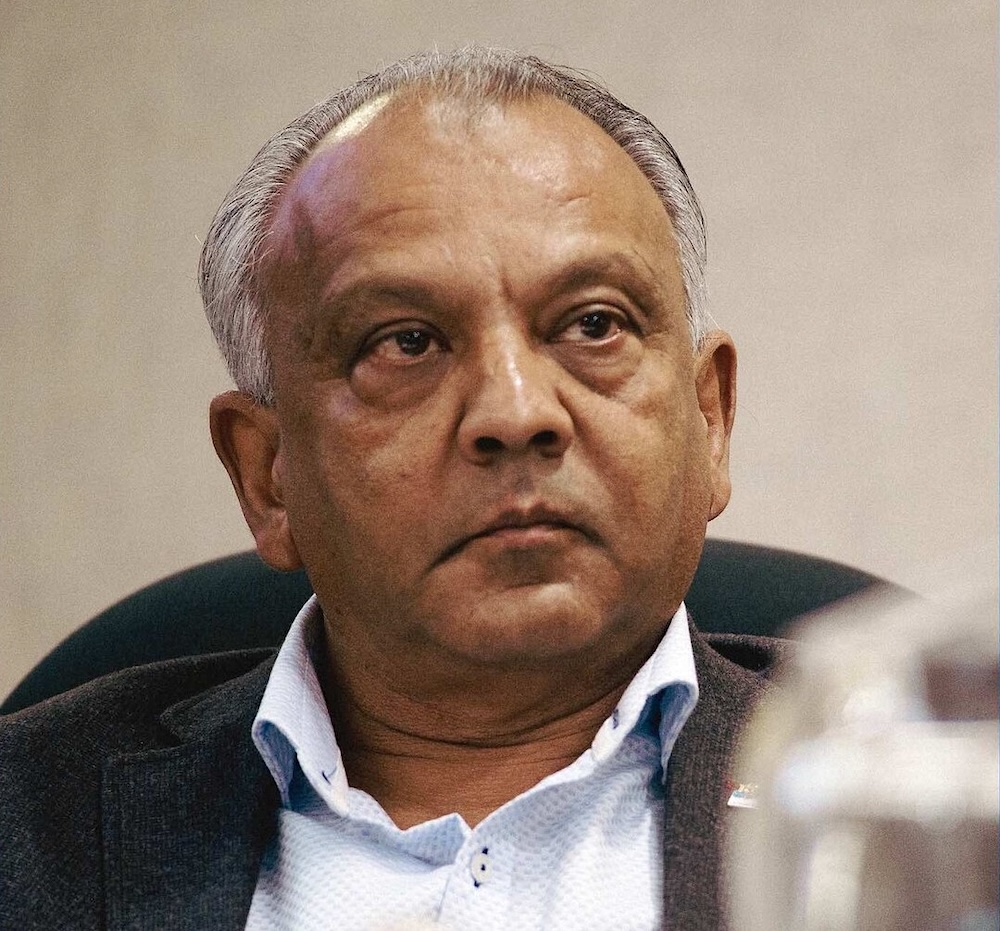
After the loud argument, an unknown person filed a complaint that the mayor acted inappropriately in the workplace. Colleen Quigley, the city’s then-director of human resources, said in a court affidavit that other allegations of inappropriate workplace conduct followed.
The city launched a broad workplace investigation, then hired a third-party contractor to look into the matter. Hamer-Jackson declined to participate.
The probe found the mayor had disrespected several city staffers on more than one occasion. The investigative report, which was later leaked to a reporter, said the mayor was “offensive, demeaning, insulting or abusive” to the city’s top bureaucrat, then-CAO Trawin. It said Hamer-Jackson used his office to threaten Trawin’s job. The report suggested the city restrict the mayor’s ability to directly communicate with certain staffers.
Hamer-Jackson has consistently denied acting disrespectfully and said the report has damaged his reputation in the community.
Trawin went on personal leave months later and would never return to his post at the City of Kamloops. When the city issued a news release in mid-2025 announcing Trawin’s permanent departure, the mayor’s behaviour was cited as the main reason.
8. Various Messiness
As months have dragged into years, messiness has followed Hamer-Jackson at every turn.
In May 2023, council unanimously approved its code-of-conduct bylaw, which outlines expectations for the behaviour of council members and sets out consequences. Since then, nearly 30 code-of-conduct complaints have been filed. Six substantiated complaints alone — four against Hamer-Jackson, two against Sarai — have cost city taxpayers at least a quarter of a million dollars to litigate.
Municipal lawyers investigating the code-of-conduct complaints have found that the mayor has contravened conflict-of-interest rules, misled the public and disclosed confidential documents to news reporters. He was also found to have broken privacy rules when he forwarded photographs — including one depicting homeless people involved in a sex act — while preparing a slide show presentation for a speech at a gala event.

One of the leaked documents was a copy of the same confidential report about workplace bullying — a report Hamer-Jackson had not seen with his own eyes until a copy mysteriously showed up in his mailbox in April 2024. He promptly handed out copies to every Kamloops journalist he could find. B.C.’s attorney general has asked a judge to force the mayor to hand it back because it contains personal information about city staff. Hamer-Jackson says he has temporarily returned his copies, with the matter expected to go to court in October.
In the spring of 2024, Hamer-Jackson suddenly suspended Byron McCorkell, Trawin’s successor as CAO. At the time, the mayor claimed he had “a list” of reasons why, but he refused to attend a special council meeting called to discuss the unilateral move. Council quickly reversed the decision and reinstated McCorkell.
Lawsuits have also piled up. In June 2024, the mayor sued a prominent Kamloops developer for alleged comments made about him at a nightclub. In a legal response to the mayor’s notice of civil claim, the developer accused Hamer-Jackson of having touched his wife’s backside — an allegation the mayor denies. (This was the developer whose project Hamer-Jackson later voted against and was subsequently found to be in a conflict of interest.)
Parts of Kamloops City Hall are now designated no-go zones for unescorted members of council — a development precipitated by the complaints about Hamer-Jackson’s behaviour.
Last year, after the mayor remarked that Neustaeter had passed through one such area solo, she accused him of monitoring her bathroom breaks and “engaging in creepy behaviour.” That’s according to a second defamation suit filed against her by Hamer-Jackson, this one in July.
Also over the summer, Hamer-Jackson filed a report with Kamloops RCMP after Castanet editor Tim Petruk patted him on the back at a local pub. (Petruk said the gesture was a friendly acknowledgment while leaving; Hamer-Jackson said it was assault. Police investigated and quickly closed the file, determining no crime had been committed.)
Since becoming mayor, Hamer-Jackson has hired three separate lawyers to take on his cases. The first two have taken him to court separately over outstanding legal bills.
9. Woe Is Me
From the start of his term, Hamer-Jackson has felt under attack.
It’s been a rallying cry for some of his supporters. Hamer-Jackson has indicated he will run for re-election next year. Some Kamloopsians have said that while they voted for other mayoral candidates in 2022, they now back Hamer-Jackson, whom they see as an underdog who has been unfairly targeted by council while attempting to change the status quo.
But as Kamloops has become a provincial laughingstock for its governance troubles, most outsiders who have arrived to lend their eyes and insight have found Hamer-Jackson to be the chief source of the discord.
Harding, the Vancouver lawyer hired to investigate several code-of-conduct complaints, wrote that the mayor has taken criticism of his conduct personally.
“I acknowledge that Mayor Hamer-Jackson feels embattled, isolated and undermined by the rest of council,” he wrote. “However, that does not give him licence to ignore the ethical rules created by the legislature through the enactment of the Community Charter and reinforced by the council through the adoption of the code of conduct.”
A year into Hamer-Jackson’s term, council asked the province to appoint an adviser to help it sort through its dysfunction. The province turned to former Abbotsford mayor Henry Braun, who started work at the job in February 2024.
Over the next three months, Braun spent hours talking with Hamer-Jackson, staff and council. Most of his time, though, was spent with the mayor. One such meeting lasted for five hours.
Braun and Hamer-Jackson could have formed a quick bond. Both are businessmen with winding speaking styles and seem generally happy to meet and talk at length with new people.
But even as the meetings with Braun were taking place, Hamer-Jackson was taking unilateral actions that appeared at odds with his power. Those included suspending McCorkell and releasing information from closed-door meetings.
Braun’s report laid the blame for staff departures on Hamer-Jackson’s “confrontational style and public disparagement of city staff.”
And the report didn’t provide much hope that the mayor was interested in altering his approach. Hamer-Jackson displayed a “contempt for authority structures” that undermines collaboration, wrote Braun.
Hamer-Jackson repeatedly sought Braun’s advice in those hours-long meetings, but Braun said none of it appeared to be considered. “I did not observe that the Mayor acted on that advice even once,” he wrote in his report.
Rather, Braun said Hamer-Jackson failed to acknowledge he could have done anything differently.
“I have observed the mayor avoiding responsibility for his actions or inactions,” he wrote.
Braun suggested council could improve its own education and communication. He also recommended creating off-site activities that would bring council and the mayor together, to allow them to exchange different perspectives in a non-confrontational setting, and to amend the city’s code of conduct to sanction breaches.
He also said the mayor should try to better accept constructive criticism, admit mistakes and misunderstandings, and try to seek feedback. Braun wrote that harbouring and raising slights “months and years later hampers the city moving forward and is unproductive,” and he urged Hamer-Jackson to move past his grievances.
Braun, though, was gloomy about the prospect for improvement.
“Absent significant change in how the mayor interacts with others, I’m not optimistic that there will be any improvement during the remainder of this term,” he wrote.
Braun’s report led Kamloops’ eight city councillors to jointly call for Hamer-Jackson’s resignation, but he refused.
10. Nothing Changes
Braun was right. Little has changed since the report. There have been more lawsuits and more turmoil.
Council has penalized Hamer-Jackson repeatedly. His office has been moved to the basement of city hall. His pay has been docked after he leaked more confidential documents. It hasn’t stopped the discord.
Hamer-Jackson spoke for more than 90 minutes during an initial interview; he then called back several days later for another lengthy discussion. He also shared a series of text messages. Nearly every question ended with Hamer-Jackson reverting to talking about the events that transpired immediately after his election, how news stories portraying those incidents were incorrect, and how David Trawin and others were in the wrong — not him.
He has not let anything go.
After our first interview, Hamer-Jackson called back at one point to discuss a question about why he thought it worthwhile to send the email that prompted Neustaeter’s comment about him monitoring her bathroom breaks.
Asked again about what, in retrospect, he might have done differently, he initially placed the blame on others.
“I’ve learned a lot,” he said. “Again, I was never a mayor. I was kind of expecting some help from — we’ve gotten five new councillors and three incumbents — so I was expecting some help from them.”
Very briefly, and for the only time in two hours of interviews, Hamer-Jackson acknowledged it was possible that he had made mistakes, as well. Then he immediately pivoted to the ASK Wellness showdown three years ago, and the fact that he was left out when the city’s lawyers discussed the legal ramifications of the letters sent between his lawyer and the non-profit.
“I’m sure there’s things that I’ve done wrong, obviously, not knowing a lot of it, right? And I didn’t know a lot of the procedures. It’s like, right away, right out of the chute, the first two closed meetings they had without me,” he said. “They just block me out right there.”
Although it is uncommon for a council to decide to exclude one of its members, the powers of local government officials to handle delicate conduct and confidentiality matters are subject to case-by-case legal decisions and not always clear, but dependent on the interpretation of lawyers, according to one expert we spoke to.
For its part, the City of Kamloops says it has a right to safeguard its solicitor-client privilege when individuals hold personal interests deemed to be adverse to those of the city.
11. The Challenge
Hamer-Jackson has more than a few backers in Kamloops. But it is notable that, in today’s modern political climate, so many insiders and outsiders have come to the same conclusion about his fitness for office.
Kamloops city council has been united in its position on the mayor’s conduct. His pleas have fallen on deaf ears. Multiple city staffers have left. It’s possible that at least some will receive payouts.
“He's just laying waste to the proper protocols and has no concept that that comes with a financial cost when you have up to six senior staff who could sue us for wrongful dismissal or constructive dismissal,” Bass said.

It’s hard to know the full cost of the dysfunction, but in July, Coun. Mike O’Reilly said Hamer-Jackson has cost the city “close to over a million and a half dollars.” Hamer-Jackson disputes that figure.
Highly respected municipal governance wonks like Braun and Harding from outside Kamloops have delivered common verdicts about Hamer-Jackson.
And when someone decides that Hamer-Jackson has done something wrong, he tends to look for reasons to discount them and their accounts.
After Braun delivered his critical report to city council, Hamer-Jackson picked at details, noting that one meeting declared to have been held on Feb. 13 actually took place on Feb. 12. — though in doing so, Hamer-Jackson himself got the year wrong. In an interview for this story, Hamer-Jackson suggested Braun wasn’t to be believed because his son had worked for the City of Abbotsford while he was mayor.
Allison Habkirk, a former mayor of Central Saanich who is both an instructor at Capilano University’s school of public administration and a consultant for local governments, said Braun’s report was “one of the most amazing analyses of a situation like that I’ve ever read.”
Braun, for his part, expressed a sense of futility and noted that he didn’t have any real power to do more than recommend ways both sides could improve their relationship.
“I was accused of being an investigator. I said, ‘No, this wasn’t an investigation — I was just supposed to go to listen to what people had to say,’” he said. “It was not a fun report to write.”
The turmoil in several B.C. communities, but most prominently Kamloops, has led the provincial NDP government to consider new ways that councils might hold their cities in the face of rogue colleagues. But even as the NDP has floated changes that could affect politicians like Hamer-Jackson, there has been no sign the B.C. Conservatives want anything to do with the Kamloops mayor.
Tony Luck, the Conservatives’ critic for municipal affairs, declined to discuss the issues in Kamloops in detail but noted the situation seemed to be “very frustrating” for all involved. Luck told us he generally supported efforts to provide more provincial enforcement of code-of-conduct breaches, with appropriate safeguards to ensure free speech is protected and new measures can’t be weaponized.
12. The End
In the end, the Kamloops saga is not really much of a saga. There is not much nutritional value to the plot.
Yes, there are events. This summer, Bill Sarai appeared at a large downtown car show in his position as stand-in deputy mayor. He was shouted at by supporters of Hamer-Jackson, with the mayor himself — stripped of his powers and ability to perform even the ceremonial duties that would otherwise be his — allegedly calling Sarai a “motherfucker.”
But there is no real arc or story progression. Lawsuits have been fired off, legal bills incurred, subplots have come and gone. But all the pain and anger and conflict between Hamer-Jackson and the rest of Kamloops council remains.
Hamer-Jackson swears he is a victim.
“I’m having to sell assets and it’s just crazy,” he said. “I believe this is a challenge to democracy. I’m just a regular guy trying to make a difference.”
In affidavits submitted to court for Hamer-Jackson’s first defamation suit against Neustaeter, his wife and daughters wrote about being subject to “humiliation.”
Because of the accusations, Hamer-Jackson’s wife wrote that her husband “suffers sleeplessness. He has trouble focusing. He is rarely ‘present.’”
For Neustaeter, meanwhile, the conflict with the mayor has become part of an ongoing family tragedy. Some of the allegations in the mayor’s lawsuit revolve around conversations between Hamer-Jackson and her father, former Kamloops MLA Kevin Krueger. Though Hamer-Jackson says he was unaware at the time, Krueger’s family says he has been suffering from the effects of advanced dementia for some time.
For those closest to the matter, the conflicts and dysfunction have had profound and lasting impacts.
But if you walk down the streets of Kamloops today, you won’t find signs of governmental anarchy — unless maybe you were at that car show. The city’s work is still getting done. Kamloops remains a relatively successful mid-sized city with a young and diverse population and one of B.C.’s liveliest community arts and events scenes.
For observers like Terry Lake, a former Kamloops mayor who went on to serve as a provincial cabinet minister, the city is still working. And government itself is still working, held together by a council unified by a common direction, both in terms of everyday policy and in relation to its erratic mayor. Lake says people in Kamloops are still getting along, even as he mourns a loss of potential for the city he loves.
“It’s just this feeling,” Lake said. “We could be seen as a brighter light in the province if we didn’t have this situation and the distraction of lawsuits and accusations and a mayor that doesn’t go into his office at all.”
For both Lake and Braun, Kamloops’ mayoral saga is an indication that the province should consider how members of the public can not only elect their politicians, but potentially oust them as well. They both said the last three years have demonstrated that no amount of training for newly elected politicians can ensure a mayor acts like a mayor.
“Some people aren’t trainable, to be honest,” Lake said. “A lot of people thought, ‘Well, once he’s got an idea of how it works it’ll be fine’ — but he’s never accepted the way a city council is supposed to work and the way city council is supposed to work with administration. It’s a team game, and unless you develop a team you’re just one person tilting at windmills.”
Tomorrow, we explore what the provincial government — and four current and former mayors — say might need to be done to bring order to dysfunctional council chambers across the province. ![[Tyee]](/design-article.thetyee.ca/ui/img/yellowblob.png)
Read more: Politics











Tyee Commenting Guidelines
Please note that email notifications for replies are not currently working due to a software issue which may be resolved in a future update.
Comments that violate guidelines risk being deleted, and violations may result in a temporary or permanent user ban. Maintain the spirit of good conversation to stay in the discussion and be patient with moderators. Comments are reviewed regularly but not in real time.
Do:
Do not: