

 SHARE:
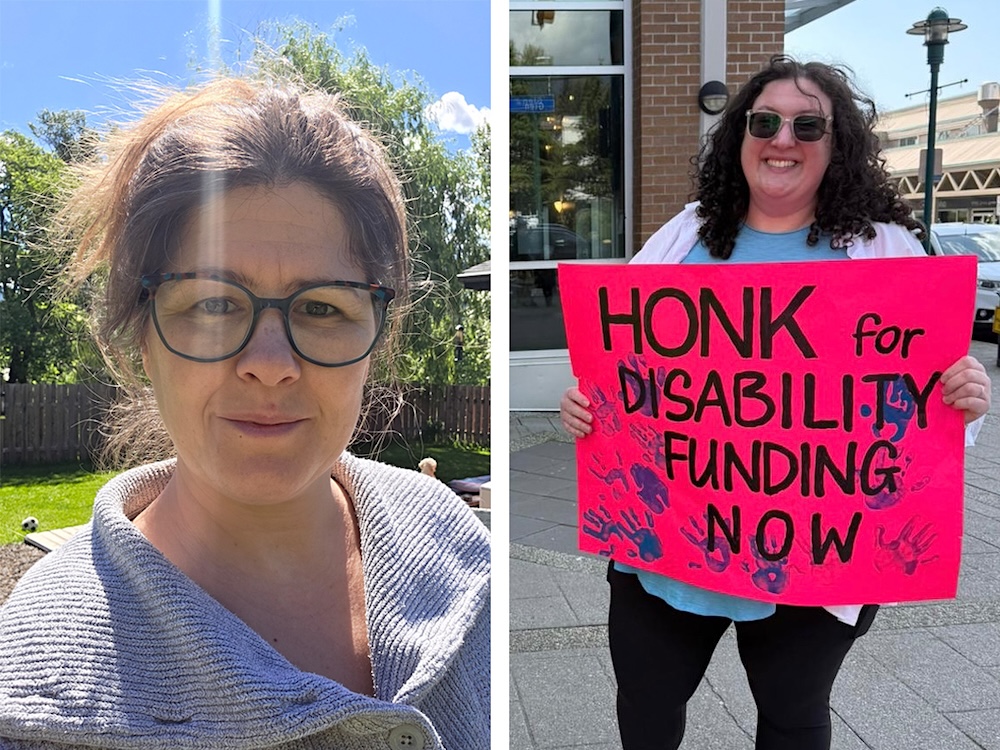
Parents Sara Lindberg and Lynn Henderson say changing the province’s direct funding formula for supporting kids and youth with disabilities is a good thing. They just don’t understand why the shift in approach will result in a loss of funding for their autistic children’s needs.
“The expansion to other disabilities is long overdue,” said Lindberg, who along with Henderson is a member of the grassroots, parent-run BC Families for Fair Autism Funding.
Henderson lives in Fernie in B.C.’s East Kootenay region, while Lindberg lives in Port Moody in the Lower Mainland.
Both moms have primary-school-aged children with a Level 1 autism diagnosis, as determined under the Diagnostic and Statistical Manual of Mental Disorders. Unlike some people with autism, the children have no co-occurring intellectual disabilities.
Currently the children are part of the Ministry of Children and Family Development’s autism funding program. Eligible children receive funding to help their families cover autism-related expenses such as speech language pathology, physiotherapy and occupational therapy.
Children under six who are eligible for funding have access to $22,000 per year to cover supports (in 2010, this amount was increased from $20,000 per year). Children and youth six to 18 years old receive $6,000 annually, an amount that has not changed since funding was announced in 2003.
But kids in B.C. with other disabilities that are not medically complex, or who are waiting on a disability diagnosis, currently receive no direct government funding at all.
It’s an “unfair burden” on those kids and youth and their families to never receive financial help from the province for their support needs, the two moms say.
That will change next April when the ministry’s current child and youth disability funding programs will be replaced by a new disability benefit open to more kids and youth with disabilities in B.C.
The province is investing $475 million in new funding to provide more families with access to services and supports for their kids with disabilities, many for the first time.
“Families have told us the current system isn't working for many children. Too many receive no support at all, while others struggle to navigate a system that doesn't reflect their child’s needs,” reads an emailed statement Children and Family Development Minister Jodie Wickens sent to The Tyee.
“When children and youth can’t access the supports they need, it can have serious impacts, and that is the reality many families are facing today.”
But Lindberg and Henderson say the government’s new disability benefit will exclude their autistic kids, because the government doesn’t seem to view their autism diagnoses as severe enough.
“You don’t fix a government system by disadvantaging another group of children,” said Lindberg.
This loss of funding for their children’s autism supports is particularly concerning to Henderson and Lindberg because academic research shows an increased risk of suicidality — suicidal ideation, suicide attempts and suicide deaths — among autistic people who do not have a co-occurring intellectual disability.
One study found autistic people without an intellectual disability are 9.4 times as likely to die from suicide compared with the general population.
Without adequate financial support for the tens of thousands of dollars families spend annually on supports such as behaviour interventionists, physical therapists and other necessary services to accommodate their children’s needs, Henderson and Lindberg are concerned their kids’ mental health will deteriorate.
It’s not the severity of a child’s or youth’s autism diagnosis that predicts increased suicide risk, said Connor Kerns, an associate professor of psychology at the University of British Columbia. Rather, the key factor is the absence of a co-occurring intellectual disability.
Kerns’ research focuses on anxiety, stress- and trauma-related disorders among children, particularly those on the autism spectrum. She said Henderson’s and Lindberg’s concerns are justified.
“Most children with autism also have co-occurring mental health conditions that can put them at risk for suicidality,” she said.
“A lot of the reasons that some of the kids with mental health concerns on the spectrum that I work with are feeling so lonely and depressed is because they actually do have more awareness of the differences, the ways that they’re being excluded. They can develop more hopelessness. They’re aware of when they’re not being supported, when they’re struggling to access services.”
That is relevant to the potential loss of government funding for services, Kerns added.
New funding model will result in fewer benefits for some families
There are two enrolment pathways for the new B.C. Children and Youth Disability Benefit that comes into effect next April: automatic direct inclusion and needs-based review.
Under the new disability benefit, eligible children and youth will receive anywhere from $6,500 to $17,000 annually, depending on their level of need.
That is a drop in individualized funding that kids and youth under the current autism fund receive: $22,000 annually for children under six and $6,000 annually for kids aged six to 18.
The ministry’s guidebook for the transition to the new funding system appears to show that neither Lindberg’s nor Henderson’s children will qualify for automatic direct inclusion in the disability benefit.
The guidebook includes a list of needs and diagnoses that automatically qualify for the direct inclusion pathway. The document does state the list is not complete and could include other children with other disabilities, as admission is based on need, not diagnosis.
“The new model does not determine eligibility based on autism diagnosis alone, nor is it determined by autism support level,” a ministry spokesperson told The Tyee via email. “Eligibility is based on a child’s individual support needs and functional impact.”
But Henderson and Lindberg say that because it highlights “autism with the most significant and pervasive needs” for automatic direct inclusion qualification, including “profound autism,” “Level 3 autism” and “autism (any level) AND intellectual disability,” they believe their children will be excluded.
The second option for accessing the disability benefit, a needs-based assessment method, won’t be finalized until after the autism funding program is replaced by the new benefit.
That means Henderson and Lindberg remain unclear on whether their kids or those with similar diagnoses will receive any funding at all between April and July 2027, when the new B.C. Children and Youth Disability Supplement will start.
At $6,000 per year, reduced based on adjusted family net incomes of over $50,000 annually, the supplement is less money than the disability benefit.
The supplement phases out entirely for families with one eligible child that have an annual adjusted net income of $200,000 or more. For households with two or more eligible children, it phases out at $350,000.
Eligibility for the supplement is open to all kids and youth who are also receiving the federal disability tax credit.
Regarding the disability benefit, “the Needs-Based Review Pathway is one part of a broader system of supports and does not replace or delay access to existing supports,” a ministry spokesperson told The Tyee via email.
The ministry’s funding transition guidebook includes four examples of children with disabilities and whether they are eligible for the new financial supports. This includes “Ollie,” who, like Henderson’s and Lindberg’s children, is autistic with no co-occurring intellectual disability.
“Ollie” is not eligible for the disability benefit, the guidebook explains. He is eligible for the disability supplement. But because his adjusted family net income is $120,000, he will receive $3,200 per year to go towards his supports.
According to the ministry’s guidebook, “Ollie” would have received $78,000 total between ages six and 18 under the current autism funding program.
Under the new disability support system, he will receive about $42,000 altogether from age six until he turns 19.
The high cost of caregiving
Both the Lindberg and Henderson families are currently topping up their government autism funding with thousands of dollars of their own money.
For example, Henderson’s son, who is five, is currently eligible for $22,000 annually from the ministry. If they could afford the amount of services he requires to be fully supported, including weekly occupational therapy and behaviour interventionist sessions, it would cost them about $31,000 annually.
Henderson said they already know they will have to cut her son’s services down next year, even if he does qualify for the disability benefit and the supplement. That’s because the costs are much higher than what the province is offering families.
“I wish they lived a day in my fucking life,” said Henderson.
“My child has a pathological demand avoidance profile and can become aggressive when his nervous system feels threatened. I was physically abused before. And it’s been very hard to separate hiding in the bathroom from my child and hiding in the bathroom from a man.”
Henderson runs her own bookkeeping business. But her business has suffered from the stress of balancing work with caregiving, she said. The family has gone into debt since her little boy was diagnosed with pediatric autoimmune neuropsychiatric disorders associated with streptococcal infections, or PANDAS, two years ago.
PANDAS can exacerbate autism symptoms, which were already present in Henderson’s son. The PANDAS diagnosis spurred the family to get their son assessed for autism. But the wait-list for a government-funded assessment was up to two years.
Instead, the family borrowed money from a line of credit and drove to Calgary, where they stayed in a hotel for several days so Henderson’s son could undergo a private psychological assessment.
After receiving his diagnosis, his school successfully accommodated him at first. The kindergarten class has a permanent education assistant, but a second was assigned to the class for the first two months of the school year. This provided a lot of direct attention and support for Henderson’s son.
But when the second worker’s contract ended, the class’s sole education assistant had to divide their attention among many kids with support needs. As a result Henderson’s son struggled and eventually stopped going to school.
His school district is still receiving the Education Ministry funding for in-school supports for kids with autism, which comes to $24,340 per child annually.
But even if he were in school, not all the funding would go to supporting Henderson’s son. B.C. school districts pool the money received to cover all the kids with disabilities, including those who do not yet have a diagnosis or whose diagnosis doesn’t come with government funding for schools.
Now that he’s no longer in school, Henderson’s son has left the house only a handful of times in the past few months because of his anxiety and autism-related sensory issues. Because her son struggles with separation anxiety, Henderson doesn’t leave the house much anymore either.
“I work during the night to try to keep my business afloat,” she said. Henderson has lost clients, and her family has missed credit card payments because of the stress associated with balancing her job with her son’s care, her advocacy work around funding for kids with autism and her own neurodivergence.
Henderson and her husband also have their own health issues that cost them $36,000 in out-of-pocket expenses annually. They have minimal coverage through personal health benefits.
Combined with the loss of income from her business, their debt and the increased cost of living everyone is struggling with, Henderson is afraid they will lose their house.
“I don’t know what to do,” she said.
Smart and charismatic, Henderson’s son can do math problems well beyond his grade level, she said. But he gets frustrated when he sees his peers doing things he struggles more with, such as learning to read. As a result he often physically lashes out.
When children with disabilities have support needs that aren’t being met, it is typically their mothers who stay home full time to be caregivers or to home-school their kids, Henderson said. This can affect their career trajectories, which puts families in financially precarious situations.
“It is a systemic issue against women,” she said through tears. “I don’t see how this is allowed to happen.”
Gaps in disability funding
Under the current ministry funding program, children and youth with autism receive the most direct funding by far.
Children with intellectual disabilities such as Down syndrome, for example, do not receive any direct funding for services unless they fit under the At Home program for children with severe disabilities who have complex medical needs.
The At Home program will continue after the disability benefit rolls out next April. But its associated School-Aged Extended Therapies program, which provides funding for occupational therapy and physiotherapy for kids enrolled in the At Home program, will not.
Kids without a diagnosis for their disability are also currently unfunded. Wait-lists for assessments through the ministry are months to years long, depending on where you live.
But even after a diagnosis, there can be a delay in receiving funds.
“It took three months from us having a diagnosis to actually having funding in place” under the current autism funding program, Henderson said.
This is why the funding formula for kids with disabilities is changing, said Children and Family Development Minister Wickens. So all kids with disabilities who have unmet needs receive some kind of support.
“I understand that any change can create uncertainty and stress for some families, and as Minister I am committed to supporting them every step of the way,” she wrote in an email sent to The Tyee.
The Tyee requested an interview with Wickens, but she was not made available.
Wickens told The Tyee in an email that it’s not accurate to say there are children who won’t receive some kind of support after the disability benefit begins next April.
“Eligibility is based on a child’s individual level of need, and many children with autism, including those without an intellectual disability, will qualify for support,” her statement reads.
The ministry guidebook for the funding transition notes that “Ollie” doesn’t qualify for the new disability benefit and will receive only $3,200 under the supplement.
And “Ollie” also has access to government-funded services through one of the government-subsidized child development centres.
This is another support option open to kids ineligible for the disability benefit, Wickens told The Tyee via email, adding that the province is investing $80 million over three years to expand community services for kids and youth with disabilities across B.C. by 40 per cent.
Fernie, a small town in the East Kootenays, is not currently serviced by a government-funded child development centre, Henderson told The Tyee.
But even communities that do have the centres experience long waits for supports, said Lindberg, whose daughter was referred to Kinsight, a nearby government-funded child development centre, by her preschool.
“It took us from March until August to be able to get in, and that was just for occupational therapy and physiotherapy,” Lindberg said, adding that her daughter had to find speech language pathology services elsewhere.
“Public services are important and wonderful, [but] they’re definitely not the only thing that is going to help people. Or that is even accessible for everyone.”
Asked about the suicide risk for kids with autism who may lose funding support, a Children’s Ministry spokesperson told The Tyee via email that the autism funding program was never about providing mental health supports.
Instead, they pointed to the $35 million the ministry has invested in child and youth mental health services in B.C.
But UBC’s Kerns said the province is “playing catch-up” with mental health services for kids with disabilities.
“Part of what goes on for kids with autism, but also other kids with disabilities, is the ability to access appropriate mental health care is really diminished, because of their autism diagnosis,” she said, adding that is a focus of her work.
“A lot of mental health clinicians don’t necessarily feel comfortable supporting autistic children or feel like they have evidence-based strategies to help them and their families.”
The BC Disability Collaborative is an umbrella organization of grassroots advocacy and professional organizations representing people with disabilities, their families and the support workers they rely on. It was formed during the province’s previous failed attempt to reform funding supports for kids and youth with disabilities.
On June 24 the collaborative put out a press release criticizing the new disability benefit and supplement eligibility criteria, questioning whether early intervention will be prioritized and noting a lack of reassessment pathway for children and youth whose needs change over time.
“Families are not simply asking whether some support exists. They are asking whether the support that is available will be sufficient, timely, flexible, and responsive to their children's individual needs. This is a crucial distinction,” the press release reads. “The Ministry's response focuses primarily on access. Families are concerned about adequacy. The Ministry states that no child will receive nothing. Families are asking whether they will receive enough.”
The collective wants the province to commit to accountability through publicly documented performance measures regarding the success of the new funding model.
Measures would include wait times for community services, particularly in rural and remote areas; family satisfaction; access to culturally relevant supports; and the effectiveness of early intervention across disability groups.
Lindberg and Henderson want the province to provide the disability benefit minimum funding levels for all kids with disabilities, not just those with autism. Children with higher needs would receive the $17,000. And both funding amounts would be indexed to inflation to ensure funding levels no longer remain stagnant.
Funding for family counselling should also be maintained, Lindberg added, for parents as well as siblings.
“That is part of the life-saving therapies that people access through this funding,” Lindberg said.
They would also like the maximum family net adjusted income level where the $6,000 disability supplement begins to drop — family net incomes greater than $50,000 — to match that of the federal disability child benefit, which begins phasing out for family net incomes above $82,847.
“Let’s call a spade a spade: the disability supplement is not a replacement for the autism funding,” Henderson said. “It is an income top-up for the struggles of what families of disabled children endure.” ![[Tyee]](/design-article.thetyee.ca/ui/img/yellowblob.png)









Tyee Commenting Guidelines
Please note that email notifications for replies are not currently working due to a software issue which may be resolved in a future update.
Comments that violate guidelines risk being deleted, and violations may result in a temporary or permanent user ban. Maintain the spirit of good conversation to stay in the discussion and be patient with moderators. Comments are reviewed regularly but not in real time.
Do:
Do not: