


 SHARE:
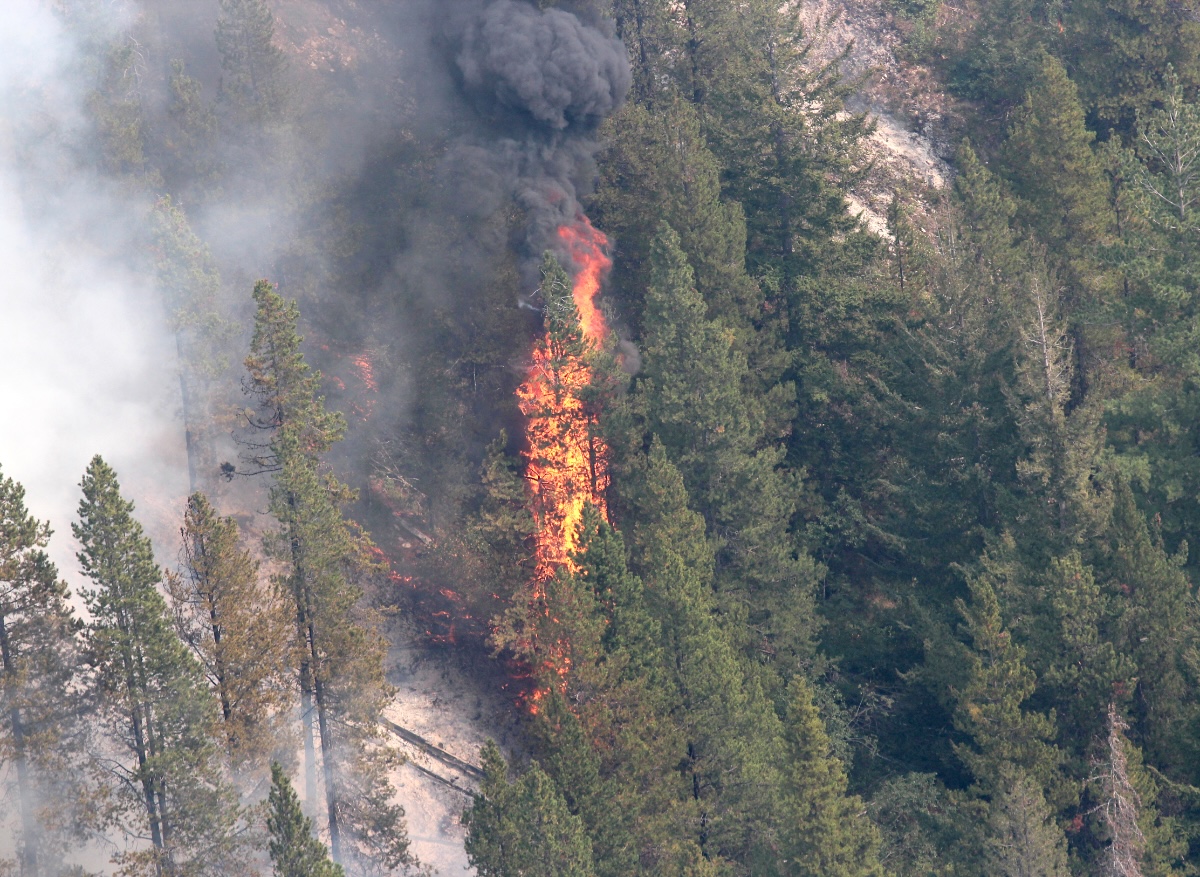
The helicopter tilts right, then banks hard to the left. Beneath it, dense white smoke billows from trees and over logging machines building a key fireguard. Somewhere below, firefighters haul hoses through the underbrush.
It’s just past noon in the smoky forests south of Merritt, and in the helicopter and on the radio, once-relaxed voices have become more clipped. There is an undercurrent of annoyance at a massive fire that, once again, just will not behave.
Pilot Brandon Akeroyd peers out a window, trying to locate other aircraft. A firefighter on the ground reports seeing flames beyond the guard meant to stall the progress of the Ainslie Creek fire. He asks for help from above, but is met with bad news.
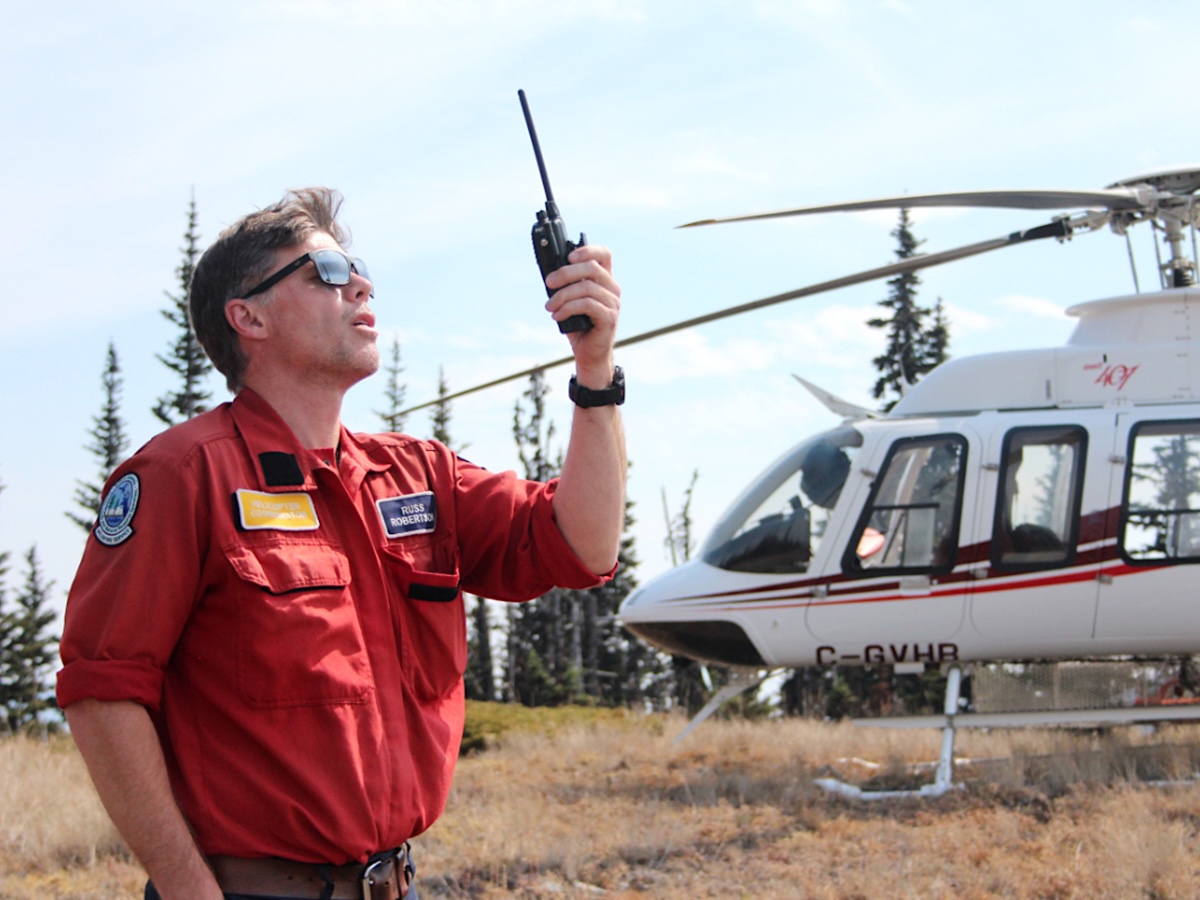
In the passenger seat next to Akeroyd, Russ Robertson, a veteran firefighter turned helicopter co-ordinator, surveys the smoke. It’s too thick for a helicopter to help, he tells those on the ground. They’ll have to do their best to quell the flames.
“It went from going great to going to shit, eh?” someone says into the radio.
A battle in the sky
Large, devastating fires like those B.C. has witnessed this year frequently spark complaints and questions from the public: Why are there helicopters sitting at the local airport while smoke billows from a nearby mountain? Why are no squadrons of water bombers coming to the rescue?
While officials might compare fighting a firestorm to spitting into a campfire, it does little to dispel the complaints that more could and should be done — in particular as anxious residents are evacuated and wait to hear if their homes, farm animals and pets have survived.
To better understand how aircraft are used as a tool in wildfire fighting, The Tyee climbed aboard a Bell 407 deployed to one of the province’s largest wildfires.
Flying above the Ainslie Creek wildfire, the massive 667-square-kilometre blaze south of Merritt, The Tyee witnessed the co-ordinated battle to keep the flames away from rural communities, First Nations and one of B.C.’s busiest transportation corridors.
The aerial observations, radio conversations between ground and air crews and candid interviews with Ainslie Creek’s air command shed new light on how B.C.’s wildfire officials use aerial resources at their disposal.
We observed wildfire fighters’ optimism about new technology and increased resources, but also the steep logistical, regulatory, physical and environmental challenges that come along with aerial firefighting.
If you think you hate smoke, you should be thankful you aren’t a pilot.
‘Bingo!’
It’s a little after 11 a.m. and Akeroyd, a pilot with two decades and 9,900 hours of experience in the cockpit, is flying above a densely forested valley southwest of Merritt.
Robertson, sitting left-seat shotgun, is happy, for now. As a helicopter co-ordinator and veteran firefighting tactician, Robertson’s job is to supervise the pilots in the area and make sure the crews on the ground get the aerial support they need.
“It’s looking great,” Robertson says into his headset.
He likes what he sees here on the east side of the Ainslie Creek wildfire, despite the thick smoke clouding everything.
Below Akeroyd’s “ship,” a red-and-white striped “heavy” helicopter hovers above a stream of white smoke. It’s one of six “heavies” assigned today to the Ainslie Creek wildfire. As we look on, its pilot opens a hatch to allow hundreds of gallons of water to rain down on the fire.
“Bingo!” Robertson says.
The heavy machine pivots and heads to a nearby “dip,” a water source accessible to helicopters, to refill.
Robertson tells Akeroyd to point his helicopter to the south, toward another section of forest — and fire.
Just a few minutes later, the pair — plus The Tyee in the back seat — arrive in a tight valley where a more complex and higher-stakes battle is being fought.
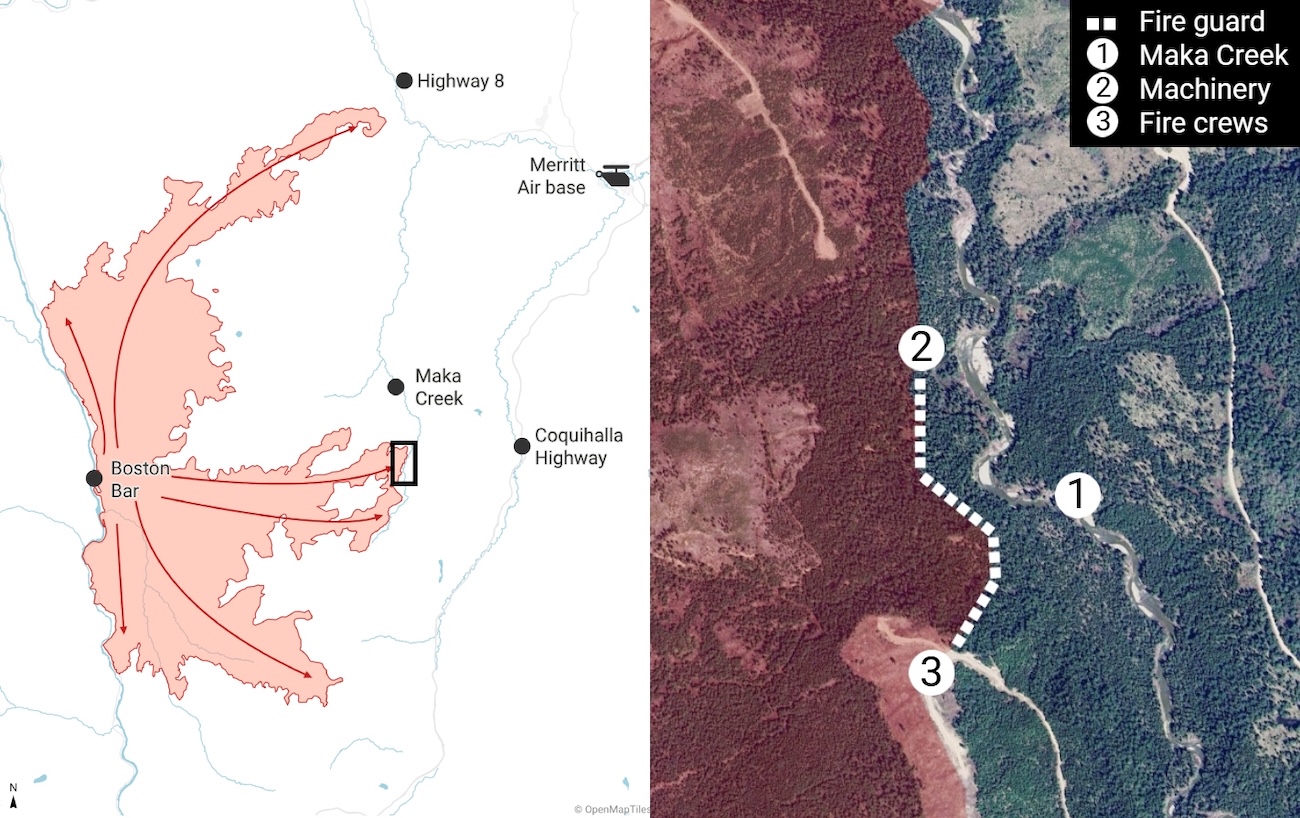
At the bottom of the valley is a small creek punctuated by frequent logjams. A web of forestry roads connecting logged cutblocks weaves its way up both sides of the valley. Lazy streams of white smoke are drifting from various bits of forest on the western side of the valley.
It’s here where the fire equivalent of trench warfare is being fought. For the last week, fire crews have been trying to keep the Ainslie Creek wildfire upslope and west of the creek.
The stakes are incredibly high. The coming days are expected to bring heat, then high winds. If the winds push the flames beyond the creek and crews can’t quickly snuff them out, it might take the fire only a couple of hours to travel the 10 kilometres to the rural community of Kingsvale, the Coldwater Indian Band and the Coquihalla Highway. Homes, lives and transnational commerce would all be at risk. And bad weather is in the forecast.
Wildfires are often pretty tame. On most days, they will burn at a low intensity and move at a crawl, with flames only occasionally reaching waist high.
Most fire growth occurs on a relatively small number of “fire weather” days, when high winds can push flames into the crowns of forests and bring movement of a dozen kilometres in a single day.
Since making a major push on Aug. 7 and 8, the Ainslie Creek fire has lingered in the hillside above Maka Creek for days, slowly chewing its way through underbrush. Absent wind, fires don’t like to travel downhill, and although the days have been warm, flames have only occasionally risen into the forest’s overstorey.
That has allowed crews time to work to build fireguards. Using the network of forestry roads as a starting point, the crews hope to block the flames’ progress downhill in the days to come.
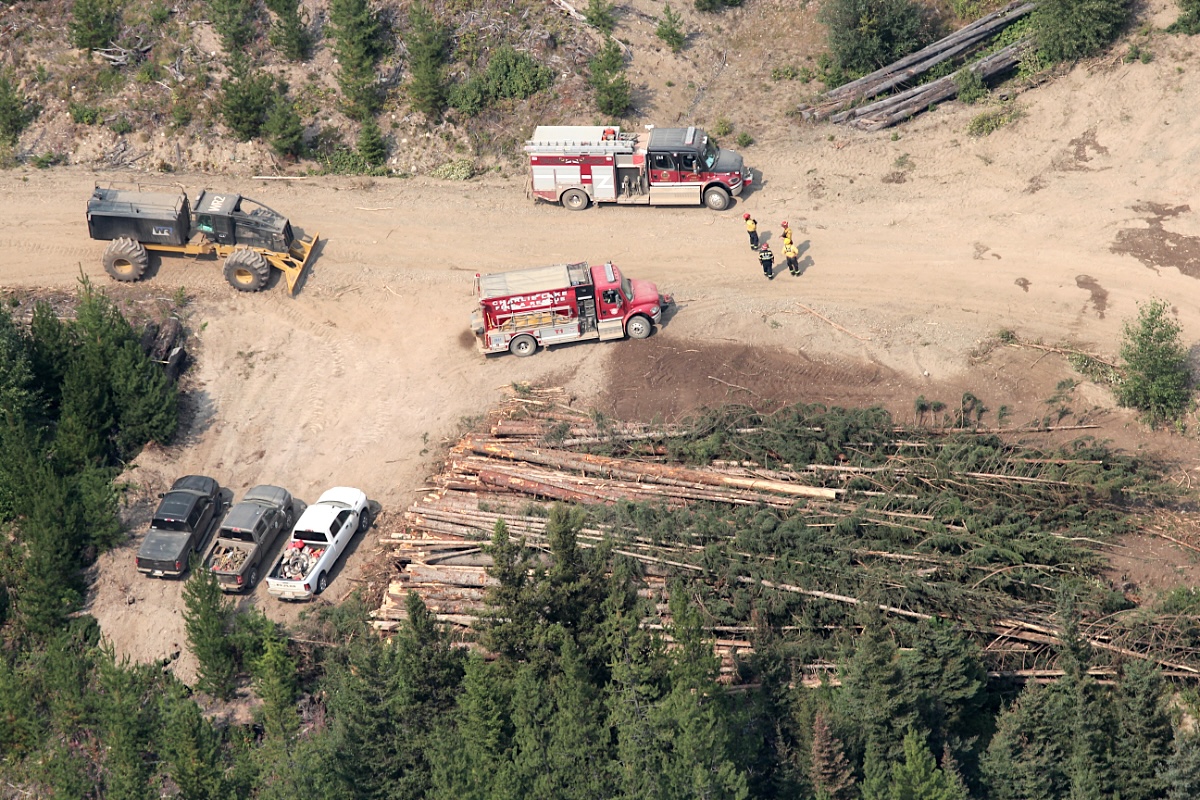
Today, logging machines are chewing a firebreak through the forest, parallel to Maka Creek.
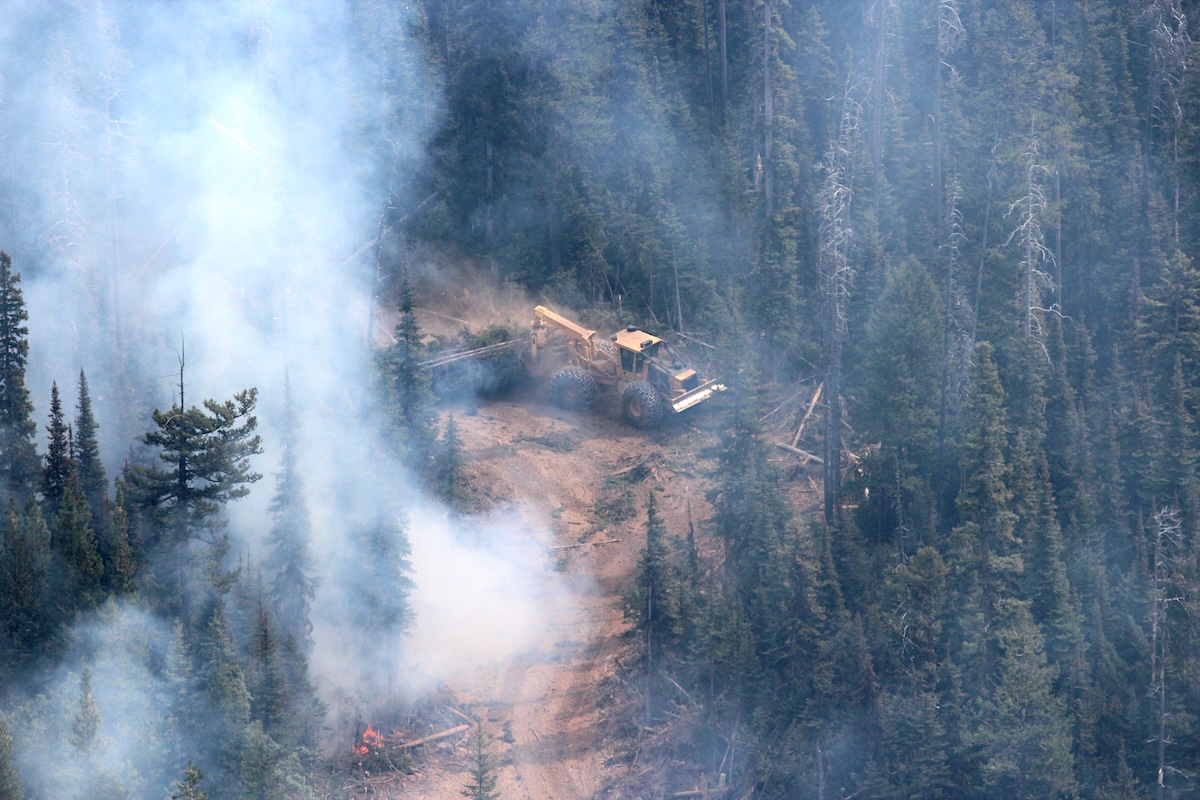
One machine fells trees, chewing a line through the forest, and in front of the fire’s path. A skidder grabs the trees, tows them along the guard and places them neatly in stacks. Later, a bulldozer will come through and plow the ground down to dirt.
Fireguards form the basis of the defensive firefighting that occurs in B.C.’s forests. Where machines can’t work, teams of firefighters dig guards by hand.
The guards are then bolstered by a network of hoses drawing water from nearby watercourses or, if there are none, from fire trucks or bladders. Crews tap into those lines to hold the guard and extinguish any flames that emerge on the other side.
With troublesome weather approaching, crews at Maka Creek are busy fortifying their defences.
Along one section, firefighters have used drip torches to set dry fuel ablaze next to the road. The goal is to eliminate any brush or debris that could allow the fire to jump into the treetops when the winds pick up. Fire trucks sit ready nearby to allow crews to contain and control the spread of the flames.
A line of white smoke at the edge of the road is blowing uphill, toward the smouldering fire above, and away from the guard and Maka Creek.
“This is looking really tidy,” Robertson says. “Good job there.”
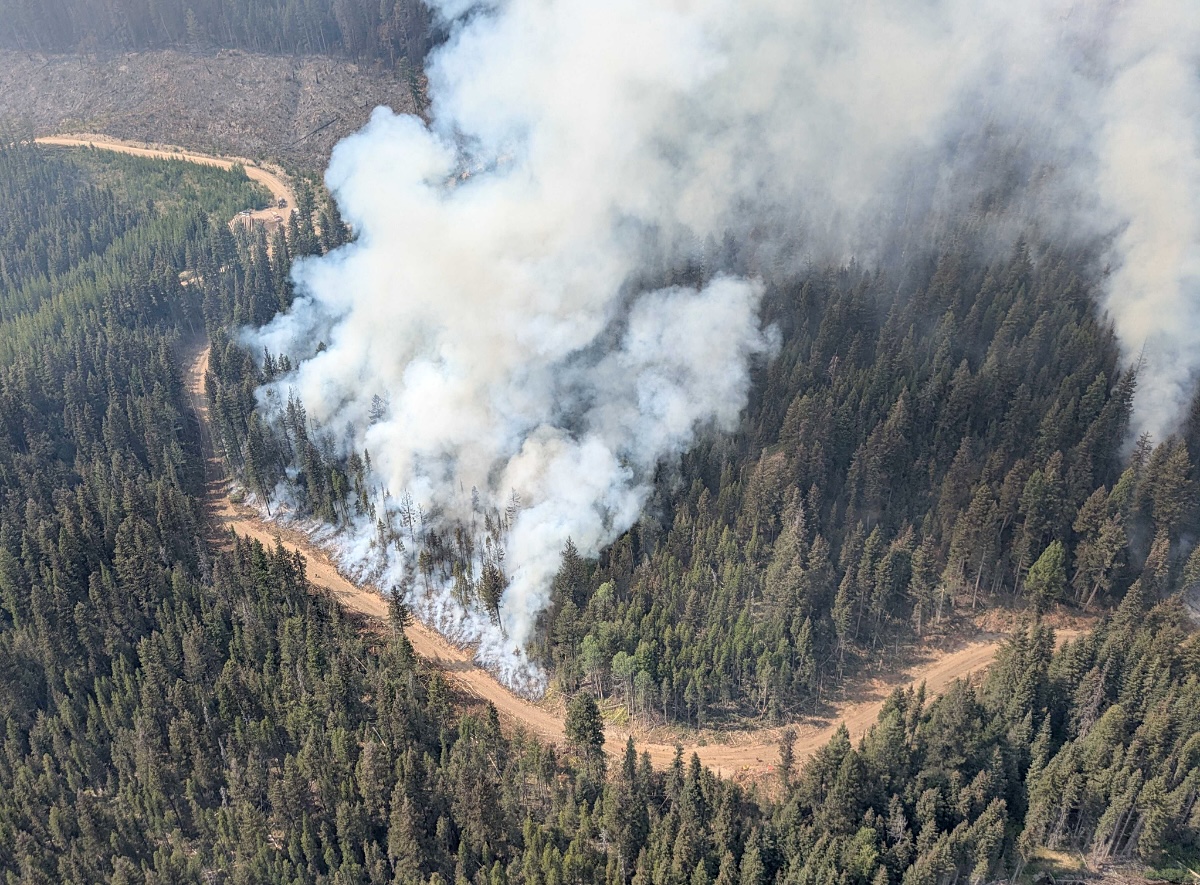
A half-dozen firefighters stand on the road below, observing their work. Robertson talks to a leader, gives his assessment and examines the rest of the guard.
Akeroyd then steers him farther down the fire line, to another section of guard that’s being built immediately in front of the fire’s path.
Helicopters perform a variety of firefighting roles, but their core function is to support the efforts of crews like those at Maka Creek.
That can mean dropping water to cool a fire near guard-building work, or dousing the “green” side of a guard to make it less likely that an ember will ignite a spot fire. Helicopters can also be used to hunt down spot fires and hit them with water as ground crews pursue them on foot.
Dropping low over the guard, Robertson spots flames licking at the edge while the skidder passes.
“That’s a concern right there,” he says. “The fire’s getting close to that machine.”
There are a couple of helicopters in the area, but some help would be useful, so Robertson asks Akeroyd to pull out of the valley and find him cell service. Within a couple of minutes, he’s sent texts that will bring reinforcements from Merritt. The flames are still knee high, if that. With a little help, the guard will hold.
Akeroyd continues down the fire line. One area could benefit from a heavy helicopter, but the smoke is too thick to deploy one to the narrow valley. Thankfully, it’s in a lower-priority area.
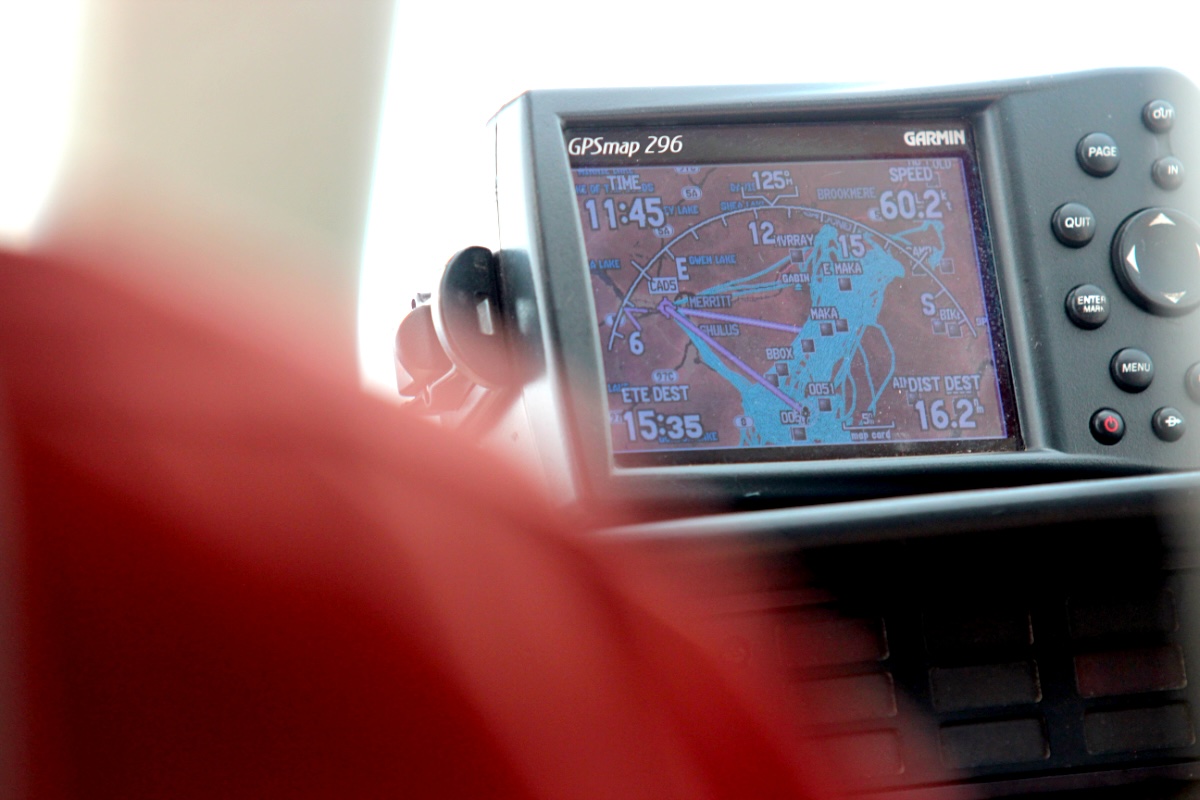
After one more survey, Robertson declares everything to be in order. With a batch of helicopters slated to arrive shortly, Akeroyd touches down in a mountaintop meadow with a view of the Coquihalla. A few yards away, weathered moose antlers lie on the dry, yellow grass.
Akeroyd grabs his lunch as Robertson holds his radio to the sky to get a better signal.
The stop will be brief — Robertson will soon need to guide newly arriving helicopters to their operational areas — but the pause provides the opportunity to save gas, decompress and connect with the fire base north in Merritt.
The sky is blue, the smoke is receding and, so far, things are looking up.
The air corporals
A 10-minute flight to the north, Leanne Ingham is sitting in an unusual spot in mid-August: on the ground. Specifically, on a Zoom call with members of B.C.’s nascent night-flying team, a small but growing contingent of pilots and flight officers who, equipped with high-powered goggles, are now able to use helicopters to hunt down fires in the dark.
As BC Wildfire Service’s superintendent of wildfire operations, Ingham is one of the province’s senior firefighters.
As with many senior officials, Ingham’s year is split between administration roles in the off-season and critical daily duties in the summer. And when trees start catching on fire, Ingham’s weeks are spent hovering over B.C.’s largest and most volatile fires.
Ingham is among the most experienced of the province's dozen or so helicopter co-ordinators and one of only a couple who fly at night.
“You really are fighting human nature,” she told The Tyee. “It’s not normal to fly in a helicopter over a fire.”
Ingham grew up in the Okanagan, near Vernon, where her dad was a deputy chief of a rural volunteer fire department and where she “always kind of did what my brothers did.”
So when they became wildfire fighters, her future seemed inevitable. Having taken a fire course in high school, one day she was “called up” and told she was going to a fire.
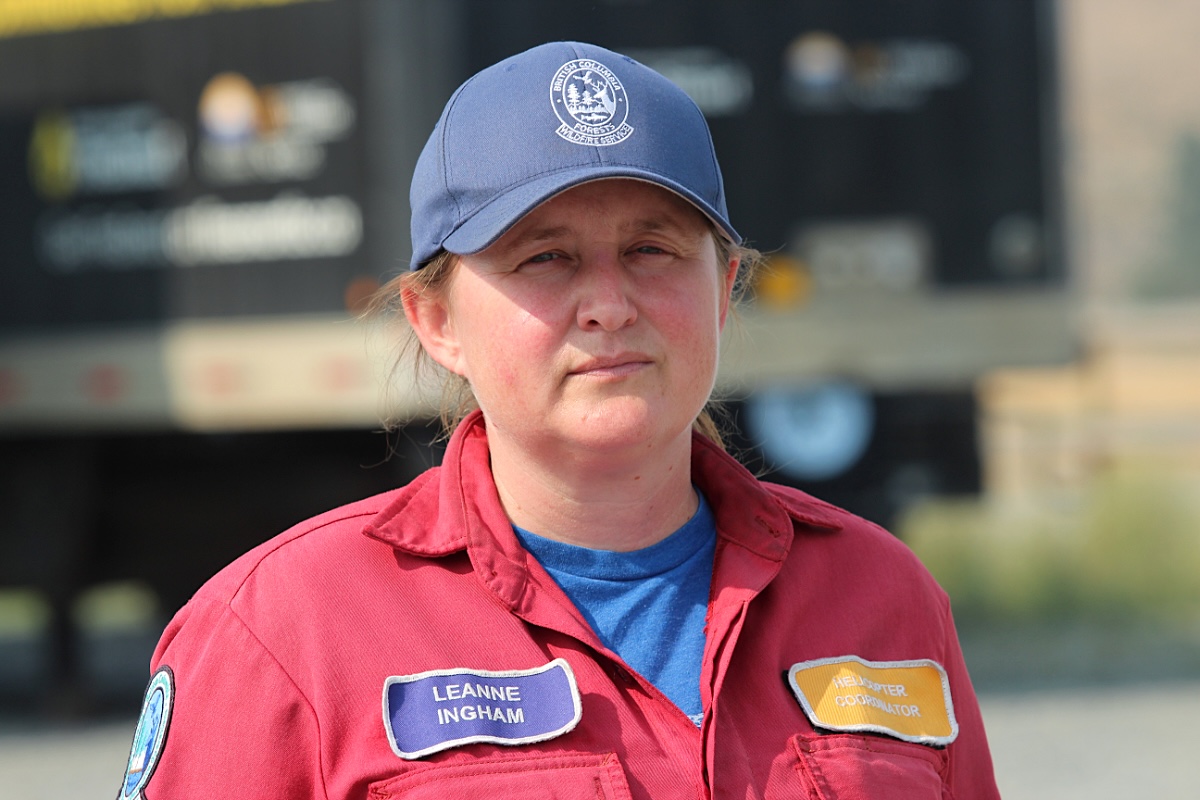
Twenty-eight years later Ingham is still battling the flames. Her experience and joint fire-line and administrative roles give her a 360-degree view of the limitations, improvements and usefulness of aerial firefighting.
The biggest change over the past decade might be obvious to any civilian British Columbian, but comes with particular challenges for aerial firefighting.
“It might be a fallacy of memory, but we didn’t have as many problems with smoke and visibility in the past,” she told The Tyee.
“I think on one fire in 2015 we were shut down for a few days due to low visibility. Now it’s a lot of the season, a lot of the time,” Ingham said.
In mountainous British Columbia, smoke presents widespread challenges to wildfire-fighting helicopter operations.
For safety reasons, helicopters are not allowed to operate when visibility drops below one mile, or 1,600 metres.
Smoke can also obscure targets and prevent helicopters from departing helipads. Sometimes it blocks the route between an airbase and the centre of operations.
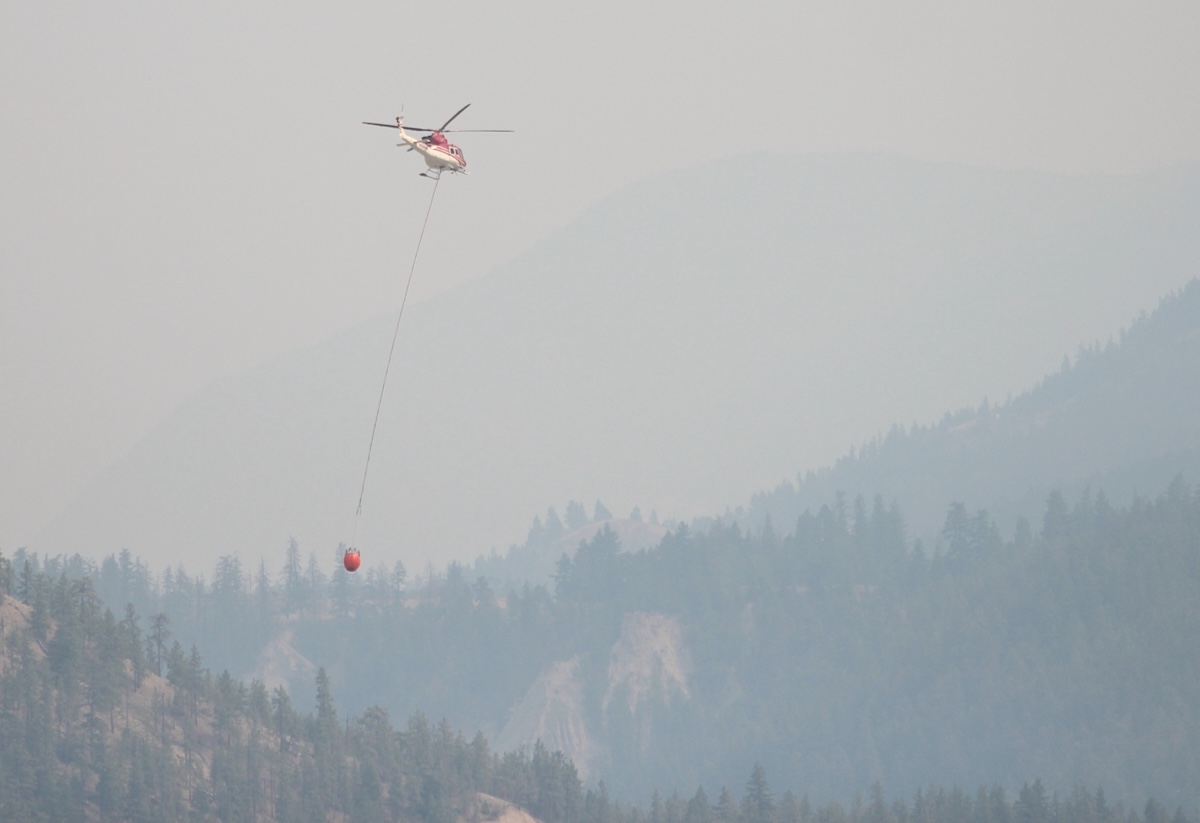
In short: aerial operations need visibility in multiple locations at the same time. Smoke in any one place can leave pilots grounded, hoping visibility will improve.
The challenges have been aggravated because the Interior now often has multiple large blazes burning at the same time. Recently, Ingham was in Vernon near the Bradley Creek fire and was unable to deploy helicopters because of smoke coming from the Ainslie Creek blaze near Merritt.
The 1,600-metre visibility rule is also just a minimum. Some operations need more visibility and space.
“When you’ve got an aircraft with a 250-foot line under it and [the pilot] is looking for hazards, looking for other aircraft [they’re] working in a circuit with, it’s not possible,” Ingham said.
A helicopter co-ordinator’s job is to organize the airspace to allow for the functioning of multiple machines, but they can’t create space out of nowhere. Only so many aircraft can be assigned before safety is compromised. That number is lower when it’s smoky.
Choppers vs. planes
One thing that was not visible above Maka Creek was planes.
Fixed-wing planes such as water bombers and skimmers bring their own benefits, but also more deployment challenges. They can often drop more water and spread their loads over a larger area. But they are less mobile, face more water source limitations and are more vulnerable to wind.
When Ingham and her colleagues are deciding what craft to deploy, they consider any machine’s litres per hour — essentially, how efficient aircraft will be in dumping water on an objective. Planes might be able to dump large amounts of water, but if they can’t repeat the action, they might be less effective than multiple smaller helicopter buckets.
Southwest of Merritt, the nearest sizable lake is more than 30 kilometres away.
“They would drop three times an hour, or something, which is not a sufficient amount of water,” Ingham said.
As for helicopters — the core of B.C.’s aerial firefighting fleet — pilots are not full-time wildfire fighters, and the machines are not owned by the province. Instead, B.C. contracts helicopters from private companies that provide a range of other services.
The pilots dropping water on fires this summer spend most of their year on other tasks — taking skiers up mountains, plucking logs from forests, scooping hydro technicians from towers. Some are familiar with tactics, while others need more guidance from co-ordinators.
The machines are also very different. Last week on Ainslie Creek, Ingham and Robertson could select from six heavy machines, six intermediate ships and six medium helicopters. The classifications reflect the size, power and carrying capacity of the equipment.
In recent years, BC Wildfire Service has significantly increased the number of heavy helicopters it has on contract.
“It gives you definitely some more horsepower sometimes,” Ingham said. “Instead of needing five mediums, you can achieve the same amount with two heavies.”
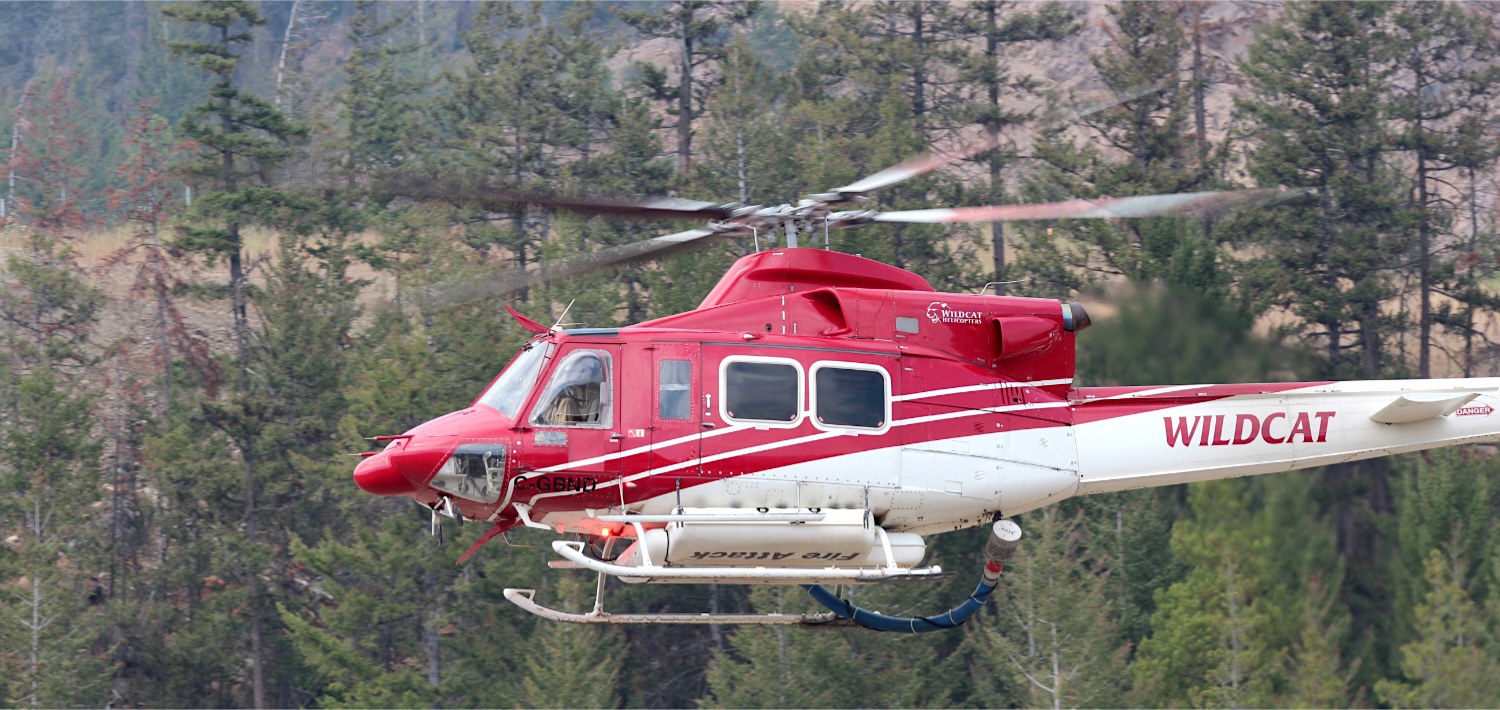
But a bigger tool is still not always the right tool. Heavy machines, which use a hose to ingest water and a tank-and-hatch system to release it, can carry and dump more water. But the large rotors that increase their power and carrying capacity take up significantly more space. That can make it harder to find a good, clean dip. Swampy ponds can also clog hoses and necessitate repairs.
Smaller bucket-carrying ships are more manoeuvrable and can be more precise, but deliver smaller payloads. Smaller machines are particularly useful for reconnaissance and specialized tasks such as aerial ignitions, in which a “plastic-sphere dispenser” — branded the Red Dragon — releases incendiary ping-pong-like balls that start a controlled burn over an extended line.
The Red Dragon
Around the time The Tyee flew over Maka Creek, Ainslie Creek operations section chief Bruce Raby was hovering over the Fraser Canyon 30 kilometres to the southeast, watching smoke billow into the sky.
An aerial ignition specialist and their pilot used a sphere dispenser to ignite a large chunk of fuel between the blaze’s southwestern front and fireguards. Such burns aim to remove fuel near a control line, hindering a fire’s ability to break containment. They are often used when windy weather is in the long-term forecast. The broad idea is to burn an area under relatively controlled conditions to reduce fuel loads and hinder the ability of the fire to vault over the guard in the upcoming days.
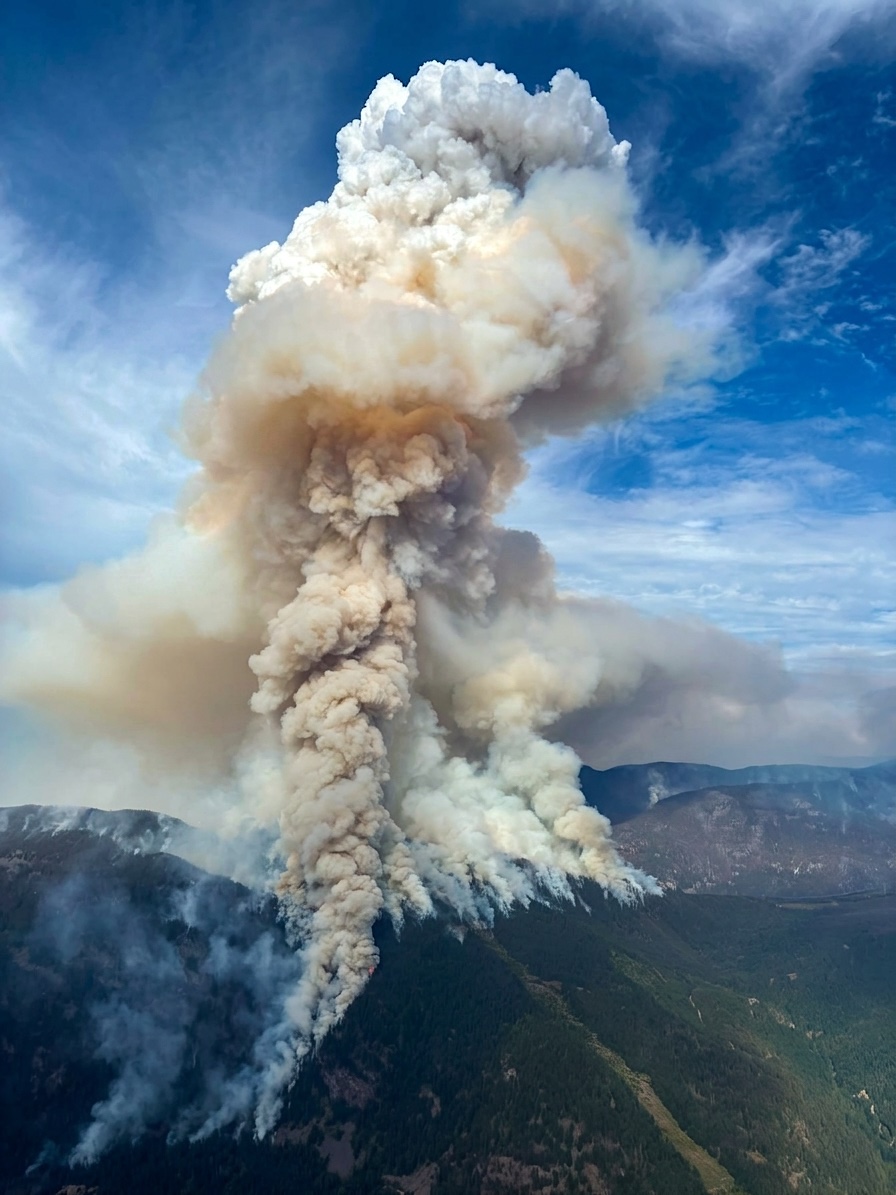
The ignition at Alexandra Bridge is comparable to the one at Maka Creek, but on a much larger scale, with photos showing a massive plume rising over the area.
Planning for the project was extensive.
As crews prepared for the ignition, a helicopter pre-wet the side of the fire line they didn’t want to burn, then moved to work another nearby part of the fire. Tactical operation officials lurked in the sky to observe.
Meanwhile, two other heavy helicopters sat on the ground in Hope, a 15-minute flight away.
Why? The reasons are complex. Sometimes, they include cost: a heavy helicopter can burn more than 10 litres of fuel every minute it is flying. Wildfire officials told The Tyee they have never had resource requests denied by the province or BC Wildfire Service’s financial managers. But they also say they are conscious that firefighting efforts are paid by taxpayers. So helicopters are flown when they can be useful, not for show, they say.
More importantly, Raby, Ingham and others told The Tyee that deployment decisions often reflect rules that limit pilots’ daily flying time to eight hours a day.
Those rules can be bent only in exceptional circumstances. In Summerland recently, pilots requested and got permission to exceed their hours in order to rescue dozens of residents trapped behind fire lines.
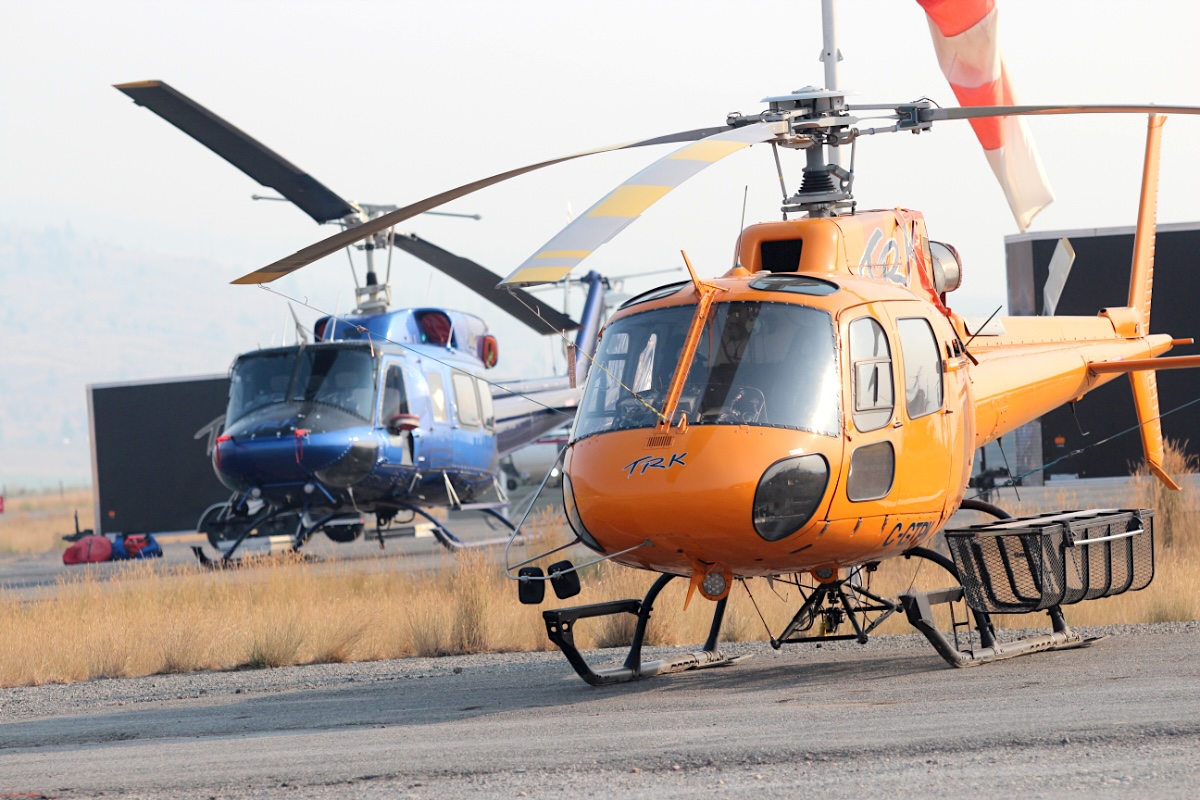
The limits, which exist for safety reasons, mean that a pilot who starts their day at 9 a.m. can’t stay in the air continuously until dusk. With fire danger often kicking up in the afternoon and early evening, officials may opt to keep their pilot-powder dry for the better part of the day.
“We can’t just have them flying around,” Raby said. “When people wonder why they’re sitting, part of that is we’re conserving them for when we need them.”
At Alexandra Bridge, all the planning pays off, and the ignition goes ahead without a hitch.
‘Adapt and overcome’
Back in Maka Creek, Akeroyd and Robertson return to the valley after their five-minute mountaintop snack break to find worsening visibility and an intensifying battle against flames below.
The “tidy” smoke from the ground ignition is no longer flowing gently uphill, away from the fireguard. Now, it is tilting over the fireguard and increasingly looming over Maka Creek. There’s a risk that within that smoke, embers will catapult the guard.
Two new pilots have arrived on the scene and Robertson gives them the lay of the land, asking them to hydrate the green side of the forest, across the guard from the ignition site. Akeroyd plays tour guide, leading one aviator to the dip, then to the drop location. The second hovers in the air. He’ll watch what the first does, then follow behind.
A minute later, a third helicopter arrives. Robertson wants to set him up nearby, but the airspace is getting crowded. With dense smoke billowing to the east, it’s hard to make out the road below, so Robertson sketches it out verbally.
“There’s an equipment guard that runs down the slope side of the road, hooks around underneath that big smoke,” he says. “You won’t be able to do much obviously in the dense smoke, but we’ll see what we can do more in the cleaner air.”
“OK. Confirming the order to stop it from jumping across the road there.”
“Yeah, the road, the river, the whole — anywhere to the east of that smoke.”
“OK.”
The smoke, which seemed like it was lifting just 15 minutes prior, has arrived seemingly out of nowhere.
Nobody is panicking. But the rate of chatter — instructions, questions, visual indicators and observations — reflects the change in condition.
Still, Akeroyd is confident.
“They’ll knock it down again. A bunch of those guys will knock it down.”
Robertson dashes out more recommendations to pilots.
Everyone in the air is conscious of the crews beneath them. The water dropped by a helicopter — especially the hundreds of gallons released by a heavy machine — is very heavy. It can injure wildfire fighters either directly or by knocking over trees and vegetation.
Robertson tells the pilot that if visibility is an issue, he can douse land farther away — even on the opposite side of the Maka from where the fire is burning. Doing so would help protect against spot fires.
Robertson suggests Akeroyd climb out of the hot zone toward another, less crowded part of the fire.
But just a few minutes later, the previous pilot is back on the radio, telling Robertson he has seen a spot fire in a tangle of downed trees on the east side of Maka Creek. An ember has vaulted not just the fireguard, but seemingly also much of Maka Creek. It’s not yet in the forest, but if left to spread, it could give the blaze a launching pad to the Coquihalla and beyond.
“I’ll start working on that,” he says.
“Yes, please do,” Robertson replies. “Maybe just focus on that for the next two or three buckets.”
“Yes, it’s looks pretty hot down there so we’ll see what we can do.”
The plans to head to another section of the fire are put on hold.
“We’re going to have to go take a look at that,” Robertson says. “It’s going to be quite a fight down there.”
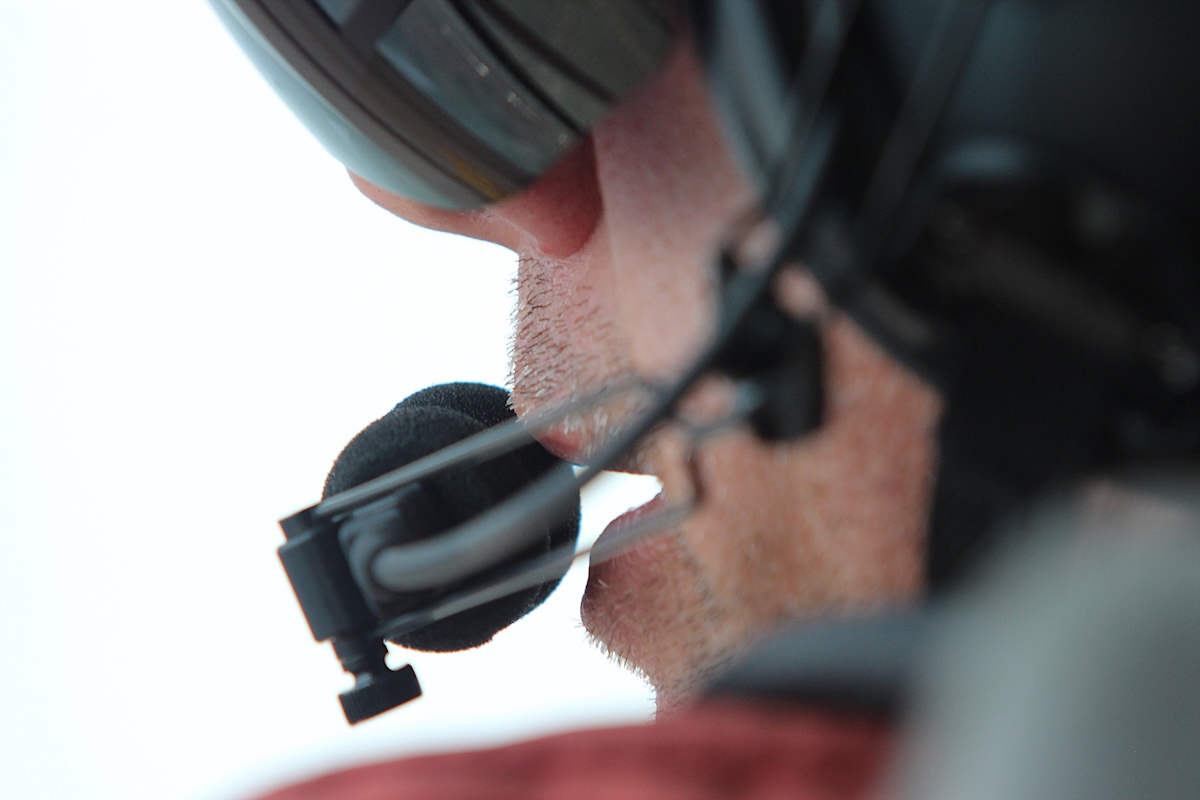
As Akeroyd returns to the valley, he and Robertson peer through the windows and the smoke, trying to pick out the locations of the other helicopters.
“Got one there. And one there,” Robertson says.
“Yeah, got them all,” Akeroyd responds.
As Robertson organizes the airspace, a firefighter on the ground is walking toward the hot spot the pilot identified a few minutes prior. Robertson suggests using the logging machines to cut the dead trees apart.
“I’d just like to advise the smoke is really thick in there,” he says. “You might not get any drops any further north than their last drop, just due to visibility issues. Advising that you start working with hose toward that.”
Another spot fire, 100 metres from the previous one, is spied by crews on the ground.
Robertson tells those crews not to expect much help from the sky, given all the smoke.
“We’re not able to support as much as we’d like with the visibility in there.”
With fuel dwindling, Robertson ducks out to head to another part of the fire. As they climb, the chatter dissipates, and Akeroyd and Robertson discuss the smoke. Poor conditions near flare-ups are being compounded by a broadening haze. Robertson suggests that the successful ignition on the other side of the fire might be contributing to the poor visibility near Maka Creek.
There’s no suggestion the Maka Creek line is beyond salvaging. But it is busier, hotter and smokier than ideal.
“Adapt and overcome, that’s what we do,” Akeroyd says.
A probability of success
With fuel running low, Akeroyd pilots the helicopter to a gravel pit near the Coquihalla that has been converted into a refuelling location. It’s here, after several hours under the eye of The Tyee, that Robertson and Akeroyd drop their journalist passenger.
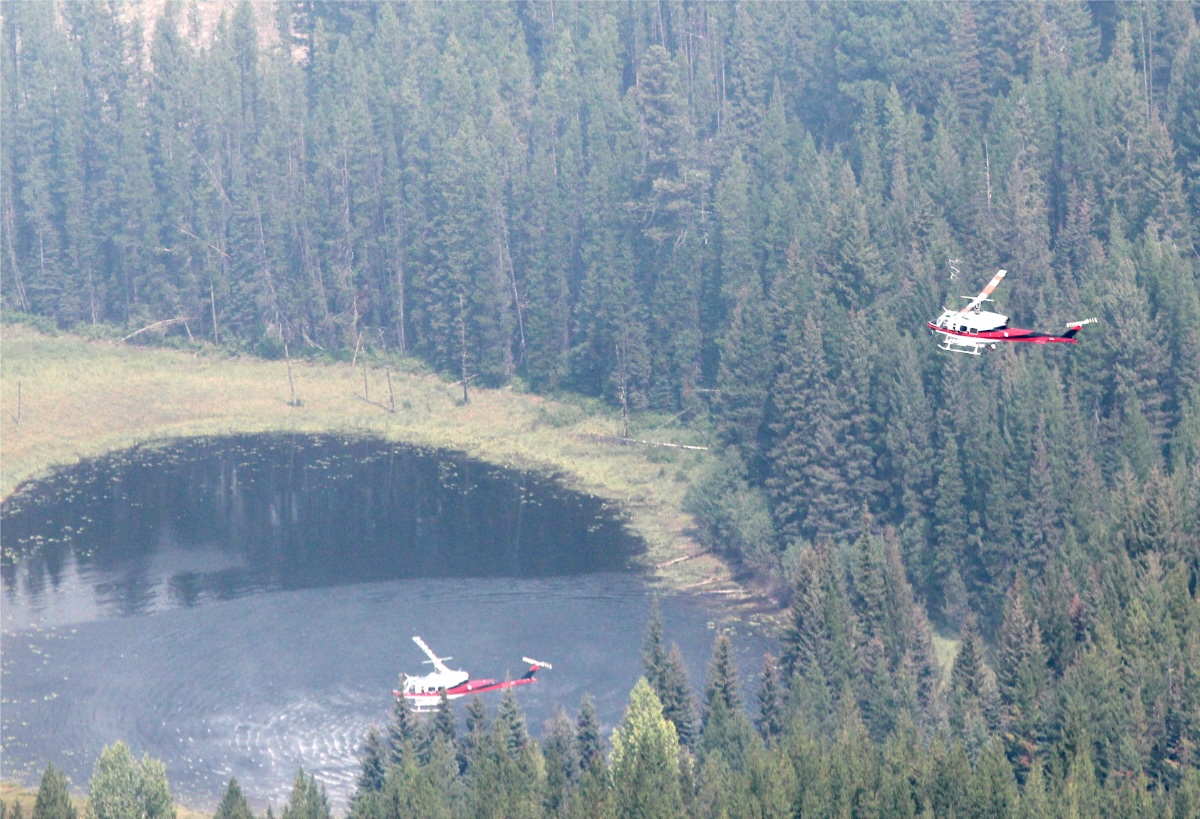
The pair will return to supervise the helicopters across the eastern flank of the Ainslie Creek fire. Six helicopters are currently working in the area, and Robertson will continue shuttling among them.
Robertson is confident that crews will be able to hold back the fire.
“They’re going to have some spots, but they’re there with hose and people,” he told The Tyee on the ground, as the helicopter took on fuel. “It’s not like those spots are happening and we’re showing up in the morning and it’s burned for two hours or four hours. Because we caught the spots immediately, there’s a high probability of success.”
But it will take hard work.
And there are “strips of pretty continuous fuel” toward the Coquihalla and nearby rural homes, Gord Robinson, a fire information officer, told The Tyee the following day.
If the fire were to escape containment at Maka Creek, new evacuation alerts and orders might be necessary.
As night falls and helicopters land, ground crews will work through the late evening and early morning to contain the spot fires. They’ll use chainsaws to break apart the tangle of downed trees that caught fire on the bank of the creek. And they’ll dig down to dirt to make sure no ember is sizzling.
This hard, unseen work will pay off. By Friday, the spots will be out.
On Saturday, thunderstorms roll through southern British Columbia, bringing high winds to blazes across the province. New fires break out to the east, demanding rapid responses to contain and limit their spread.
But at Maka Creek, fire crews look to be reaching a turning point. The line holds. ![[Tyee]](/design-article.thetyee.ca/ui/img/yellowblob.png)
Read more: Environment







Tyee Commenting Guidelines
Please note that email notifications for replies are not currently working due to a software issue which may be resolved in a future update.
Comments that violate guidelines risk being deleted, and violations may result in a temporary or permanent user ban. Maintain the spirit of good conversation to stay in the discussion and be patient with moderators. Comments are reviewed regularly but not in real time.
Do:
Do not: