


 SHARE:
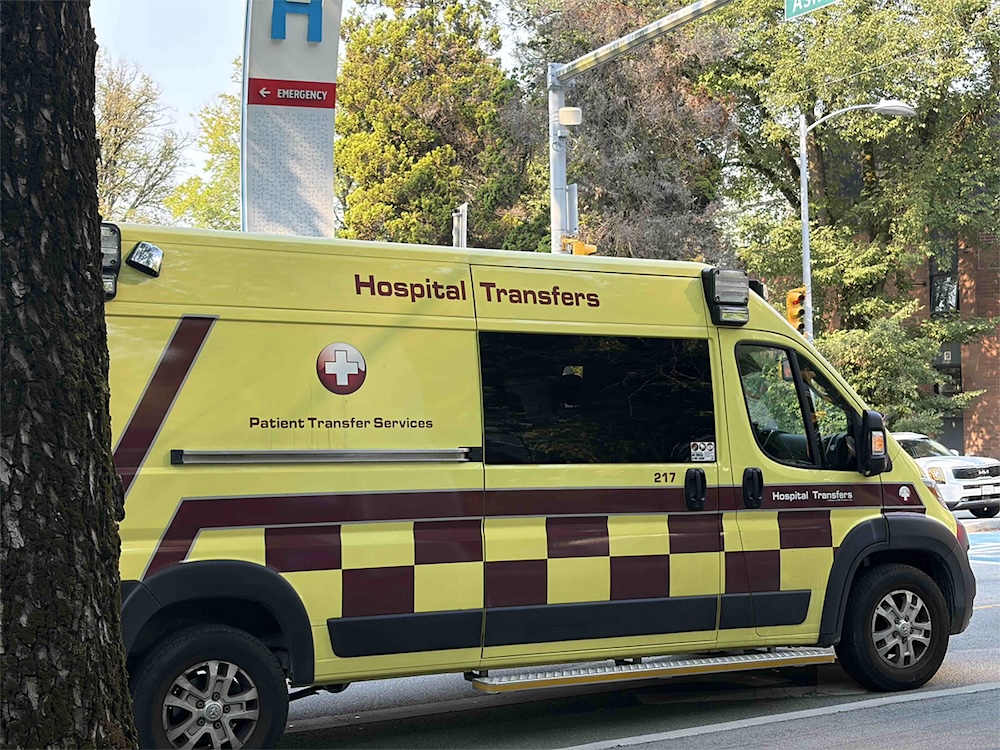
When Wilson Molina starts up his hospital transfer bus Monday morning, he doesn’t know what to expect. The air conditioning might not work, he says. The heaters could be broken. The engine light is often on.
Molina remembers tapping the gas pedal to get out of his parking spot one damp Monday morning and having water leaking into the bus.
“All this water can come pouring down on my head, soaking me, soaking my chair, soaking my uniform,” he said. “Most of the buses have that issue. It’s very rare that I can actually keep a bus that has no major issues.”
Vehicle disrepair is one of the two main issues Molina has with his job, which involves about 200 workers in the Lower Mainland.
That, and the fact that after 11 years with SN Transport Ltd., the hospital transfer company pays him only $27.60 an hour, less than Metro Vancouver’s living wage.
“I love my job. I love doing what I do,” he said. “But when we're not given the right tools and the right compensation, it makes me wonder, Why am I doing this?”
Molina said the low pay and disrepair are partly why the Lower Mainland hospital transfer workers unionized with Amalgamated Transit Union Local 1724 last year.
The union and the employer, SN Transport, are trying to get a first contract. But the union said that after nine months of bargaining, negotiations broke down, mainly over wages. Now, the drivers are escalating job action to get the company to make a better wage offer.
They stopped wearing uniforms Aug. 23 and started refusing overtime work Sunday.
ATU Local 1724 president Joe McCann said the transfer workers are prepared to walk off the job to get fair compensation.
“If we have to go there, we’ll go there,” he said. “We want to see at least an effort for them to provide something our members can vote yes on.”
An SN Transport spokesperson said in an email that the company is ready to return to the negotiating table.
“We believe we are very close to an agreement that provides a fair and competitive compensation package for our employees and also keeps this company strong for the long term,” the spokesperson said.
The company added that vehicles are inspected twice a year and those with reported safety concerns are removed from service until cleared by a qualified mechanic.
SN Transport is the main hospital transfer service in the Lower Mainland, according to McCann. The company moves patients between hospitals, including Surrey Memorial Hospital, Vancouver General Hospital and Chilliwack General Hospital, long-term care facilities and their homes.
The company has a $483-million contract with the Provincial Health Services Authority to provide patient transfer services.
Molina said workers escort patients from “bed to bed” — meaning they carry patients from their beds in hospitals to their homes or long-term care facilities.
“We'll literally get the patient out of their bed and bring them to their appointment, and then bring them back and put them back in bed,” he said. “We'll take them out of bed in an emergency situation. Or in a discharge situation, we put them in their bed at home. We carry people up and down stairs.”
They are also responsible for moving medical charts and co-ordinating movements with nurses to ensure patients are still getting essential care.
Molina loves his job. But he said that since Burnaby-based private equity firm Arviat Equity Partners purchased the company about two years ago, working conditions have started going downhill.
“They're just milking the company for as much as they can and making as much profit as possible,” he said. “I don't have a problem with people making money, but what about the employees that are doing this work?”
McCann said members have reported less overtime, stagnating wages and a lack of regular vehicle maintenance since the company was purchased.
Arviat Equity Partners did not respond to requests for comment.
On Sept. 3, 2025, SN Transport workers unionized with ATU Local 1724. The two sides tried to get the first contract through mediation. But according to a British Columbia Labour Relations Board decision on Aug. 18, 2025, the two sides remained far apart and the mediator recommended both sides exercise their right to job action or lockout.
The decision said SN Transport disagreed and asked for binding arbitration that would result in an agreement. But the labour board sided with the union, meaning it’s still up to the two sides to get a deal.
But McCann said the union and the employer are still far apart on wages. Drivers currently start at about $24 per hour with pay rising to $27.60 after two years. The union is asking for an 18.4 per cent increase to $32.67.
A worker in Metro Vancouver needs to make at least $27.85 per hour to afford food, housing and other essentials, according to the BC Society for Policy Solutions and Living Wage BC.
“They have a $480-million contract from the health authorities, and they can't afford to give us a couple of dollars’ raise,” Molina said. “It’s insulting.”
Molina said he’s hoping for wages similar to those of HandyDart drivers, who offer door-to-door transportation to people with disabilities. Drivers for that employer, called Transdev, earn up to $36.06 per hour, according to a job posting online.
McCann added that the union may not seek to address vehicle maintenance in the first contract, but with the agreement in place workers will have the support they need to be confident they can refuse unsafe work without consequences.
The SN Transport spokesperson said the company has invested significantly in ensuring patient safety.
“We are committed to ensuring that every patient we transport feels safe, respected and well looked after, and every employee has the equipment and support to deliver that care,” they said.
McCann said the union plans to escalate job action until the employer makes a better offer on wages, and members are prepared to go to a strike.
Essential services will continue even if the union goes on strike. McCann said the labour board has ruled that about 76 per cent of the workforce must continue working to maintain essential service levels, which means a full strike would put about a quarter of the bargaining unit on picket lines.
“We'll still be out there on the picket lines if we have to,” McCann said. “I hope they come to the table and we get something done.” ![[Tyee]](/design-article.thetyee.ca/ui/img/yellowblob.png)
Read more: Health, Labour + Industry









Tyee Commenting Guidelines
Please note that email notifications for replies are not currently working due to a software issue which may be resolved in a future update.
Comments that violate guidelines risk being deleted, and violations may result in a temporary or permanent user ban. Maintain the spirit of good conversation to stay in the discussion and be patient with moderators. Comments are reviewed regularly but not in real time.
Do:
Do not: