


 SHARE:
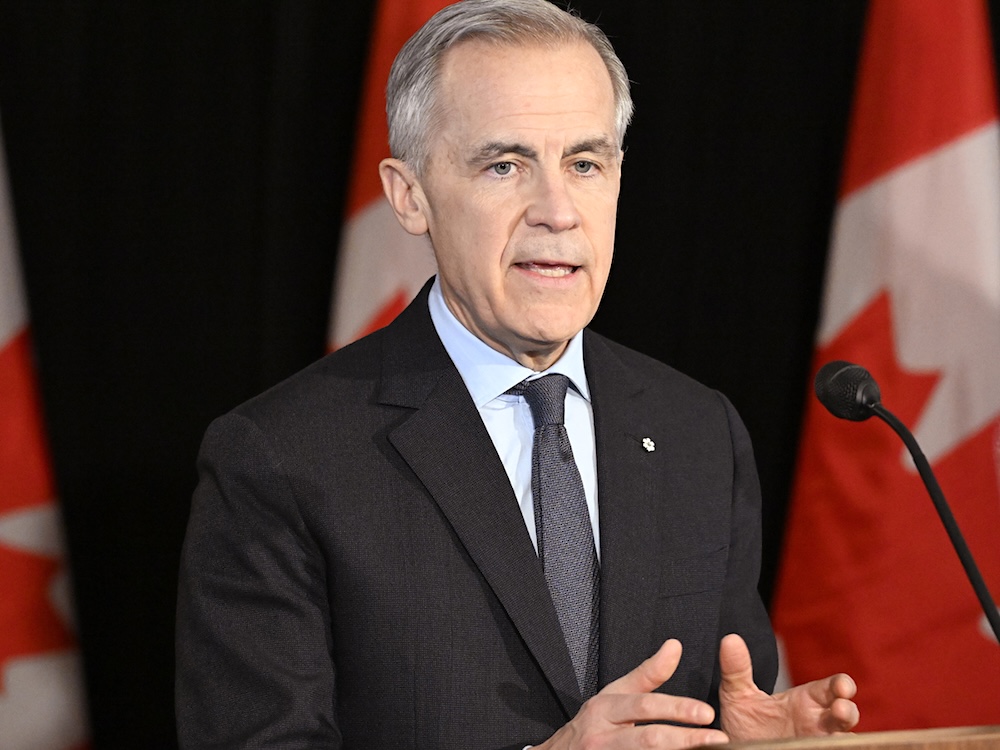
Last week in two speeches, one to a global audience from the World Economic Forum stage in Davos, Switzerland, and another to Canadians from Quebec City, Canadian Prime Minister Mark Carney articulated a vision for Canada’s future.
As we face a political discourse divided along ideological extremes, it was refreshing to see a political leader offer a sharply focused intellectual response to the current “rupture” in the global order. The two speeches share a common thread: a call for honesty, for resilience and for pluralism to be Canada’s strength.
In Davos, Prime Minister Carney delivered a candid analysis of the current state of international relations. He offered a thoughtful alternative to “waiting for the hegemon to restore an order it is dismantling.”
In Quebec, he established that this vision applies not only to foreign policy but to Canada’s unfinished business at home. The prime minister’s coherent foreign policy should also be the pillar of domestic policy on Indigenous relations.
Canada’s credibility relies on alignment between how we expect to be treated by other nations, and the government’s sincerity about Indigenous relations at home.
The confidence that Prime Minister Carney effectively projected on the world stage is reinforced and strengthened through a commitment to sew together a Canadian quilt that includes self-reliant and self-determining Indigenous governments.
No sign in the window
Prime Minister Carney talks about middle powers “living in truth.”
In retelling Václav Havel’s story of the sign in the window — in which a greengrocer begrudgingly displays a sign every morning that signals his loyalty to the current political regime — he called on “companies and countries to take their signs down.”
Indigenous leaders removed the sign from their windows a long time ago, for decades “naming reality” and rejecting the subordination of a hegemon.
They have long practised principled pragmatism with provincial and federal governments. Yet Indigenous relations remain something served up on the menu of public opinion, rather than given a seat at the decision-making table.
In his address to Canadians, the prime minister explicitly acknowledged that Canada’s foundation “rested in part on the dispossession and colonization of Indigenous Peoples and the violation of treaties.” Living in truth means addressing this history honestly.
The prime minister said: “When we negotiate bilaterally with a hegemon, we negotiate from weakness. We accept what is offered. We compete with each other to be the most accommodating. That is not sovereignty. It is the performance of sovereignty while accepting subordination.”
Prime Minister Carney is logging air miles building diplomatic relations, noting that “collective investments in resilience are cheaper than everyone building their own fortress.”
Canadian Indigenous leaders would be well served by also ramping up coalition-building efforts, pooling limited resources and strengthening their own regional, subnational and national relationships.
Why this matters now
For decades, the Canadian government has been a hegemon that excluded Indigenous people from the social and economic fabric of the country. Pre- and post-Confederation provincial policies that reduced reserve lands and restricted Indigenous people from pre-empting lands produced socio-economic devastation we still struggle to overcome.
Coercive funding programs that structurally obstruct Indigenous communities from participating in the economy have led to their inability to feed, fuel and defend themselves. Federal restrictions barred Indigenous people from hiring lawyers and prosecuting cases against the wholesale dispossession of land and resources. These and many other policies produced systematic dependence on the Canadian state.
Indigenous leaders have resisted from the beginning, and through his speeches Prime Minister Carney expresses a vision that aligns with the calls of Indigenous leaders for self-determination.
From the Plains of Abraham, he admitted that progress was imperfect due to the exclusion of Indigenous people and affirmed that reconciliation is fundamental to Canada’s identity, not a policy on the periphery. Now, he must act on it.
Make Canada’s pluralism work better
“Canada is a pluralistic society that works,” Carney said in Davos.
He positions Canadian pluralism as our global strength, yet domestically, pluralism is incomplete. When he stands under the brightest lights on the global stage and speaks truth to power, his quilt at home must be united and strong. It is ideal for all orders of government to be aligned and working together.
Self-reliant, self-determining Indigenous governments at the table, not on the menu, are essential to Canada’s legitimacy abroad. For too long Indigenous nations have been systematically excluded from the table. There are fractures in our foundation that diminish the stature of the “stable, reliable partner” the prime minister projects.
At home, the prime minister repeated a promise to “build inclusively in full partnership with Indigenous Peoples.” It is time that promise moves from aspiration to action by finally stitching Indigenous nations’ contribution as an essential panel in the pan-Canadian quilt.
Embrace this moment
Canadians have been rattled by our continental neighbour threatening our sovereignty. It was always an imbalanced relationship. In Prime Minister Carney’s words, for decades we accepted the lie of “mutual benefit through integration” and we “participated in rituals. And largely avoided calling out the gaps between rhetoric and reality.”
He says, correctly, “this bargain no longer works.”
Indigenous leaders would do well to invest in coalition-building with their relatives and neighbours. Ultimately, our collective well-being in the rapidly changing international order is best realized not in a discordant and fragmented domestic policy, but in Indigenous Nations defining how their unique piece fits into the Canadian quilt, contributing to the country’s resilience.
Prime Minister Carney’s words from Davos are most powerful here: “Nostalgia is not a strategy. But from the fracture, we can build something better, stronger, more just.”
In Quebec City, he said Canada needs to be a “beacon” of inclusion and a “bastion of security.” That depends on a domestic foundation that is strong, cohesive and just.
To lead abroad with legitimacy, Canada must “take the sign out of the window” and finish sewing the quilt at home that includes self-reliant, self-determining Indigenous nations with a seat at the table. ![[Tyee]](/design-article.thetyee.ca/ui/img/yellowblob.png)
Read more: Indigenous, Politics







Notice about commenting changes
The Tyee’s commenting system will be moving to a new platform on Nov. 12. If you’re already a Tyee commenter you must register with the new system on or after Nov. 12 with your preferred username.More information can be found here.