


 SHARE:
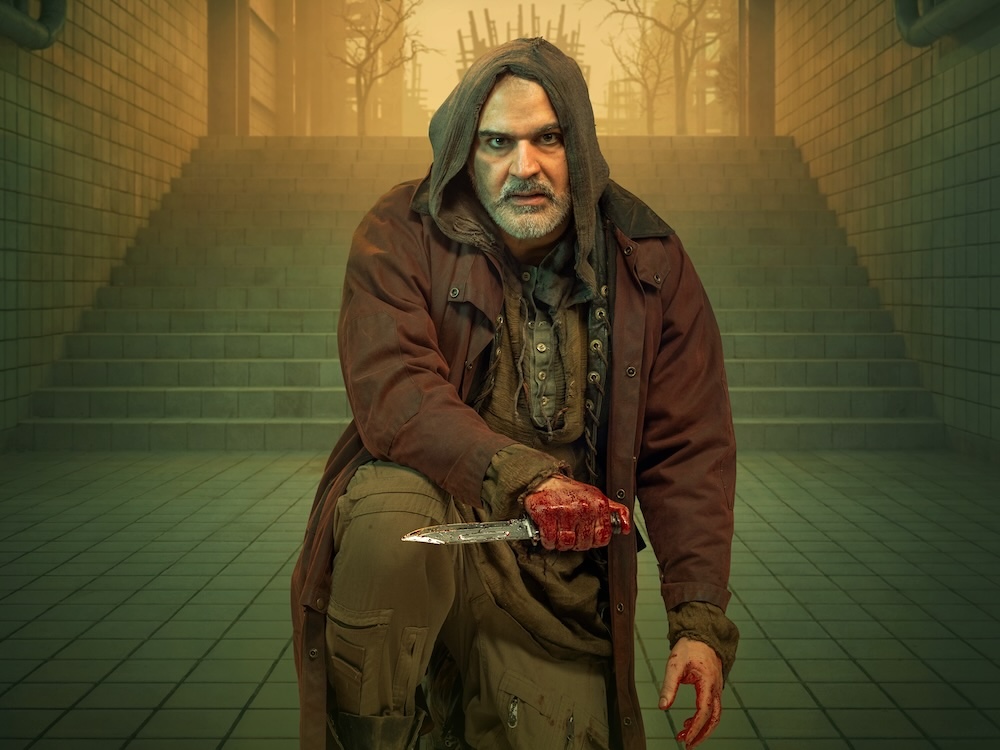
Shakespeare isn’t timeless — at least, that’s not the philosophy that director Stephen Drover took when it came to his production of Macbeth at Bard on the Beach this summer.
“There is something about Macbeth that is very much of Shakespeare’s time,” says Drover. “In prepping for this production, I’ve paid more attention to the conditions under which it was first written than I have for any other Shakespeare play I’ve worked on.”
One of Shakespeare’s best-known and bloodiest tragedies, Macbeth follows the story of a victorious general who receives a prophecy telling him that he will become king. With the encouragement of his wife, Macbeth murders King Duncan and seizes the crown, before descending into paranoia as he tries to hold on to his throne.
It is a play about succession and the transfer of power, written during a time when that was at the forefront of societal concern. By the late 16th century and into the early 17th century, Queen Elizabeth was growing older and she had no children, nor had she named an heir. At the same time, it could be deemed an act of sedition to publicly discuss who the next monarch could be.
“Shakespeare wrote prolifically about the rise and fall of kings,” says Drover. “He set his stories in other lands and other times, far away from Elizabeth’s court, yet similar enough that audiences could feel that their concerns were valid. They effectively served to rehearse a social anxiety.
“As I approached this production, I thought about what our social anxieties were today. Climate change. Moral decay. A dystopian future. What happens when somebody who has a great deal of power acts on their own whim. I think Macbeth addresses those concerns to some degree, if set in the right place.”
Starring Munish Sharma as Macbeth and Tess Degenstein as Lady Macbeth, Drover’s adaptation imagines Shakespeare’s tragedy for a contemporary audience. Instead of medieval Scotland, we are in the near future, in a post-urban society salvaged from the rubble of an earth-shattering event. Dunsinane is now a sterile bunker, a safe space where the Macbeths are isolated from the contamination of the toxic outside world. There are no swords that might evoke the idea of a valiant death, only brute force. Macbeth seeks to evoke real fear.
“My aesthetic is to pair the heightened language with a psychological and filmic realism that makes us believe this is actually happening,” says Drover. “In doing so, I think Macbeth can let us walk beside our fears — and give us permission to confront them.”
Macbeth runs June 11 to Sept. 18 on the BMO Mainstage at Sen̓áḵw/Vanier Park.
Bard on the Beach’s full 2026 season runs June 9 to Sept. 19 and features ‘The Merry Wives of Windsor,’ ‘Macbeth,’ ‘Goblin:Oedipus’ and ‘Antigone.’ Tickets start at $30. For more information and to buy tickets, visit Bard on the Beach’s website. ![[Tyee]](/design-article.thetyee.ca/ui/img/yellowblob.png)
Read more: Theatre
This article is part of a Tyee Presents initiative. Tyee Presents is the special sponsored content section within The Tyee where we highlight contests, events and other initiatives that are put on either by us or by our select partners. The Tyee does not and cannot vouch for or endorse products advertised on The Tyee. We choose our partners carefully and consciously, to fit with The Tyee’s reputation as B.C.’s Home for News, Culture and Solutions. Learn more about Tyee Presents.








Tyee Commenting Guidelines
Please note that email notifications for replies are not currently working due to a software issue which may be resolved in a future update.
Comments that violate guidelines risk being deleted, and violations may result in a temporary or permanent user ban. Maintain the spirit of good conversation to stay in the discussion and be patient with moderators. Comments are reviewed regularly but not in real time.
Do:
Do not: