
 SHARE:
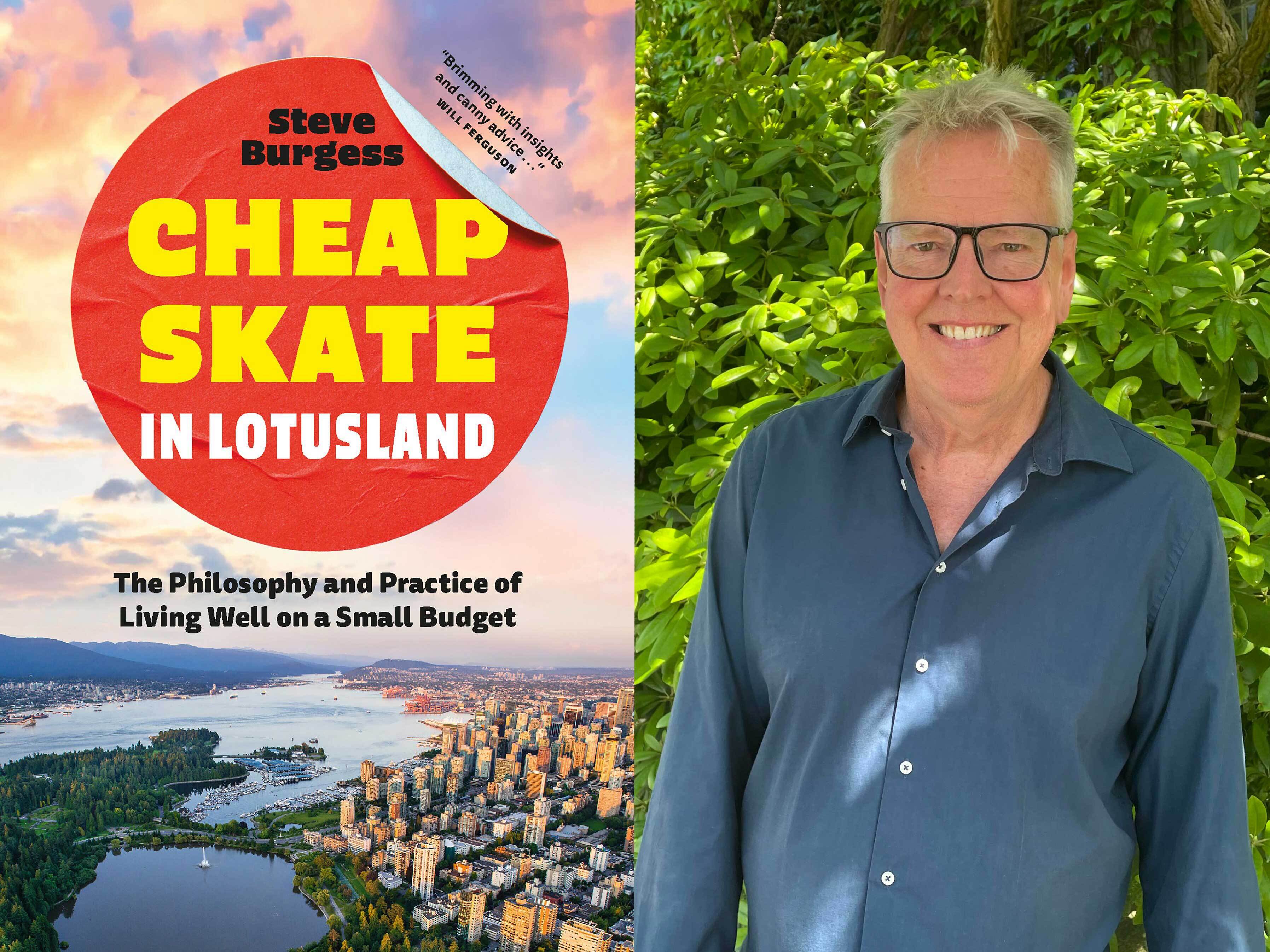
[Editor’s note: Tyee contributing editor Steve Burgess’s latest book dives into the philosophy and practice of frugality. A blend of memoir and reportage, 'Cheapskate in Lotusland: The Philosophy and Practice of Living Well on a Small Budget' is out through Douglas & McIntyre in the new year and considers what it means to live modestly but happily in Vancouver, an expensive city. In this excerpt from 'Chapter 25: Sunrise Market,' Burgess takes us to a beloved source of affordable food in Vancouver’s Downtown Eastside.]
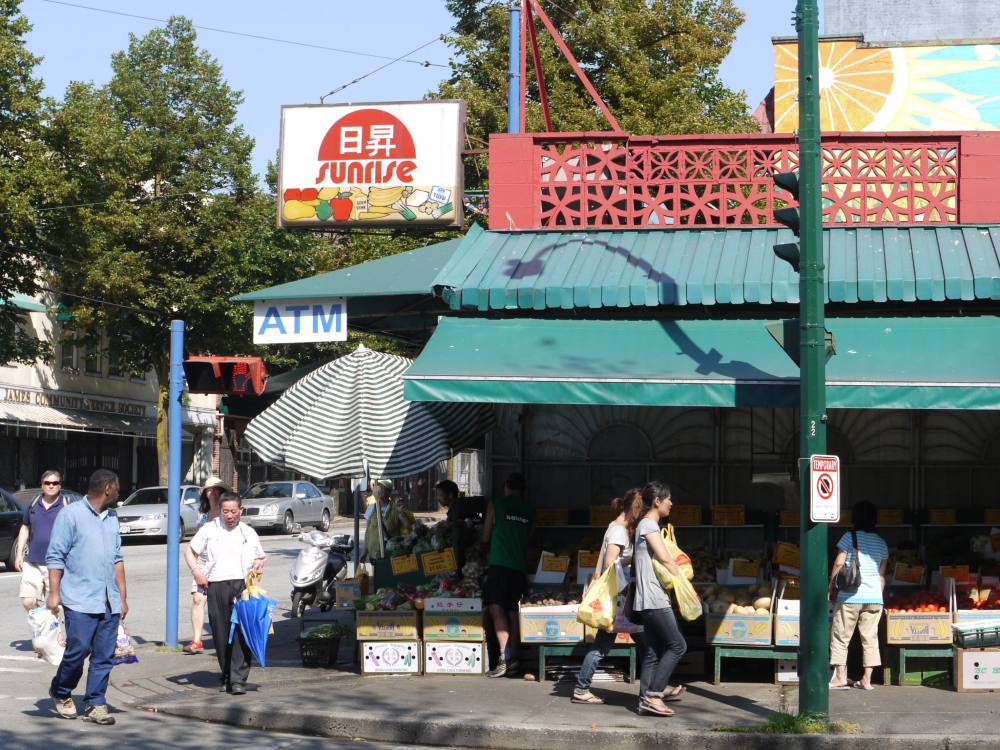
Sunrise Market is located on the southeast corner of Powell Street and Gore Avenue in Vancouver’s Downtown Eastside. Its west-facing exterior wall features a vibrant mural detailing some of the neighbourhood’s people and streetscape.
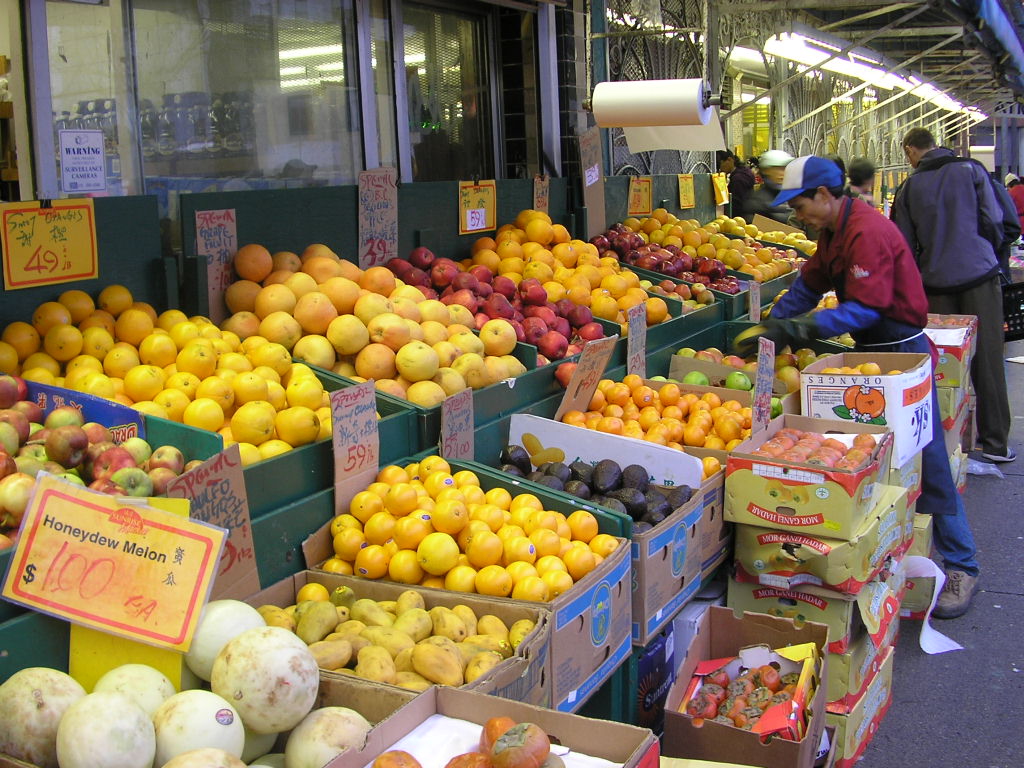
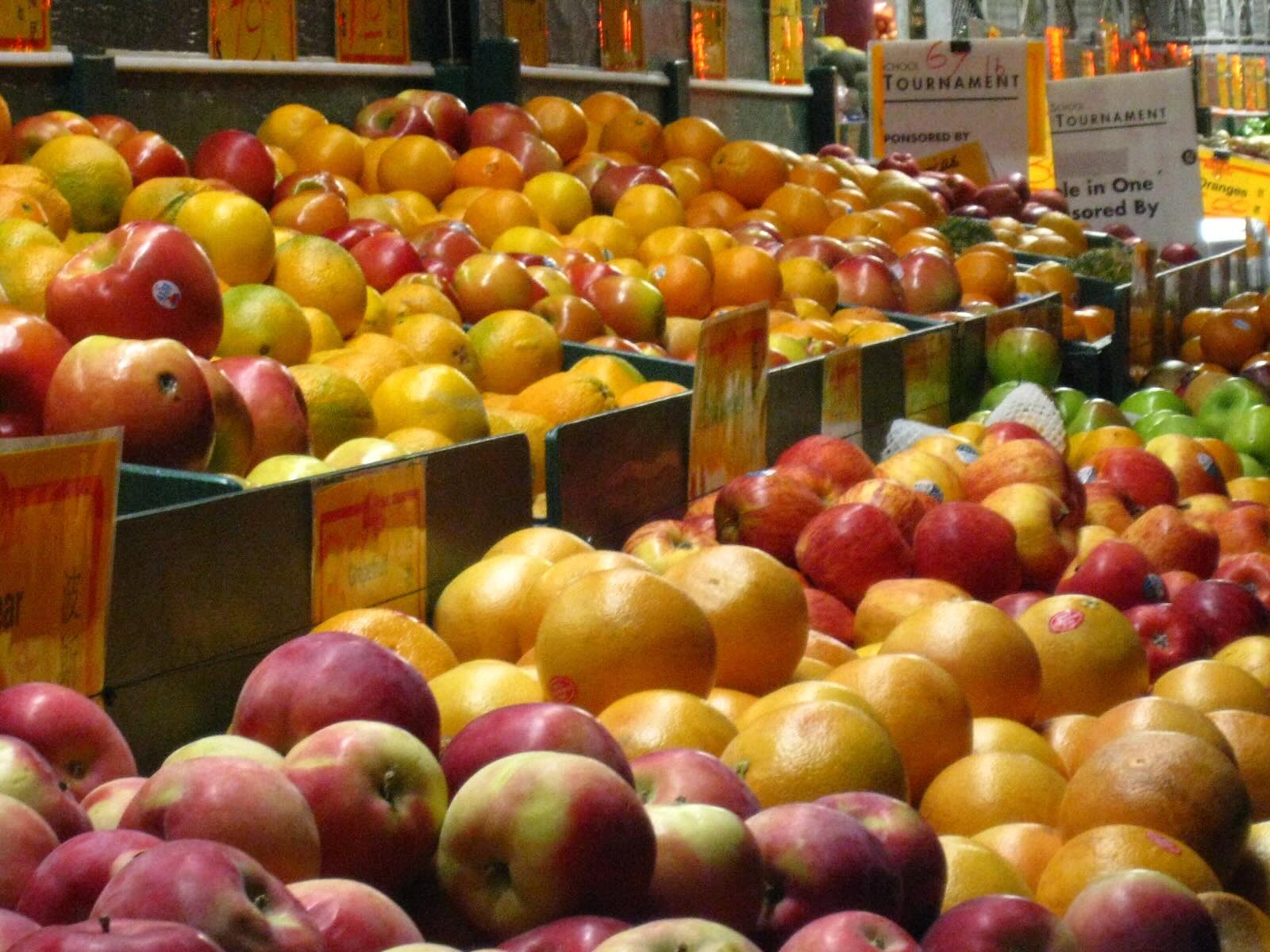
During business hours the lower half of the mural is always obscured by racks of vegetables and fruit, often at remarkably low prices, and a steady stream of browsers. There’s no telling what the selection will be in a given week — romaine lettuce, Taiwanese cauliflower, asparagus, some sort of green you don’t recognize with a name you’re afraid to pronounce, cherry tomatoes, carrots, strawberries, gai lan, corn on the cob when it’s in season, fresh spinach for a dollar a bunch, sometimes even two for a buck.
Sunrise is not really the sort of place you visit with a grocery list. Rather, you show up with a supply of bags, see what the ever-spinning wheel of deals has produced this week, and plan your meals accordingly.
The bike ride to Sunrise from my apartment takes about 20 minutes, and I have my choice of lovely waterfront routes before turning onto Gore and navigating the rugged pavement to the shopfront across from the busy Downtown Community Court. I never lack for motivation — Sunrise is crucial to my dietary regimen, and my finances, too.
But Sunrise Market is more than my personal downtown spinach dealer. It is an increasingly rare outpost of local food retailing, an alternative to discount chains, an outlet for shipments of fresh produce that might otherwise fall victim to the arbitrary whims of chain-store regulations, and a connection to an era of small business that is in danger of disappearing entirely.
A lifeline, and a family biz
It is often reported that lower-income households have less nutritious diets than those with higher incomes. A 2019 study from scientific journal BMC Public Health, using a measure called the Healthy Eating Index, found that higher-income households scored significantly above lower-income homes for purchasing healthy foods.
With its great deals on a variety of healthy produce, Sunrise Market offers a solution to that syndrome. And nowhere is it more desperately needed. Sunrise serves a neighbourhood that ranks among Canada’s poorest. But its client base reaches much further than that. Sunrise services restaurants, food trucks, students and budget-conscious consumers like me who will come halfway across town for a shot at a cheap tomato and a solid dill-pickle discount.
Around 1956, 21-one-year-old immigrant Leslie Joe arrived in Vancouver from China’s Guangzhou region with a Grade 1 education and years of practical experience assisting his mother, a street vendor; their family, his daughters tell me, was the poorest in their village.
Joe opened the first Sunrise Market on Powell, then a few years later built himself a new facility at Powell and Gore, where Sunrise has been ever since. So has he. Now 90 years old, he still shows up daily to pester his daughters, Jennifer, Sally and Winnie, who currently run the place.
“About eight times a day,” Jennifer Joe tells me, roughly 10 minutes before the old man himself ambles into the room, shakes my hand and immediately starts an urgent Cantonese conversation with Sally about some issue or other.
Sunrise Market faces the same competition from major grocery retailers as any other small local business. But they have found their niche, a way to use their small size and relative flexibility to their advantage.
Sunrise specializes in scooping up the shipments wholesalers are desperate to unload — the rejected truckload, the surplus order, the cancelled container. It is an approach Leslie Joe pioneered with local warehouses, now carried on by his daughters.
“It could be returns from big chain stores, which are really picky,” Sally Joe says. “A lot of produce that’s still very edible, but doesn’t meet their standard, because their markup is crazy high.”
Sunrise also takes in plenty of unwanted packaged products, usually because they are too close to their best-before dates. I even got some deeply discounted Sigdal crackers once.
“We have really good relations with all the wholesalers,” Jennifer Joe says, “because our dad would never say no. He’d just take everything. And if he had too much, he would blow it out at cost, just to keep it moving. The wholesalers appreciated that. They knew they could always unload what they wanted to. They might not be getting a huge profit, but they’re recouping their costs, and they’re not dumping anything.”
Even food banks will usually reject items at or near their best-before dates, Jennifer says. “They’re quite picky. So wholesalers don’t know what to do, and they don’t want to just dump it, right? A lot of times, they’ll either sell it to us for a low price, or even give it to us.”
I tell the sisters that I often refer to Sunrise as the “Second-Hand Vegetable Store.” Jennifer counters with a nickname she prefers. “We have one client, a juicing company, and they call us ‘Underground Whole Foods.’ I do carry health food products that sell at less than half of what Whole Foods would charge. We have high-end companies that buy from us. We also had one catering lady — she’s famous. She bought, like, 40 wheels of brie from me. She said she was going to put cranberry on top.”
Pledging me to secrecy, Sally mentions one esteemed Vancouver retailer who has stocked up at Sunrise in the past. Take my word for it, you’d be shocked.
Small but mighty
Sunrise can also be a lifeline for local restaurants that find themselves in a pinch. “We do wholesale to around 150 restaurants,” Jennifer says. “We’re helping a lot of restaurants,” Sally adds, “because if they go through [restaurant wholesalers] Sysco or Gordon’s Fine Foods, it will cost more. You’re getting the best quality from them, but with every single box, they rebox it. So it’s really a waste of material and time. They charge you, and charge for delivery. There’s a minimum, too. You can’t just buy a couple of cases. But some restaurants, they can barely survive, so they can’t use those food services. They come here — usually it’s the owner. They’ll shop themselves, save money and keep the restaurant going in tough times.”
The Sunrise business model is very much like mine when I shop there — stay flexible, grab the bargains. “Basically, I buy short-dated stuff, or whatever is on sale that month,” Jennifer says. “I don’t just buy what I need. When I see the monthly sale, I’ll try to stock up on it.”
When I arrived in Vancouver in the late 1980s, one of the things I liked best about the city was the many small produce stores and flower shops. I soon learned that produce stores are like coal-mine canaries.
Low-margin operations, when real estate prices climb, are often the first to go, sacrificed to redevelopment. Over the years my favourite spots have winked out like dying stars as more and more blocks are transformed by condo projects. Small grocers are giving way to cellphone outlets and international chain stores. Produce stores are bellwethers of community destruction.
Sunrise, however, survives. It helps that they own the building. But they are still navigating through a landscape of giants. “Whole Foods, Walmart, big American chains,” Sally says. “They have big pockets. They’re bullies, right? There’s a lot of big players out there that can afford to bully distributors and manufacturers. And they get paid for shelf space. We don’t charge people.”
Sunrise pays supermarket stocking fees too, thanks to their successful side business. They manufacture and distribute several popular brands of tofu — Sunrise, Soyganic and Mandarin. “They charge us for shelf space,” Sally says. “They decide if you can have that space or not. Plus, they’ll make you do promotions. And they want long [best-before] dates. It’s the requirement of the big chains like Loblaws, that’s what all the manufacturers have to cater to. They dictate. They want a lot from the manufacturer, and they make the money.”
Ultimately most consumers will always look for the lowest price. That’s really how Sunrise truly competes and thrives. In a no-quarter-asked-marketplace, they win on the bottom line.
Sunrise keeps costs in line via some old-fashioned methods. Like me, they shrug off the latest technology. “We don’t have scanning,” Jennifer says. “We still price stuff with tags, because our prices change — it’s dictated by whatever we’re getting.”
Sunrise uses colour-coded tape so cashiers can differentiate between, say, a bag of spinach that was sitting on one of the outdoor racks priced at two for a dollar and an in-store bag that is a little fresher and thus more expensive.
“We’re old school,” Jennifer says. “Us three owners decide, should we buy it, how much to price it, where to display it? Some of our employees have been working for us for a long time, so they know what we want. But at the end of the day, we still have to oversee it and say, ‘Oh no, that price is too high or too low.’”
“We don’t spend one dollar on advertising,” Sally says. “It’s all word of mouth. It’s funny, new immigrants seem to know our place. People say, ‘Hey, if you have a low budget, go shop at Sunrise.’”
“The Union Gospel Mission purchased a lot of gift cards from us to hand out to refugees and the homeless,” Sally says. “There’s not many places where they’re welcome, right? We don’t stigmatize anyone, we don’t bar anyone from coming in.”
‘We’re a dying breed’
And yet the future does not look bright for Sunrise. “It’s dying,” Jennifer says. “We’re a dying breed. I don’t want my kids to do this. We feel trapped. Even just to go on holiday, all the preparation before, and then during the holiday I’m still doing work, and then after, you’re killing yourself. It’s tough. It’s not a holiday.”
So it seems the next generation is unlikely to take up the torch. “They love the store,” Jennifer says of their kids, “but they know they won’t do things the same way. If they did take over the store, it wouldn’t be the way we do it.”
“I think if we didn’t have the difficulties we have because of the area,” Sally adds, “they might consider it.”
Yes, the area. The neighbourhood surrounding Sunrise is indeed the elephant in the room, except this is one everybody in Vancouver talks about. Space does not permit a full essay on the character of the Downtown Eastside, or DTES, perhaps the most discussed and debated district in the entire nation. It is, as residents often say, a place with a strong sense of solidarity and mutual support, as well as a large creative community.
In the heart of one of Canada’s most expensive cities, it is also among the country’s lowest-income neighbourhoods, where the consequences of homelessness, substance use and mental health issues are evident on almost every block at any time of day or night.
While there is an understandable defensiveness toward those who would marginalize or demonize the DTES , no reasonable portrait of the area can overlook the suffering, poverty, misfortune and occasional violence that characterize the streetscape here.
Running a business on the corner of Powell and Gore is not quite like opening a gluten-free pet bakery in West Vancouver.
“I’m the first to get here in the morning,” Jennifer says, “and I don’t know what I will have to deal with every day. People camped out, sometimes in front of the store or in the parking lot. There could be a fire. It could be vandalism. We have at least one or two security guards. That’s a big budget. Our style of dealing with shoplifting is different. It’s not like [Vancouver-based retailer] London Drugs, where they say, ‘Let them shoplift, they’ll be on camera, and we’ll catch them next time.’ We can’t do that. They’ll come back and do it over and over. We have to be hard-asses.”
In fact, London Drugs president and COO Clint Mahlman said the company may close its own nearby DTES location following numerous violent incidents. “We want to stay here but there are limits to what we can endure,” he told Global News in February 2025.
Sunrise does not prosecute shoplifters — experience has shown that approach is futile. Convictions never result. “It’s better to deal with them directly and try to ban them from the store,” Jennifer says.
“It’s only if they’re really out of hand, starting to fight with us, that we might call the cops. But otherwise we try to deal with it internally. We know how to adjust to each person. You get to know the neighbourhood.”
For now Sunrise goes on, and locals like me will continue to depend on them to make ends meet.
“It’s our type of work,” Jennifer says. “Not everyone can do it. That’s the problem. We’re so hands on, and it’s all by experience. It’s all we’ve known since we were kids.”
'Chapter 25: Sunrise Market' from ‘Cheapskate in Lotusland,’ Steve Burgess, 2026, Douglas & McIntyre. Reprinted with permission from the publisher.
[Editor's note: According to reports, the owners of Sunrise Market have put their business up for sale and expect the site to be redeveloped.]
Happy holidays, readers. Our comment threads will be closed until Jan. 5 to give our moderators a much-deserved break. See you in 2026! ![[Tyee]](/design-article.thetyee.ca/ui/img/yellowblob.png)