



 SHARE:
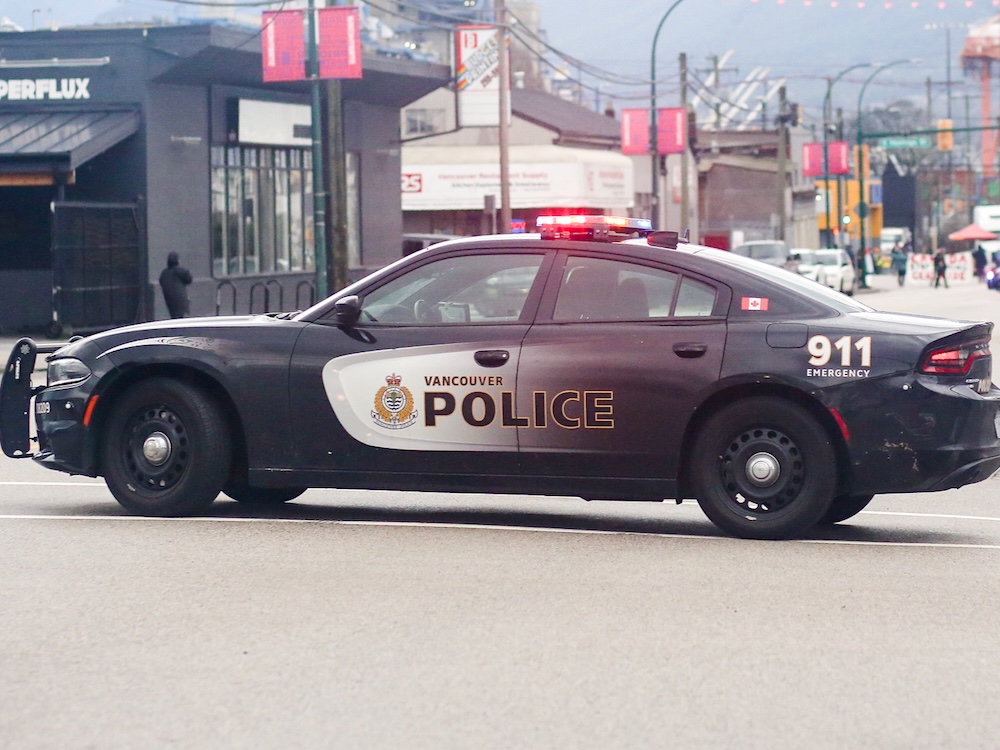
Earlier this fall, the Vancouver Police Department quietly updated the Youth Outreach page of its website to include the names and school assignments of the 17 police officers working in Vancouver public schools.
The change came a year and a half after the VPD told The Tyee that releasing the names and school assignments would be a potential threat to the physical and mental health and safety of the officers and others. The Tyee first requested the names and school assignments of the officers on Dec. 6, 2023.
In September 2023, the school liaison officer program, run jointly by the Vancouver School Board and Vancouver Police Department, was reinstated two years after a previous school board cancelled the nearly 50-year-old program. Over half of the newly elected school trustees ran for election with the ABC Vancouver municipal party, which campaigned on returning police to schools as a student safety measure.
Three months later, on Dec. 6, The Tyee sent a freedom of information request for the names and public school assignments of the 15 police constables, two staff sergeants and one youth justice co-ordinator in the school liaison officer program.
Advocates say it’s important to make this information public because it provides some transparency and accountability over how the program operates.
Sadie Kuehn is a former Vancouver School Board trustee and a member of the Vancouver Police Department’s now-defunct African Descent Advisory Committee, which disbanded last year in part over the department bringing police back to schools without hearing from committee members.
She pushes back on officers’ safety being compromised by knowing their names and what schools they work in.
“We all like and want to be safe in the environments that we’re in,” said Kuehn.
But part of feeling safe for Black, Indigenous and other community members overrepresented in police stops, arrests, use of force and rates of incarceration is knowing who is working in schools, she added. “People take advantage of power.”
Beyond acknowledging it had received our FOI request, the police department didn’t provide a response for four months. And when it did, it was to refuse to release the information.
Citing B.C. privacy legislation, VPD lawyer Darrin Hurwitz pointed specifically to sections 15(1)(f) — “the disclosure could reasonably be expected to endanger the life or physical safety of a law enforcement officer or any other person” — and 19(1)(a) — “could reasonably be expected to threaten anyone else's safety or mental or physical health.”
The Tyee complained to B.C.’s Office of the Information and Privacy Commissioner and by October this year had reached the final inquiry stage where both sides submit their arguments and an adjudicator determines whether the information should be released.
But on Oct. 1, the deadline for the Vancouver Police Department to submit its side, Hurwitz sent The Tyee an email with the names and school assignments of the school liaison officers.
The department had “reconsidered” my request, Hurwitz wrote in the email — 21 months after The Tyee had first sent our freedom of information request.
For those who opposed the return of the school liaison officer program after it was cancelled because of the negative impact on some vulnerable students, including Black and Indigenous students, the delay in releasing the officers’ names and school assignments felt intentional.
“I think that holding it back was a power move to basically wait out the people who were successfully holding those systems to account,” said Karen Tsang, a parent and former executive member of the Vancouver District Parent Advisory Council.
Tsang, whose youngest child graduated high school last school year, has criticized the school board’s decision to return police officers to public schools.
Parker Johnson is a parent, educator and abolitionist who advocated against police in schools before the program was cancelled in April 2021. He was also a member of the Vancouver Police Department’s African Descent Advisory Committee.
“Transparency with the police is always important in terms of accountability,” said Johnson, whose child also recently graduated from the district.
A history of disclosure
The school board and the police department have a history of publicly disclosing the names and school assignments of school liaison officers, both before and after the Vancouver Police Department denied our request for this information.
The school board published the names of all school liaison officers and their school assignments prior to the program’s 2021 cancellation in its annual “VSB Ready Reference” document.
Individual schools, both public and private, published the names of their school liaison officers on their web pages, in school newsletters and in their parent information night slide shows, all available online.
The Griffins’ Nest, Eric Hamber Secondary’s student newspaper, even published an interview with their school liaison officer, Davor Tolja, over a month before The Tyee’s freedom of information request was filed.
And the police department itself would post photos and videos naming school liaison officers, and sometimes the schools they worked in, on its Instagram and X accounts.
The Tyee filed a complaint about the Vancouver Police Department’s response to our FOI request with the Office of the Information and Privacy Commissioner in April 2024. The Tyee’s complaint pointed out the history of disclosing information about school liaison officers.
The Vancouver School Board previously told us that school liaison officers’ names and badge numbers were “available to anyone interacting with them.”
In June 2024, The Tyee revealed that Vancouver Police Department Const. Hardeep Sahota was a school liaison officer at John Oliver Secondary.
At the time Sahota was facing potential disciplinary proceedings for her alleged failure to take notes and five-month delay in submitting her statement following her involvement in the police-caused homicide of Myles Gray in 2015.
Today Sahota, the current school liaison officer at John Oliver, as well as South Hill Education Centre, the Vancouver Learning Network and Crofton House private school, still faces a public hearing with the Office of the Police Complaint Commissioner, alongside the six other officers present when Gray died.
By January 2025, The Tyee had moved to the inquiry stage with the privacy commissioner’s office. It took nine months for the inquiry process to begin.
On Oct. 1, the deadline for the Vancouver Police Department to submit its argument for why school liaison officers’ names and school assignments should not be disclosed, police lawyer Hurwitz instead sent The Tyee a PDF of officers’ names and school assignments, current to Aug. 28, 2025.
At some point between Aug. 3 and Oct. 12, the list of school liaison officers was added to the VPD’s website, according to searches on the Wayback Machine.
The Tyee asked the Vancouver Police Department why it changed its mind about the disclosure, as well as when it decided to post the school liaison officers’ names and school assignments to its own website, and for its response to criticisms outlined in this article. We did not receive a response by publication time.
Remaining questions
Critics of police in public schools still have questions about the school liaison officer program.
Johnson wants to know what training the current school liaison officers receive, as The Tyee previously revealed that the old school liaison officer program did not provide officers special training, despite police claims to the contrary.
Tsang wants a public, easily accessible account of what issues students bring to school liaison officers and how they are addressed. She believes the information can be provided in a way that respects students’ privacy.
“If they are truly a source of good in the community, then that’s what that looks like to me,” she said. “Otherwise it just looks like more useless adults hanging out in a place where children are.”
Tsang also wants assurances that students' statements to school liaison officers are not used to form a record that could follow students into adulthood, or to report students who lack legal immigration status in Canada, or whose parents do, to the Canada Border Services Agency.
The Vancouver Police Department has “access without fear” guidelines for working with people without immigration status.
When asked for her opinion on school liaison officers’ name and school assignment disclosure, Vancouver District Parent Advisory Council chair Melanie Cheng told The Tyee she is more interested in cuts to the district’s Safe and Caring Schools department.
Safe and Caring Schools was created in 2021 to fill the student-supporting role after police were removed from schools, and its staff were supposed to work together with school liaison officers after the program was reinstated.
“It would be great to have engagement with the Vancouver School Board and parents in our district on the specific issue of the school liaison officer program, as part of their review,” Cheng said, adding the school district should reach out to parents for feedback on the program.
In an interview with The Tyee, school board chair Victoria Jung said the Safe and Caring Schools department remains operational and working with the school liaison officer program.
At least some outstanding questions about the school liaison officer program may be covered in an independent third-party program review that is supposed to happen this fall, according to a memorandum of understanding signed between the police and school district.
A spokesperson for the Vancouver School Board told The Tyee the review, which includes feedback surveys filled out by students, will be made public when it comes before the board’s policy and governance standing committee after winter break. Its first meeting of the new year is Feb. 11. ![[Tyee]](/design-article.thetyee.ca/ui/img/yellowblob.png)







Notice about commenting changes
The Tyee’s commenting system will be moving to a new platform on Nov. 12. If you’re already a Tyee commenter you must register with the new system on or after Nov. 12 with your preferred username.More information can be found here.