


 SHARE:
It was February in 2016. FIFA was reeling from a criminal investigation that uncovered decades of corruption, and its newly elected president was promising to do better.
Gianni Infantino stood before the soccer officials from around the world gathered in Cardiff, Wales, and declared that a new era had arrived.
“We will restore the image of FIFA and the respect of FIFA. And everyone in the world will applaud us,” Infantino told representatives of the national soccer associations that make up FIFA’s voting membership and stakeholders.
A decade later, FIFA’s dreams of worldwide respect remain unfulfilled.
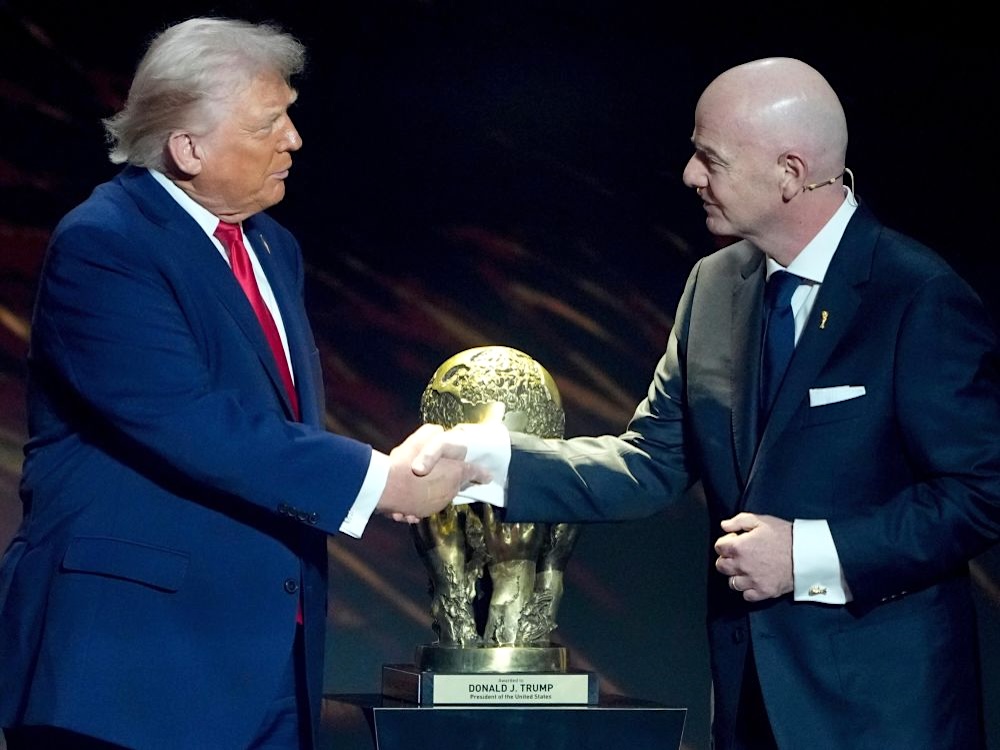
Although the organization is adamant that its bribe-taking days are in the past, FIFA has doubled down on cosy relationships with authoritarians seeking to leverage the “beautiful game” to bolster their own image. Infantino’s awarding of a new FIFA “peace prize” to U.S. President Donald Trump was only the most recent glaring example.
With Vancouver preparing to host seven FIFA World Cup games this year, The Tyee will be publishing stories on the tournament’s impact — for better or worse — on the city and its people.
Having summarized what we know about the World Cup’s impact on Vancouver (seven games, many tourists, various costs to the city and an array of downstream impacts), today we’re offering a primer on the infamous organization beyond the games.
What is FIFA?
FIFA’s sordid past goes back nearly a half-century and is not in dispute — in 2022, a FIFA spokesperson acknowledged that the organization had been “toxic, almost criminal,” before saying it had reformed itself.
The organization’s dubious history is closely tied to its structure and purpose — and the massive popularity of the sport it oversees.
At its core, FIFA is a non-profit association composed of non-profit national soccer/football associations.
Soccer’s global organizations are arranged like a pyramid. At the very bottom are local associations that organize leagues within communities and set standards for games, training and other “grassroots” efforts. The vast majority of games are organized by these local associations, most run by volunteers. (I briefly sat as a director on a minor soccer board; no bribes were given or accepted.)
At the middle of the pyramid are national soccer associations, like Canada Soccer. These associations (and subsidiary provincial or state organizations) set standards for how the game is played in their respective countries, provide insurance and training, certify referees and organize national competitions.
The associations vary hugely in terms of size, competency and legitimacy. Some, like Curaçao, have fewer people than Abbotsford. Others are akin to arms of the government. Some are fiefdoms beset by their own corruption and fraud scandals.
And others, like England’s Football Association, are massive organizations with hundreds of millions of dollars of revenue.
Canada Soccer reported $37.5 million in revenue in 2024.
Most of the national associations are members of FIFA and their continental football association, like CONCACAF (for North America). The operation (and sometimes dysfunction) of the national associations is closely related to various scandals involving FIFA, which sits at the very top of the pyramid and whose central purpose is to facilitate global competition. As with associations further down the pyramid, that requires creating frameworks and setting standards for fields, refereeing, rules and players. It also means organizing global international competitions like the men’s and women’s World Cups and the recently expanded Club World Cup.
The men’s World Cup is FIFA’s main cash cow. The tournament is expected to bring in about half of the $13 billion in revenue the association will receive over its 2023-26 budget cycle.
Those competitions are the reason FIFA exists. They are also why it is notorious.
Of all the soccer played on Earth, FIFA has a direct hand in only a tiny number of games. But the scale and success of the World Cup mean that it takes in a huge amount of revenue. It is supposed to pass that money on to its member associations. Historically, FIFA’s own executives have found that they can siphon off millions for their own enrichment.
And even when they aren’t themselves taking bribes for doling out contracts to companies or awarding tournaments to specific countries, their executives are beholden to a membership who profit — organizationally, personally and sometimes both — when more money is plowed into the world’s largest tournament.
In the beginning, there was just a game
Given the scale of soccer’s popularity and the simplicity of the game — kicking a ball into a goal — it can be easy to miss the fact that it is a relatively new sport, gaining traction only in the latter half of the 19th century. The FIFA and the World Cup we know today are even newer, having mushroomed into their current billion-dollar forms only after the Second World War.
Although FIFA began more than a century ago and three World Cups were organized before the Second World War, the game was mostly a local affair. After the war, the increasing ease of international travel and the growth of live television allowed more frequent games and meant more people watched soccer of all forms. And they loved it.
Today, most observers point to the 1974 election of FIFA president João Havelange as bringing in a new era in FIFA — and its focus on business and corruption.
After the war soccer grew in popularity, and FIFA’s resurrected World Cup became globally popular. National soccer associations across the world began joining the organization. Prior to Havelange, FIFA had been a relatively modest operation, governed by sport administrators, many of whom were military veterans and amateur soccer promoters and officials.
Havelange, a Brazilian business-focused political animal and lawyer, was totally different — and not just because he wasn’t from Europe. Havelange had competed in the Berlin Summer Olympics as a swimmer and later ran a bus company. He saw the potential for glory and fame in international sports and went about orchestrating a campaign that would dethrone the longtime existing FIFA president, an old English referee named Stanley Rous.
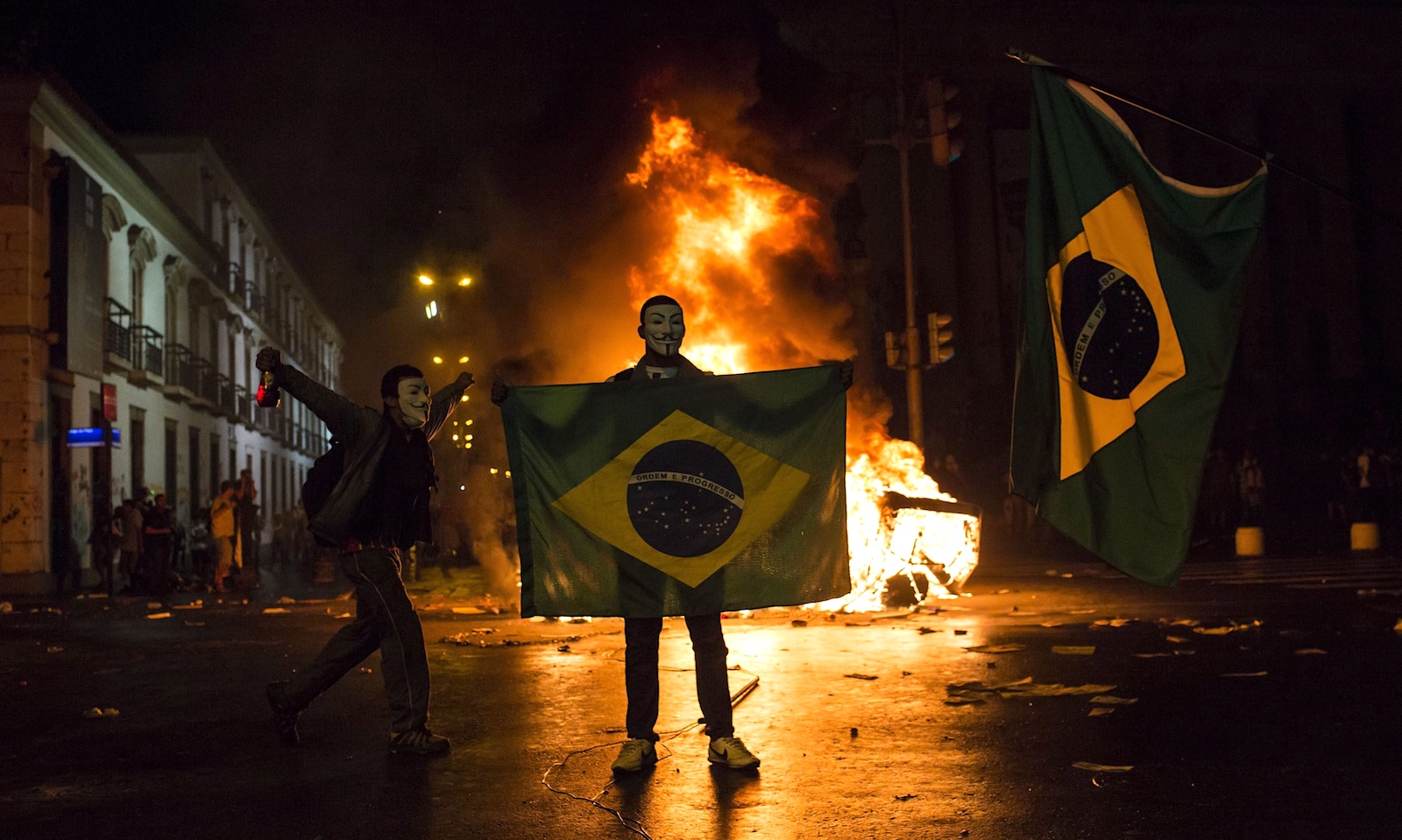
Havelange recognized that the route to FIFA power ran not through Europe and the associations governing soccer in countries like Germany and France, but through associations and administrators who ran soccer in the rest of the world.
“Havelange had seen the future,” a colleague who helped orchestrate his rise to power later told journalist Andrew Jennings. “He knew that if he became the president of the only federation already running its own high-profile world championship, then he would enjoy huge economic power.”
After defeating Rous, Havelange would lead FIFA for more than two decades, overseeing the dramatic expansion of the World Cup and international soccer. His business acumen and force of will led to changes that saw more teams competing at the World Cup and millions more spectators, both in person and on television. The growth of the World Cup brought in consistently more money to FIFA, its member associations and the “sportocrats” who accepted bribes and kickbacks to steer competitions and contracts to those who would pay.
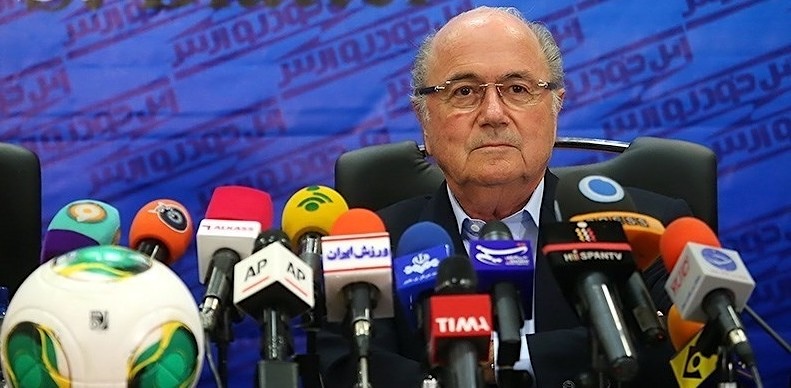
When Havelange eventually departed the scene, his second-in-command, Sepp Blatter, took over. Corruption was so firmly at the heart of FIFA’s modus operandi that when FIFA financed its own widely panned 2014 hagiographic film about its history, the movie acknowledged the tawdry past — painting Blatter as a reforming figure.
FIFA’s penchant for corruption was an open secret for decades, but Andrew Jennings’ work for BBC thrust it into the spotlight in 2010. A series of revelations followed, culminating in a wave of arrests in 2015, Blatter’s resignation, the election of Infantino, and reforms designed to buy the organization more credibility.
The authoritarians
There is the perception among some that the bribes and kickbacks are a victimless crime, longtime Canadian journalist Bruce Arthur says.
“You’re skimming off contracts, you’re making money off TV deals, you’re making money off stadium deals,” he told The Tyee. “It tends to be governments and private corporations giving you the money more than anybody else.”
But FIFA has found it hard to persuade close watchers that it has truly reformed itself. Last year, a coalition of sports experts published an open letter that said FIFA remained poorly governed and opaque and that the structural flaws that had led to the problems remained. The organization’s model, the letter said, “disincentivizes ethical conduct.”
Unfortunately, the corruption long reflected a culture that has frequently left FIFA engaging with, if not actively supporting, countries where the rule of law is defined by a single person or ruling party. And even as FIFA has attempted to distance itself from its bribe-taking past, at least in public, it has doubled down on close relationships with autocratic regimes that have left behind very human victims.
FIFA — like the Olympic Games — has a history of excusing countries’ human rights abuses if punishments could affect the organization or the games it organizes. And its relationships with authoritarian countries predates even Havelange’s ascension in 1974.
His predecessor, Rous, infamously supported apartheid South Africa’s admission to FIFA after that country had been expelled from the Confederation of African Football.
And in 1973, after a coup brought Augusto Pinochet to power in Chile, FIFA inspectors declared the country’s football stadium an appropriate venue for an upcoming World Cup qualification match between Chile and the Soviet Union, despite it housing thousands of prisoners. (Many prisoners were ushered below ground, away from inspectors, but some remained in the stands; the Soviet Union boycotted the match, allowing Chile to qualify for the event.)
Under Havelange, FIFA remained cosy with dictatorships. Officials co-operated with Argentina’s ruling military junta in 1978 and Spain’s Franco dictatorship in 1982 to hold World Cups in the respective countries. And after tournaments in the 1990s and 2000s bounced between democracies, FIFA’s executives awarded the 2018 and 2022 tournaments to Russia and Qatar after accepting millions in bribes.
Although those tournaments were awarded to those countries during Blatter’s reign, Infantino declined to move either after taking over, even after Russia invaded eastern Ukraine and hundreds — perhaps thousands — died while building new stadiums in Qatar. In 2023, FIFA awarded the 2034 World Cup to Saudi Arabia, a country that has seen a wave of executions in recent years and that murdered a journalist in an embassy in 2018.
Democratic countries and their politicians are not immune from paying or taking bribes. But many observers say FIFA seems inherently more comfortable dealing with authoritarian regimes where corruption is endemic and accepted and where the public might not balk at spending billions of dollars to construct stadiums that will sit empty after the tournament ends.
For FIFA, authoritarianism can be a selling point, not an obstacle, says Michael Caley, who co-hosts a podcast called The Double Pivot that frequently considers the interaction between the game of soccer and the money and institutions that increasingly pay for it.
“Saudi Arabia can say, ‘We get to host a World Cup and the crown prince can do whatever he wants and those two things are not in conflict. No one is making us bow down to western institutions to be involved in something like the World Cup,’” Caley said.
For authoritarian regimes, hosting a World Cup brings legitimacy and shows they can participate in global commerce and discourse without bothering with cumbersome ethical or democratic reforms.
FIFA, meanwhile, gets a host willing to spend billions on a highly lucrative soccer tournament — and a host without the critics, advocates and politicians who create hassles in democratic countries.
“It is typically much cleaner to work in places where there aren’t any processes for overseeing how a contract is given out; it’s easier, if there’s kickbacks all over the place,” Caley said. “That fits their model better.”
The contrast can be seen in New York, where that city’s newly elected mayor, Zohran Mamdani, has publicly attacked FIFA’s dynamic ticketing scheme that will hike prices for in-demand games for next year’s event.
While Mamdani’s power is limited on that front (games in his area will be held in New Jersey, not New York), politicians and officials can complicate issues in other ways, whether it be refusing to adjust local laws to suit FIFA, strictly enforcing environmental regulations or simply refraining from moving impoverished people out of areas near stadiums.
Fan groups, especially in Europe, are notorious for staging protests when ticket prices are perceived to be too high.
None of those headaches exist in countries without robust civil societies.
The curse of soccer
The tawdriness and general unseemliness of soccer’s largest international governing body can seem mismatched with the sport’s global popularity. Usually (at least, until the rise of Trump) the world’s largest celebrities, figures, politicians and institutions have seen value in trying to maintain an upstanding image.
And even the International Olympic Committee, an organization that was beset by its own corruption scandals, has sought to hold itself to a higher standard in recent years.
But the unequalled global popularity of both soccer and the World Cup has left FIFA with few incentives to reform itself, act more ethically and stop palling around with dictators, Arthur says.
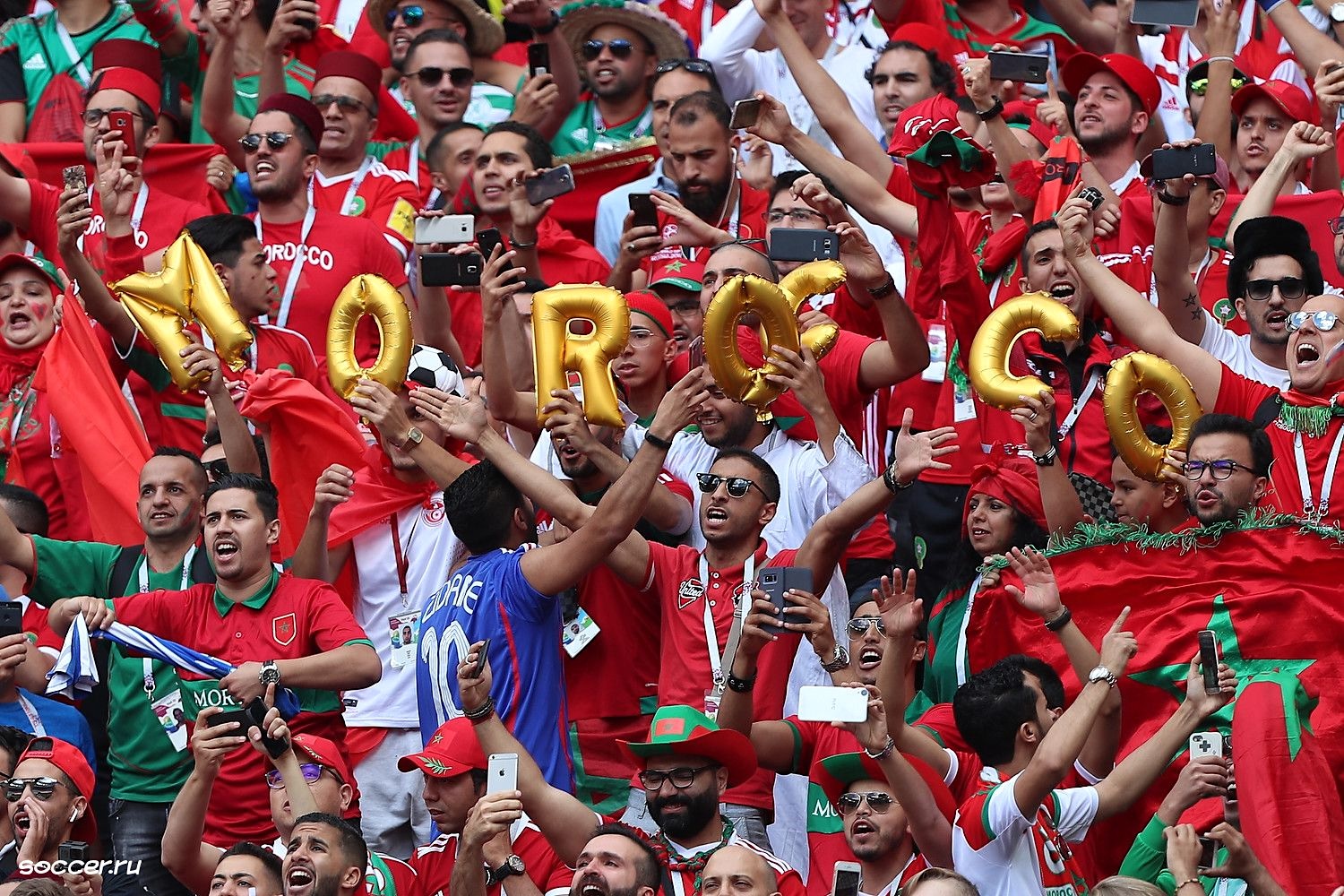
“The Olympics is selling the human spirit. What FIFA is selling is domestic religions,” said Arthur, who has covered multiple Olympics and World Cups in person. “Going to a World Cup, you really get an understanding of how deep the love of this sport is in different countries.
“This is what they’re selling, so they haven’t had to be good because they’ve got the greatest product in the world.”
The Trump challenge
FIFA spokespeople have explained their president’s close relationship with Trump as being part of ongoing efforts to work with the leaders of all host countries.
In a statement to The Tyee, the organization said those who thought it is still corrupt were wrong.
“In the past decade, FIFA has made significant changes and has transformed from a toxic institution to a respected, trusted and modern governing body,” FIFA officials wrote. They said that perception was reinforced by the U.S. Department of Justice’s decision to award it $201 million in compensation for losses it suffered “as victims of decades of football corruption schemes.”
As for the FIFA Peace Prize, the statement said the organization deserves praise rather than ridicule.
“Rather than be criticized for endorsing peace in a divided world, FIFA should be recognized for what it is — a global governing body that wants to make the future a brighter place,” the statement said.
At first glance, Trump might seem like the perfect politician for FIFA and Infantino to do business with.
Like FIFA, Trump is explicitly and unabashedly transactional in his relationships. He has repeatedly demonstrated and proclaimed that he will assist those who assist and praise him — and punish critics and opponents.
“If you look at how comfortably they’re dealing with Trump, for these guys this is the water they swim in and the basic business hasn’t changed,” Arthur said.
Trump is happy to take credit for hosting the world’s most popular sporting event. Infantino, meanwhile, needs to try to ensure that the U.S. federal government doesn’t hinder FIFA’s big show, even as it institutes new rules on migrants and travellers from foreign countries. Beyond the institutions they control, both Trump and Infantino have large public profiles and little sense of shame.
“It’s two massive egos stroking each other,” a former US Soccer official told the Los Angeles Times last month.
Caley says Infantino appears to particularly relish his interactions with Trump.
“I see Gianni Infantino up onstage with Trump, and I think he is like, ‘This is great! This is way better than having to deal with the prime minister of Canada, or the president of Mexico,’” he said. “That’s where they’re comfortable.”
Trump could present a new opportunity for FIFA and Infantino, potentially allowing them to use the authoritarian playbook in a historically democratic country.
But Caley sees landmines. Because even as Trump exchanges favours for patronage, he does not yet wield all the levers of government or the law.
“There’s a really interesting story for this World Cup, which is that the U.S. is both a country with incredibly extensive legal systems and rules and a country where the president wants to run a humongous bribe operation,” Caley said.
“I am interested in whether FIFA is able to be nimble enough to do all the stuff that pleases Trump, but not run into issues where the attorney general in Brooklyn can easily find a bunch of crimes.”
Trump has repeatedly spoken of admiration for autocrats and tried to emulate the behaviour and actions of strongmen the world over. But he is also increasingly unpopular and there is no guarantee that even if FIFA could get Trump to bend the federal government to its will now, those activities won’t come under scrutiny by either present-day state attorneys or future federal justice officials.
And Trump himself remains an unpredictable wild card who may not personally care about the World Cup or need its legitimacy in the same way as authoritarian regimes elsewhere in the world.
This month he paused issuing immigration visas to applicants from dozens of countries. While that move won’t affect the issuance of tourist visas, it does raise the possibility of future restrictions that do limit the ability of travellers from abroad to visit the United States.
Already, Trump’s policies have led many to declare they won’t travel to the United States because of the threat of detention.
“Trump is wildly unpredictable,” Caley said. “I do wonder if FIFA understands how weird this could potentially get.” ![[Tyee]](/design-article.thetyee.ca/ui/img/yellowblob.png)







Tyee Commenting Guidelines
Please note that email notifications for replies are not currently working due to a software issue which may be resolved in a future update.
Comments that violate guidelines risk being deleted, and violations may result in a temporary or permanent user ban. Maintain the spirit of good conversation to stay in the discussion and be patient with moderators. Comments are reviewed regularly but not in real time.
Do:
Do not: