

 SHARE:
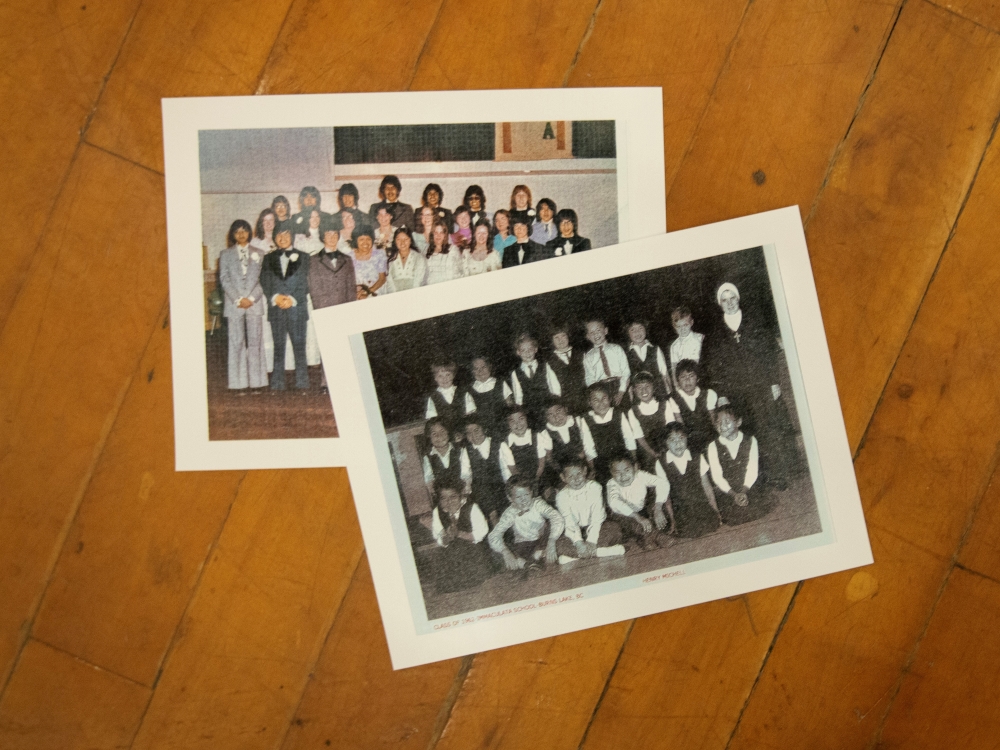
The Canadian Human Rights Tribunal has ruled that the RCMP discriminated against First Nations former students when it investigated claims of historical abuse at two northern B.C. schools.
The decision comes 12 years after the RCMP concluded its investigation into a “well-known Canadian” accused of sexually, physically and mentally abusing children at two schools where he worked as a physical education teacher in the late 1960s and early 1970s.
The man’s identity is protected by a confidentiality order issued by the tribunal in 2022. He is referred to by the tribunal as “A.B.”
The ruling, which was released Monday, had been more than a year overdue.
In the decision, the tribunal member who heard the case, Colleen Harrington, wrote that although the RCMP’s investigation did not fall “below the standard of a ‘normal’ police investigation,” police still discriminated against some complainants and witnesses.
Harrington found that officers failed to fully inform witnesses of their legal options and improperly asked for one to take a lie detector test. She ruled that Indigenous identity was likely “at least a factor” in the discrimination and that police actions further eroded First Nations’ trust in police.
“The evidence shows that, as a result of these negative interactions and beliefs about the RCMP, the Indigenous witnesses did not expect that the RCMP would take them or their complaints seriously,” she wrote.
“As a result of this adverse treatment, their distrust of the RCMP was further entrenched, thus perpetuating the cycle of fear and distrust of the RCMP by Indigenous people and the historical disadvantages suffered by Indigenous peoples in relation to the RCMP.”
Harrington ordered the RCMP to review its policies to ensure trauma-informed, culturally appropriate investigations. She also ordered the RCMP to pay $7,500 in damages each to eight First Nations former students from Prince George College and Immaculata school in Burns Lake.
Damages were awarded to four of the six complainants who initiated the case, along with four others who were witnesses in the investigation and deemed to be victims of discrimination. In two cases, the compensation will be paid to the estates of those who died in the nine years since the filing of the human rights complaint. In total, three of the complainants, all from the Lake Babine Nation, have died since the complaint was filed in 2017.
The six complainants — all former students — alleged that police stereotypes and biased attitudes toward Indigenous people, coupled with favouritism toward “a powerful non-Indigenous individual,” led to an investigation that was flawed, incomplete and racially biased.
The RCMP launched its probe in July 2012 after a former Immaculata student reported to the Burns Lake detachment that A.B. had sexually and physically abused her when she was 11 years old. The investigation lasted 18 months and led to a “spinoff” investigation into broader allegations of abuse by teachers, nuns, priests and other school staff at Immaculata.
The allegations were reported in the Georgia Straight in September 2012, after which A.B. filed a defamation lawsuit against the journalist. Laura Robinson countered with her own lawsuit. The man later withdrew his lawsuit while Robinson’s lawsuit was dismissed by the B.C. Supreme Court.

The RCMP concluded its investigation into the abuse without recommending charges, after investigating officers declared there was insufficient evidence to substantiate the claims.
The tribunal hearing began in May 2023 and continued intermittently over 44 days into early 2024. Harrington heard from 38 witnesses, including 15 former students who had shared their experiences with police during its investigation.
The Canadian Human Rights Tribunal inquiry marked the first time the First Nations complainants were offered the chance to publicly share their stories of abuse.
They described experiencing and witnessing sexual, physical and emotional abuse at the schools. They said they were beaten, forcibly grabbed by the hair, ears or arms, and hit with sticks for being slow during physical education classes, speaking their Carrier language or getting something wrong. At times, they said, school officials beat them for no apparent reason at all.
Harrington said she believed all the witnesses who testified at the inquiry.
“I did not doubt that any witness was endeavouring to tell the truth in their testimony,” she wrote, despite the years that had elapsed since both the police investigation and the abuse.
She said evidence from RCMP witnesses showed that the investigations “were complex and were complicated,” in part because of how they unfolded and also because of the significant media coverage surrounding the case.
The lack of charges following the 18-month investigation was not a reflection of whether police took the complaints seriously, Harrington determined, but rather that police must consider whether the evidence is likely to lead to a conviction.
“I saw no evidence that the investigators disbelieved that the Indigenous complainants experienced abuse at school when they were children,” she said.
But she identified several flaws in the investigation that she believed amounted to discrimination based on Indigenous identity.
She found that the police officer who took the initial sexual assault complaint at the Burns Lake detachment had discriminated against the woman making the allegations by repeatedly asking her to take a polygraph test, also known as a lie detector.
She also found that an investigator had discriminated against a man who shared stories of abuse at Prince George College by ending the interview because the spinoff investigation was focused only on Immaculata. The officer should have informed the man he could file a separate complaint, she said.
Harrington also found that the RCMP’s failure to follow up with five witnesses about the outcome of their investigation and, in some cases, inform them that they could file their own abuse complaints amounted to adverse treatment or the denial of police services.
But Harrington stopped short of ordering two significant remedies that were sought by the complainants. They had requested that the RCMP divest itself of abuse investigations in Indigenous communities and that community-led teams take over investigations.
They had also asked that their original complaint be reinvestigated by one of these teams.
Harrington said that because the investigation was not discriminatory overall, she would not award “such broad public interest remedies.”
She ordered the RCMP to review its policies and training related to crime complaints from Indigenous people when it comes to allegations of historical abuse involving Indigenous people to ensure trauma-informed, culturally appropriate investigations. The RCMP has one year to report back to the Canadian Human Rights Tribunal on its review.
“While I decline to order all of the proposed public interest remedies, I do consider that to prevent recurrences of the discrimination found in this case, a review of policies guiding RCMP investigators is warranted,” she said.
“Eliminating the recurrence of the kinds of adverse impacts found requires policy guidance and shifts in culture, indicating that an order directed to the policy level is required to prevent further, similar occurrences that perpetuate harm and mistrust.”
The Tyee will have coverage of the reaction to the findings next week.
We have closed comments for this story due to the legal situation in relation to the piece. Thanks for your understanding. ![[Tyee]](/design-article.thetyee.ca/ui/img/yellowblob.png)
Read more: Indigenous, Rights + Justice