

 SHARE:
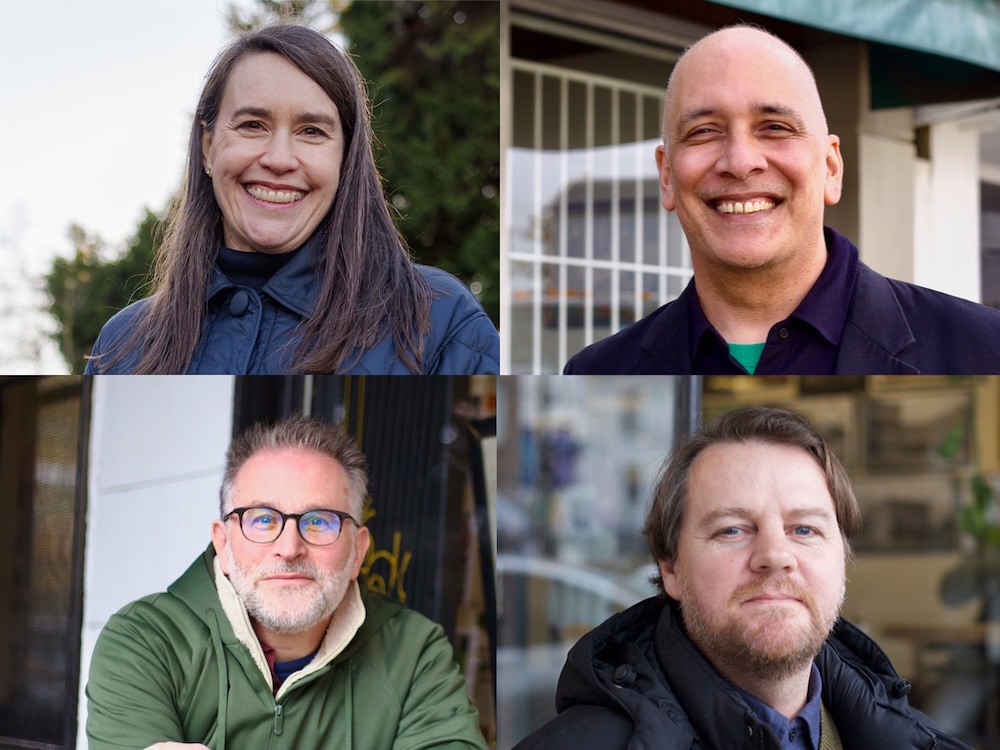
After months of behind-the-scenes negotiations — and one public pitch that may or may not have been an ultimatum — Vancouver's three progressive municipal parties have reached a deal to avoid splitting the vote in October's election.
Last week OneCity, the Green Party of Vancouver and the Coalition of Progressive Electors, better known as COPE, announced they had reached an agreement to run up to 13 candidates each across the city council, school board and park board races. Municipal elections will occur across British Columbia this fall on Oct. 17.
Each party will run up to five city council candidates. COPE and the Greens will run up to four candidates each for school board and park board. OneCity will run up to three for park board and up to five for school board.
The parties reflected on last year's byelection results, where each party ran a single candidate for the two open council seats, said Shawn Vulliez, COPE's campaign director.
COPE's Sean Orr and OneCity's Lucy Maloney won the election. The Greens' Annette Reilly came in fourth place behind Colleen Hardwick with TEAM for a Livable Vancouver.
"The byelection ratio was something that was not too overwhelming: enabling voter choice, at the same time not blowing up the ballot with too many people," said Vulliez.
In the 2022 election across all three municipal races the Greens ran 10 candidates, COPE ran nine candidates and OneCity ran 12 candidates.
Critics claim the lack of agreement among the progressive parties led to majority wins in all three races by A Better City Vancouver, also known as ABC. COPE was shut out of council and the park board entirely, with only trustee Suzie Mah winning her school board race.
The Greens and OneCity captured a combined three seats on council and three seats on school board. On park board, the Greens' Tom Digby was the sole non-ABC candidate to win his election.
The current deal among the parties is not a perfect plan for ensuring votes for the progressive candidates don't cancel one another out, said pollster Mario Canseco. But it's not a bad plan, either. (Canseco, the president of polling company Research Co., has recently done polling work for the Vancouver Liberals, another municipal political party.)
"It's not the Wild West that we had in 2022. And it's a better situation for those three progressive parties than it was before," said Canseco.
A strategy for mayor is still to come
The candidate numbers differ for the parties on the school board and park board to reflect OneCity's interest in the school board and the Greens’ interest in the park board, the parties' representatives told The Tyee.
"OneCity's always considered, since our inception, school board as a really important piece of the work we do," said Anna Chudnovsky, a OneCity volunteer and member of the party's negotiating team.
"We continue to have really invested time and energy in building a robust school board caucus and some really meaningful policies that are important to us at the school board, but also across our party."
Current Vancouver School Board trustee Jennifer Reddy is a OneCity member, while trustee Suzie Mah represents COPE. Trustees Janet Fraser and Lois Chan-Pedley represent the Greens.
"At COPE we're comfortable that we're going to elect four great people. We think with the other parties we're going to get our agenda substantially done on school board without a majority," said Vulliez.
Both COPE and the Greens still need to bring this deal to their membership for a vote, which both parties said would take place in the first half of May.
All three parties will be holding votes open to their membership during the same time period, as well, to determine their non-mayoral candidates.
The tri-party agreement does not include mayoral candidates. Both OneCity and the Greens have announced mayoral candidates in William Azaroff and Pete Fry, respectively. COPE has indicated they are also considering running a mayoral nominee.
All three parties told The Tyee they have agreed to revisit the mayoral candidate discussion in mid-July, with a deadline later in the summer to determine who will continue their candidacy and who will drop out of the race.
"We do feel it’s fair for each party to test their candidate's strengths with the voting public," said Nick Poppell, board chair for the Green Party of Vancouver.
While there hasn't been a formal agreement, both COPE and the Greens told The Tyee factors such as volunteer numbers, money raised and public opinion polling will be considered when deciding which candidate is best positioned to be elected as mayor come October.
"If our joint goal is to defeat Ken Sim and replace him, then we can do that by putting the strongest candidate forward for mayor," Poppell said.
The challenge for the three parties
In 2022, ABC Vancouver's Ken Sim received 50 per cent of votes for mayor. The rest of the votes were split mainly among four other candidates. OneCity, COPE and the Greens did not run mayoral candidates in 2022.
By eventually whittling down to just one progressive party mayoral candidate, the three parties are hoping to avoid a vote split that would see Sim win again in October.
They will have to attract disaffected ABC voters, Canseco said.
“When you look back at the early stages of the party, it’s almost like, ‘We're everything! We're kind of progressive, and we're pro-development,’” he said.
“Now it's seen as more of a centre-right party. So if you have some of those progressive elements that said, ‘Kennedy Stewart didn't convince me, let's see what Ken Sim's about,’ those are the voters that you're going after.”
There are currently six candidates declared for the mayoral race: Sim with ABC Vancouver, Fry with the Green Party of Vancouver, Azaroff with OneCity, Rebecca Bligh with Vote Vancouver, Kareem Allam with the Vancouver Liberals, and Colleen Hardwick with TEAM for a Livable Vancouver.
This past February, COPE proposed the idea of a “people's primary” based on popularity with voters to determine which progressive party would run a mayoral candidate. However, no details on how that would work were publicly shared.
Later that same month, OneCity's Azaroff released a public proposal for a “progressive primary.” Giving the other two parties just four days to agree, the primary would have been conducted based on existing party memberships' votes for a single mayoral candidate.
At the time, both COPE and Green representatives described Azaroff's proposal as an “ultimatum.” But Azaroff told The Tyee he did not think COPE's “people's primary” would work.
The loose structure of the mayoral candidate selection the parties are suggesting now more closely resembles COPE's primary proposal. But when asked what changed OneCity's mind, Chudnovsky did not answer directly.
“We spent a lot of time at the negotiating table talking about this, but we haven't discovered yet what a perfect path is” to agreeing which mayoral candidate will stay in the race, she said.
“But there is a good-faith commitment from all three parties to continue talking about it.” ![[Tyee]](/design-article.thetyee.ca/ui/img/yellowblob.png)
Read more: Municipal Politics




Tyee Commenting Guidelines
Please note that email notifications for replies are not currently working due to a software issue which may be resolved in a future update.
Comments that violate guidelines risk being deleted, and violations may result in a temporary or permanent user ban. Maintain the spirit of good conversation to stay in the discussion and be patient with moderators. Comments are reviewed regularly but not in real time.
Do:
Do not: