

 SHARE:
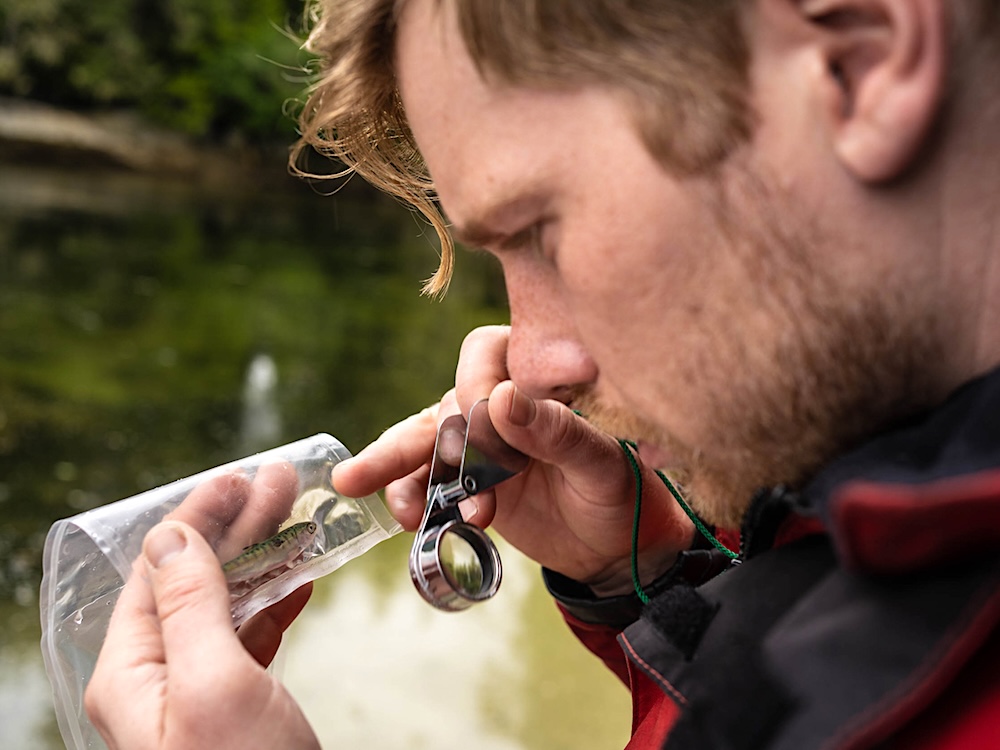
Salmon scientists are worried about steep cuts at a world-leading genomics program at Fisheries and Oceans Canada, commonly referred to as DFO.
DFO has confirmed to The Tyee that a shakeup is happening at its genomics program at the Molecular Genetics Laboratory at the Pacific Biological Station in Nanaimo, but wouldn’t speak to the extent of the changes.
The scientists The Tyee spoke with, who are current and former employees and collaborators of the program, said about half the team, including several very experienced people, have been removed from the lab. They worry the lab will become a shell of its former self — that it will still exist on paper but won’t be able to do the high-quality scientific inquiry that it is known for.
The scientists also emphasized that it’s not too late for DFO to reverse these changes. They told The Tyee they hoped that a recent, unrelated, $413-million federal investment to “restore vulnerable Pacific Salmon populations and their habitat” could be used to save the genomics program amidst a scheduled downsizing of DFO.
Many salmon populations across the West Coast have been declining for decades, and high-quality science is needed to understand what is happening and reverse it.
The genomics program was one of the only labs at DFO producing science critical of aquaculture, scientists told The Tyee.
The head of the lab, Kristi Miller, was one of the first scientists to find that fish farms in B.C. were infecting wild fish populations with the highly contagious Piscine orthoreovirus back in 2012. Her research was kept from public release for 10 years and she was not allowed to talk about her science.
Speaking to salmon
The ocean used to be a “black box” for salmon research because we didn’t have the tools to understand what was killing fish at sea, Sean Godwin, an assistant professor at the University of California, Davis, and adjunct professor at Simon Fraser University, told The Tyee.
Godwin, who has collaborated with the Molecular Genetics Laboratory but never worked for DFO, said the genomics program was helping change that.
The genomics program was built from the ground up by Miller, who worked as a senior research scientist for DFO for more than 30 years before retiring last fall.
Miller told The Tyee her team developed three main tools that let the salmon “speak” directly to researchers. High-throughput pathogen screening told researchers what pathogens were making a fish sick, the salmon Fit-Chip told them what was stressing a fish out, and environmental DNA/RNA told them which salmon food, pathogens or predators were in a geographic area.
Altogether these tools took decades to build. They involved input from about 40 students and researchers and cost millions of dollars, Miller said.
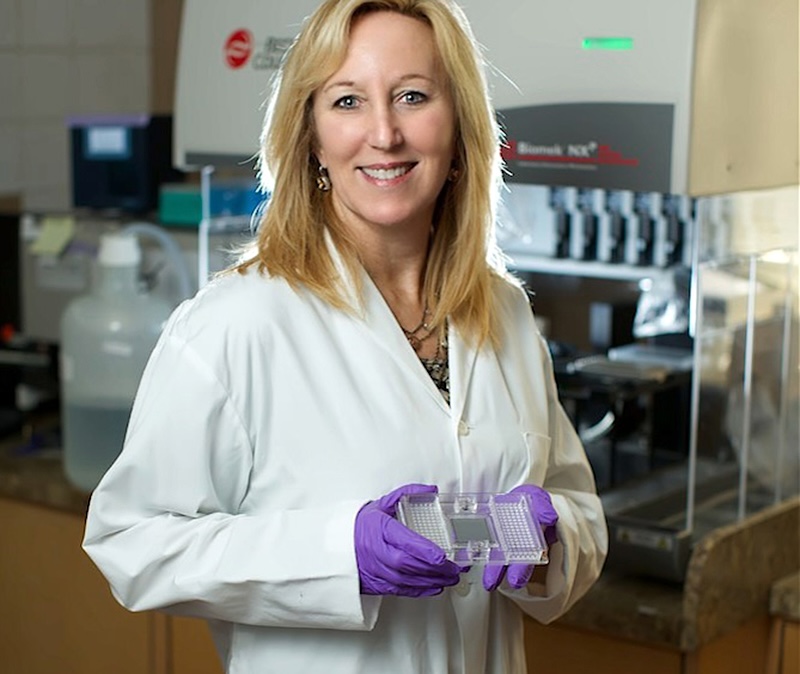
The tools “fundamentally changed” Pacific salmon research, helped reshape how scientists could study salmon health and have been used in over 200 published studies.
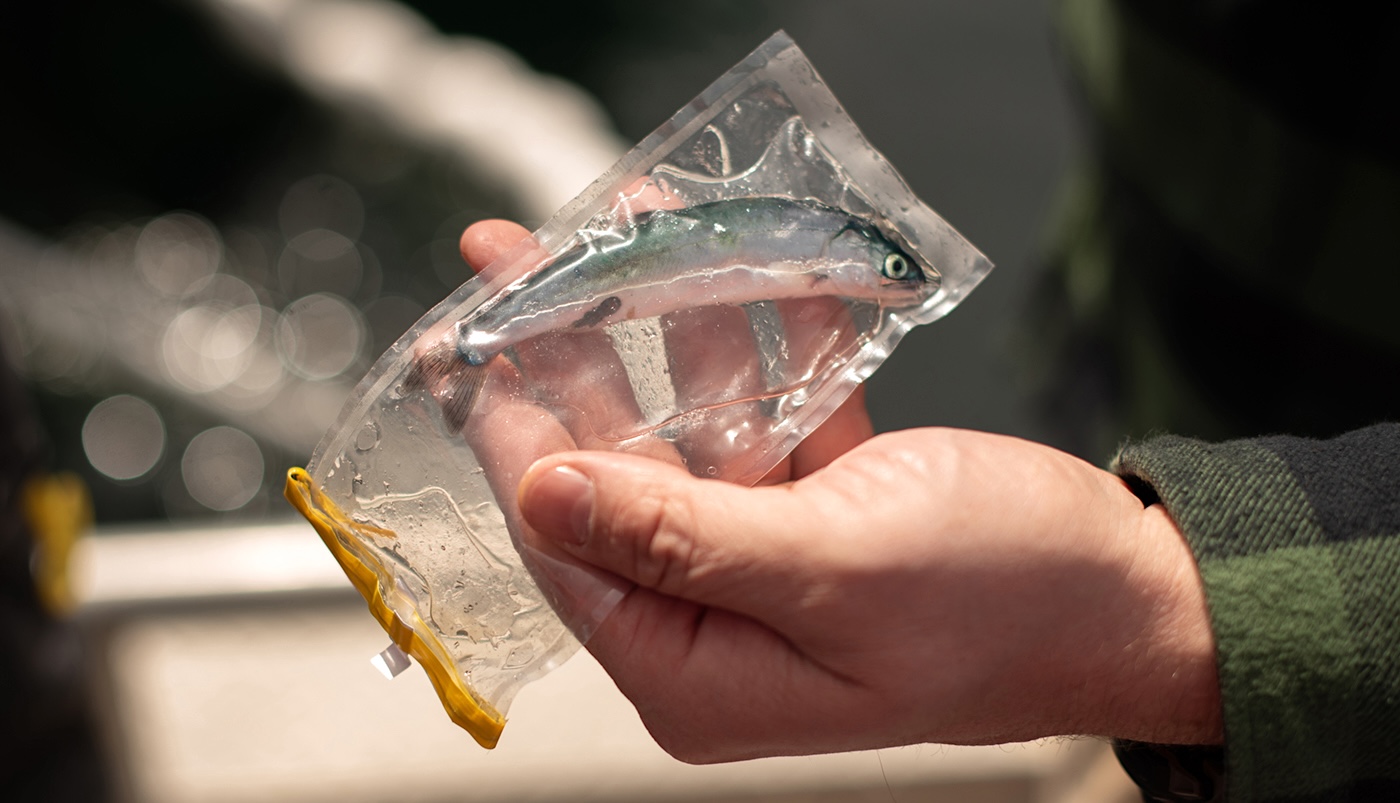
The program used a type of PCR testing to check non-lethal gill biopsies collected from wild salmon for evidence of pathogens and environmental stressors.
That’s the same PCR testing that was used to check nasal swabs for COVID-19.
For decades the team has been building a huge database of “assays,” or samples of salmon pathogens or salmon stressors from across B.C. The biopsies can then be compared with the assays to understand what stressors wild salmon were facing.
To develop the assays, researchers exposed salmon to different environments in the lab: high temperatures, low food, changes in salinity or oxygen, high viral load. Then they checked what patterns of genes the salmon’s body expressed in reaction.
Once they knew how the expression of these genes changed in response to the stressor, they could check a wild salmon for co-ordinated gene‑expression patterns, which told researchers if that wild salmon had experienced that specific stressor.
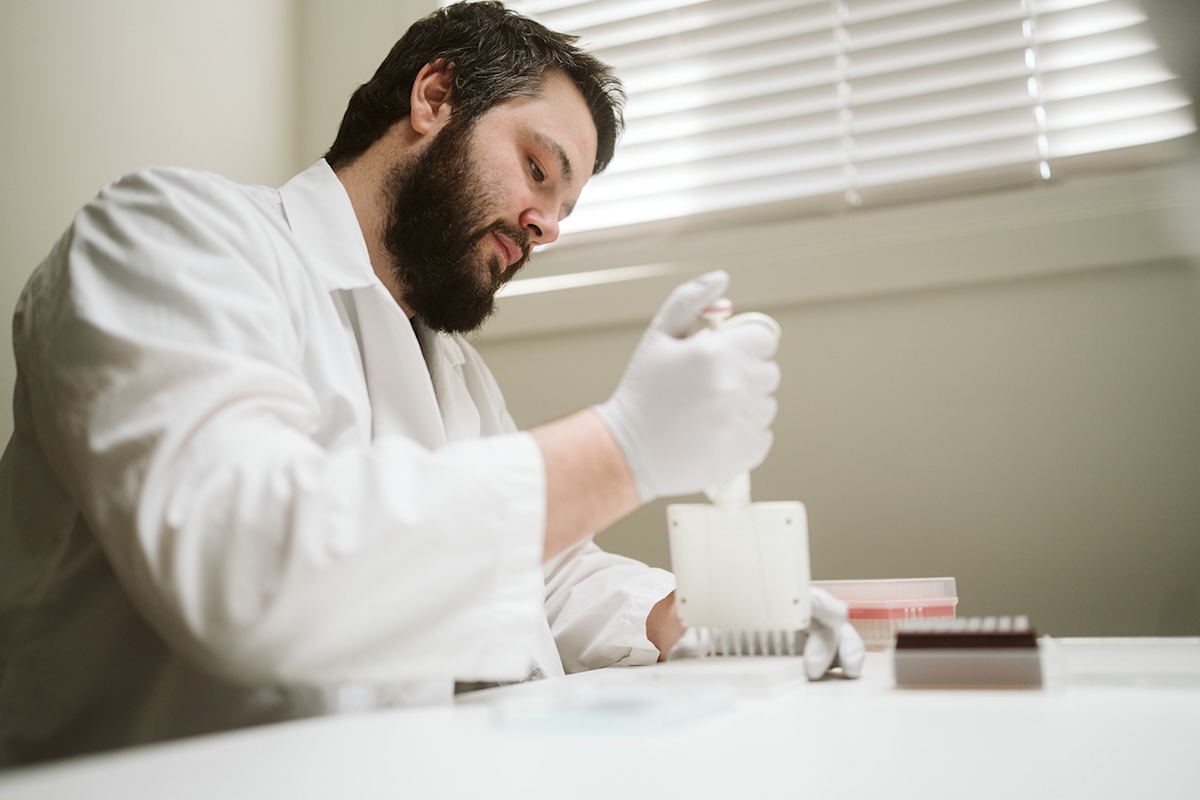
The genomics program also used environmental DNA/RNA. Water samples were collected from different geographic areas and analyzed for DNA and RNA. The presence of different kinds of DNA and RNA told researchers what life forms were in the area — if salmon were present, what kind of salmon were present and what pathogens, food sources and predators were also in the area. This tool could also be used in hatcheries to check for thermal stress or pathogen exposure without handling fish, Miller said.
Before the recent shakeup the genomics program could test 96 samples from eight different species of salmon and trout for 96 assays, several times a day, resulting in thousands of assays run in a 24-hour period, Miller said.
Researchers could also mix and match what assays they wanted to test a sample for.
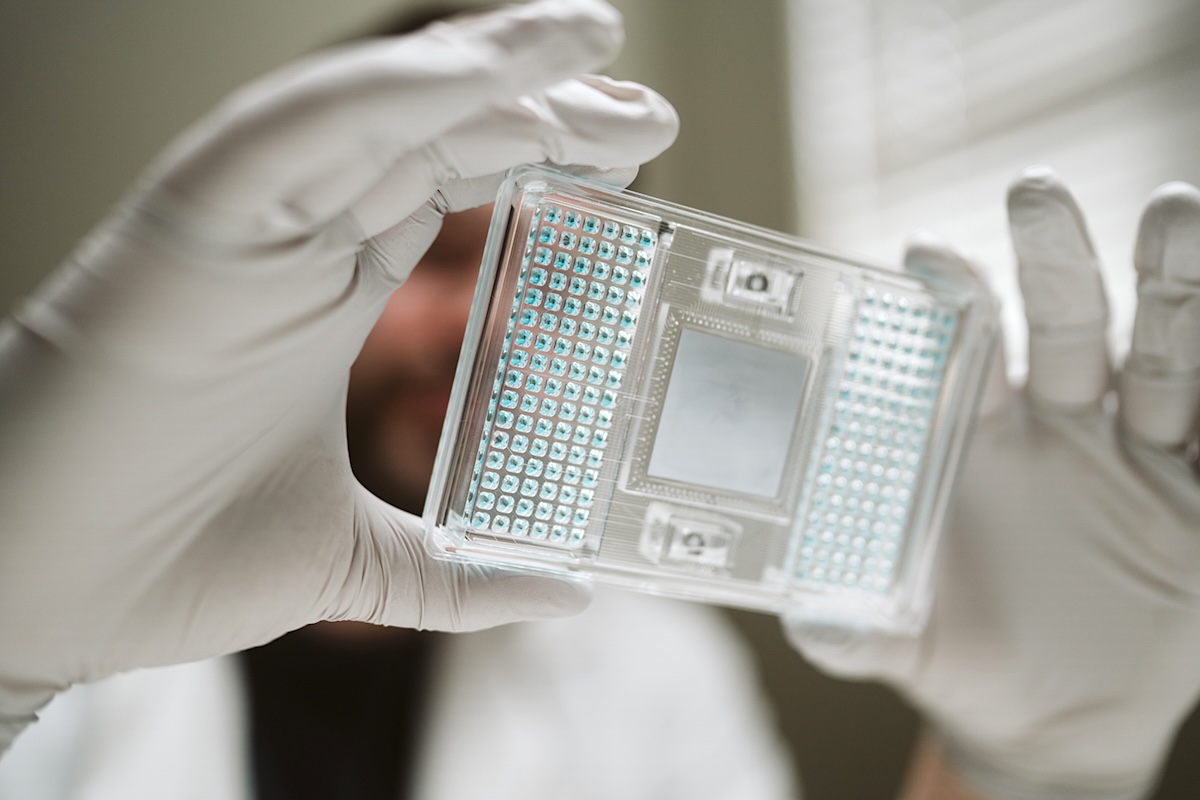
This process required a highly specialized team working closely together. Expertise was needed in field sampling, laboratory processing, database management, statistical classification, modelling and scientific writing, Miller said. It could take a full year to learn how to do any one of those jobs, and no single person did them all, she added.
It would not be practical for another department to try to take on this work or run it off the side of the desk, she said.
The shakeup
It’s unclear what exactly will happen with the genomics program. As The Tyee was reporting this story, we received different, sometimes conflicting, information from salmon scientists and DFO.
Miller said that when she retired in November, her managers said in “no uncertain terms” that the genomics program would continue.
But in the months after her departure, things changed.
In February, salmon researchers sent a letter to federal Minister of Fisheries Joanne Thompson asking her to save the genomics program.
In late March, The Tyee got an email tip that an important lab was being shut down and reached out to DFO’s media team to ask what was happening.
In response, DFO sent an email saying it was reviewing the genomics program and “realigning capacity to current resource levels and continuing the work within other teams.”
A spokesperson confirmed this meant the genomics program was being dissolved due to budget cuts, and the work of the genomics lab was moved to other departments.
Miller told The Tyee that she’s aware of five staff who have been let go from the program. The remaining four long-term technicians and biologists, “who worked for the program for over 25 years,” are being moved to other laboratories, Miller said.
Will Bugg, an independent post-doctoral researcher working with the genomics program to study conservation and environmental impacts on wild salmon, told The Tyee the layoffs cut some very experienced people from the program, including the lab’s analyst manager, the lab’s database manager and Miller’s replacement as head of the lab.
“Layoffs” is the wording Miller and Bugg both used to describe the shakeup.
In its emails to The Tyee, DFO used wording such as “an employee’s decision to leave the department.” When asked directly how many people had been laid off or to confirm that half the team had been laid off, the DFO spokesperson said they wouldn’t “comment on matters related to personnel.”
What is clear is that DFO is actively downsizing.
In a response to the salmon researchers’ letter, DFO said its budget had been cut by $192.7 million and it was “refocusing operations, streamlining internal services and eliminating redundant functions.”
That includes cutting about 551 full-time equivalent jobs by 2028-29, according to a DFO financial update. A separate DFO website said that as of March 2025, DFO employed 14,451 people, making up about four per cent of the total federal public service.
Bugg said the team held a small “funeral” for the genomics program on March 31, which was the day many laid-off staff were asked to turn in their equipment.
That same day the federal government announced $3.8 billion for conservation, including $412.9 million over five years to, among other things, “restore vulnerable Pacific Salmon populations and their habitat.”
The head of the lab and analyst manager have since been rehired by DFO under short-term contracts in other positions, Bugg said.
Bugg told The Tyee that while he is personally still working at the genomics program, staff are struggling to keep the program afloat and it is unclear what the team’s capacity to test samples will be in the future.
Miller said the genomics program’s remaining experienced technical staff are still working at the Pacific Biological Station, “but they have been told they will be reassigned. There are no remaining scientists with the expertise to oversee or conceptualize the research.”
To run the program you need the equipment, the expert technical staff and experienced scientists, she said, adding that “all three are required.”
In mid-April DFO told The Tyee in an email that “the genomics program is not moving or being dissolved” and “data, samples and equipment related to the genomics program are maintained in our inventory and are not set for destruction.”
But that contradicts DFO’s March email to The Tyee, in which a spokesperson confirmed the program was being dissolved and the work was being moved to other programs within DFO.
In its mid-April email, DFO said it is “re-evaluating how this program fits into the molecular genetics section” and that it is retaining “indeterminate staff who will assist in the transition of these projects to other programs,” with “minimal interruption.”
This re-evaluation is happening “following an employee’s decision to leave the department,” DFO added.
Salmon researchers told The Tyee that the only person who voluntarily left the program was Miller, who retired.
When The Tyee asked DFO what it meant by “decision to leave” or how the program would continue if half of the team had been laid off, DFO said it wouldn’t comment on “details related to employment status.”
Why advocates are wary of cuts
Which brings us to the multimillion-dollar question: If this program was so successful, why would DFO cut it?
Bob (Galagame’) Chamberlin, chair of the First Nation Wild Salmon Alliance, said he believes the program is being cut because DFO manages both wild salmon and the aquaculture industry — and has a long history of promoting industry at the expense of wild fish.
Chamberlin has a long history of fighting with DFO to protect wild Pacific salmon and defend First Nations food security, tradition and culture.
“What we have is a government that’s been blinded by its mandate to promote industry and expand the industry for the economic contributions to GDP, impacts be damned,” Chamberlin said.
He said part of the current problem is the Canadian Science Advisory Secretariat, which co-ordinates scientific peer review of DFO’s research.
Peer review is the process of asking unaffiliated experts in a given field to evaluate if a study is good-quality science.
Chamberlin said that in his view, the Canadian Science Advisory Secretariat has not been fulfilling its peer-review requirements.
He’s not alone in that opinion.
In 2022, Andrew Bateman, head of the Pacific Salmon Foundation’s salmon health program, told the Standing Committee on Fisheries and Oceans that the Canadian Science Advisory Secretariat failed “to uphold the principles of comprehensive, open, peer-reviewed and independent science advice” when checking if Fraser River sockeye salmon were affected by fish farms in the Discovery Islands.
Bateman continued that the secretariat’s findings “neither reflect the current state of knowledge not true scientific consensus.” The findings omitted “key risks” to salmon, such as sea lice, cumulative effects and the conservation status of the sockeye stocks, he said.
A big part of the problem was how the secretariat’s risk assessment had been “implemented, closely managed and influenced” by DFO staff, employees and contractors linked to the salmon farming industry, Bateman said.
This is often referred to as “regulatory capture,” when a regulatory agency is perceived to be working in the interests of industry, rather than in the public interest.
Which is why the genomics program was such an important part of DFO, Chamberlin said, adding “there was no opportunity to obfuscate the outcome.”
Gideon Mordecai, a disease ecologist and research associate at the Institute for the Oceans and Fisheries at the University of British Columbia, has written papers on DFO’s regulatory capture.
In a 2025 study, he found that the framework DFO used to study whether sick farmed fish could affect wild populations failed “to be evidence-based and meet international scientific standards.”
DFO’s research was not up to standard and not up to date, and its conclusions were not in line with the field of research on salmon pathogens, he told The Tyee.
A 2023 paper written in part by Mordecai, Godwin and Bateman found that DFO’s scientific advice “can fail to be impartial, evidence-based, transparent and independently reviewed.”
Mordecai told The Tyee that if the genomics program is “lost” and it’s up to DFO’s Aquaculture Management Division and DFO's industry-associated scientists to monitor pathogens, he is “not confident it will get done in the best way.”
Godwin said that without research leadership asking tough questions about what is harming wild salmon, the genomics program could become a sidelined tool in wild fish management.
Which might be convenient for the parts of the department that support the aquaculture industry above all else, he said, adding, “What we’ve seen from DFO over the years is that not asking questions is the easiest way to avoid inconvenient truths.”
Promoting industry over wild fish management caused the collapse of the Atlantic cod fishing industry, he said.
When asked how the public could trust the integrity of the Canadian Science Advisory Secretariat, given what Mordecai’s studies found, DFO said a key priority was to make decisions informed by “sound science.” DFO’s “skilled and dedicated scientists provide impartial and sound scientific advice, which is generated through the Canadian Science Advisory Secretariat,” the spokesperson said.
The spokesperson continued that DFO will keep undertaking “diverse science associated with aquaculture impacts (in various regions), including research on aquatic pathogens, fish health, sea lice, impacts from chemicals, impacts to benthic systems and genetic interactions between farmed and wild fish.”
What’s at stake for wild fish, and fish farms
The shakeup at the genomics program comes at a bad time.
In June 2024 the long fight against salmon aquaculture won a major victory. The federal government agreed to ban open-net pen fish farms in coastal B.C. starting June 30, 2029.
But the goalposts have been shifting.
The First Nation Wild Salmon Alliance is warning that DFO is moving towards “progressive minimization,” which would keep open-net salmon farms in B.C. waters but work to minimize contact between farmed and wild fish.
The alliance adds that no technology exists that would achieve this goal. DFO has a poor history of enforcing protections for wild fish, it says.
Mordecai, the disease ecologist, said the environmental DNA tool developed by the genomics lab would have been great at checking how closed the semi-closed salmon farms actually are, and if there was any pathogen spillover into the surrounding waters.
So it’s “somewhat upsetting” to see the genomics program get shaken up in the midst of the aquaculture transition, he said.
At the same time, the largest fish farm companies operating in B.C. — Cermaq Canada, Mowi Canada West and Grieg Seafood BC, as well as the BC Salmon Farmers Association, which these three companies are members of — have been lobbying provincial and federal politicians on regulations and the benefits of fish farms, according to the Office of the Registrar of Lobbyists for BC, and the Investigative Journalism Foundation’s lobbying registrations database.
Chamberlin said protecting salmon is about more than saving fish stocks — it’s about protecting Indigenous culture, and Canada’s commitment domestically and internationally to reconciliation.
Salmon are deeply important to the food security, culture and traditions of 90 per cent of the First Nations in B.C., he said.
Wild salmon are the backbone of the West Coast, Godwin said.
Gutting the lab will “completely hamstring us to understanding why wild populations are collapsing,” he said.
“Without being able to understand why salmon are declining and what stressors these fish are actually facing we have little chance of restoring the healthy salmon runs this coast once enjoyed,” Godwin said.
The Molecular Genetics Laboratory was the one lab that was actually doing this work, Godwin added. ![[Tyee]](/design-article.thetyee.ca/ui/img/yellowblob.png)
Read more: Indigenous, Science + Tech, Environment






Tyee Commenting Guidelines
Please note that email notifications for replies are not currently working due to a software issue which may be resolved in a future update.
Comments that violate guidelines risk being deleted, and violations may result in a temporary or permanent user ban. Maintain the spirit of good conversation to stay in the discussion and be patient with moderators. Comments are reviewed regularly but not in real time.
Do:
Do not: