


 SHARE:

Over the last three years, private spending on health care in Canada increased nearly twice as fast as public spending — with British Columbians spending more on private health care than some of their provincial counterparts.
A recent report by Andrew Longhurst, a senior researcher for the Canadian Centre for Policy Alternatives and a PhD student at Simon Fraser University, found Canada ranked 28th out of 35 on public health-care spending in Organization for Economic Co-operation and Development countries.
B.C. ranked fifth in private spending at an average of $2,653 per person; however, the province also ranked third overall for provincial funding at $6,237 per person.
About 60 per cent of private health-care spending in 2023 went towards non-physician professions — such as psychologists, dentists and physiotherapists — and pharmaceuticals.
Longhurst said he was concerned with the findings of the report but, unfortunately, not shocked. “I think that really helps us understand what many households are grappling with, especially in the context of no national pharmacare plan,” he said.
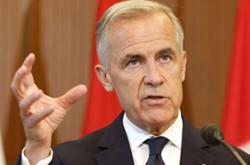
The federal Liberal government under Justin Trudeau had made promises to work towards this, but it appears this is no longer a priority for Mark Carney’s government. Canada is the only “advanced” country with a universal health-care system but no universal pharmacare program — something Longhurst said is much overdue.
Making public health care broader in terms of what is covered is not only an ethical solution, but one that could lessen the financial burden on the average Canadian and ultimately ease the strain on the public system.
“If people aren’t able to access prescription drugs, for example, they may not be able to manage their chronic condition, which means that they’re going to end up in hospital and it’s going to be more expensive for the public system overall,” explained Longhurst.
Other than pharmacare, another area Longhurst believes B.C. could make better investments in is senior care. About 15 per cent of private health-care funding went towards long-term care — spending on home care also increased the fastest at 17.4 per cent from 2021-23. Home support services allow residents to live independently in their homes for as long as possible, while long-term care is for people who can no longer be cared for at home due to more complex care needs.
Earlier this year, the province cancelled contracts for five long-term care facilities and halted the construction of two others.
“This is a big gap in the province. Home support can be very expensive, especially for lower-income households, and keep in mind that home support is intended to support people to stay in their own home longer and prevent the need for more expensive facility-based care, like long-term care.”
Most areas that people pay out of pocket for are things not covered under the Canada Health Act, but Longhurst said this provides a helpful framework of where work needs to start in bettering access and increasing coverage.
Longhurst believes the federal government can also play a much larger role in pushing the province to create more regular and timely access to a primary caregiver, which could be a family doctor or nurse practitioner.
Some provinces, whether deliberately or from neglect, said Longhurst, have simply not kept investments into health care at pace with population growth or medical complexity.
Over the past few years, some politicians, like the Conservative Party of BC, have viewed the solution to fixing Canada’s health-care system to be expanding privatization — something Longhurst said is not the answer.
While he recognizes the challenges facing Canada’s public health-care system, Longhurst quickly pointed to the United States’ private system and how the country has some of the worst mortality rates when looking at chronic disease prevalence and unmet health-care needs.
“Because [Canadians] haven’t had to deal with private health insurance for medically necessary care, I don’t think people realize that decisions to get treatment are decided by insurers rather than clinicians.”
He explained that Americans can often find themselves waiting to receive treatment as their doctors need private health insurance companies to greenlight everything before they can proceed. Longhurst highlighted his own upbringing in the United States, where both his parents had private insurance through work but still had to spend tens of thousands of dollars out of pocket every year on health care.
“Unpaid medical expenses are the No. 1 source of personal bankruptcy [in the United States]. If Canadians are feeling pinched financially right now, you can only imagine how bad it could get if people are now expected to pay out of pocket for all of the basic health care that they need.” ![[Tyee]](/design-article.thetyee.ca/ui/img/yellowblob.png)
Read more: Health











Tyee Commenting Guidelines
Please note that email notifications for replies are not currently working due to a software issue which may be resolved in a future update.
Comments that violate guidelines risk being deleted, and violations may result in a temporary or permanent user ban. Maintain the spirit of good conversation to stay in the discussion and be patient with moderators. Comments are reviewed regularly but not in real time.
Do:
Do not: