


 SHARE:
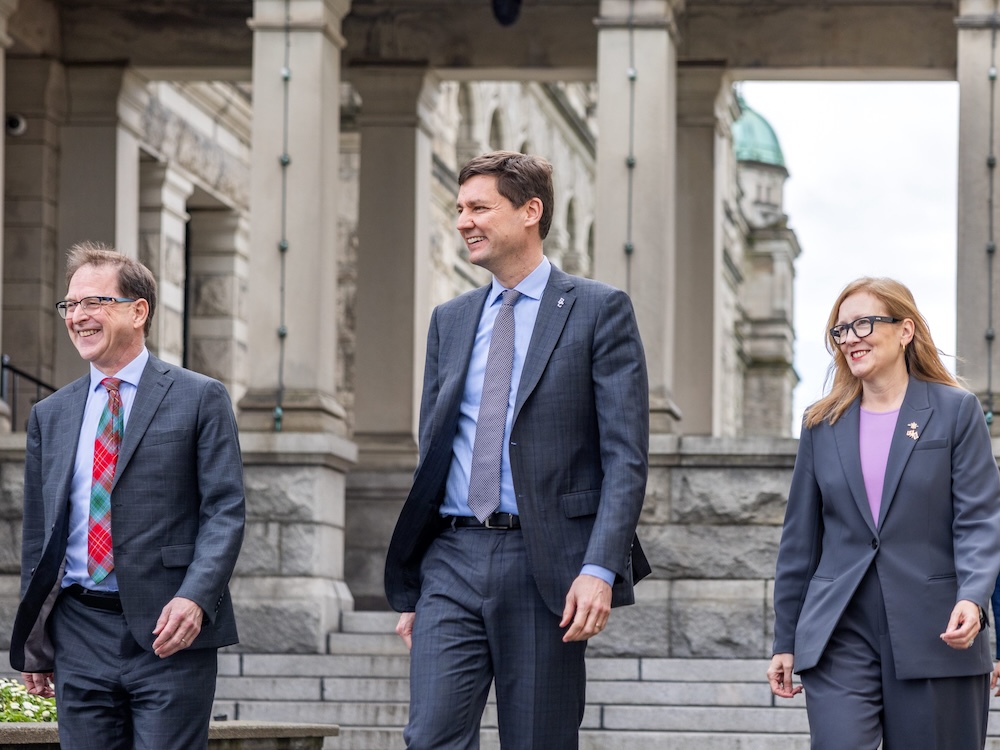
With the support of the B.C. Conservatives, the NDP have passed Bill 8 — in one day — to take the price off carbon pollution, giving in to the Conservative-led campaign to axe the tax.
With their decision to kill the carbon tax, the government is showing that rather than making decisions from a place of principled leadership and addressing the shortcomings of the carbon and rebate system in B.C., they are willing to take the path of least resistance.
While they claim to be addressing affordability challenges, the NDP are taking money out of the pockets of lower-income British Columbians by killing the climate action tax credit, which delivered rebates directly back to people who needed the most financial support. For low-income people and others, cutting the carbon tax will cut their income, because the vast majority received more in the rebate than they spent on carbon tax.
What the NDP should have done was make the fee on carbon fair — apply the same fee to big polluters as was applied to consumers — and get the larger rebates that would come from this into the hands of British Columbians.
The output-based pricing system the BC NDP put in place for industrial pollution is a bureaucratic bungle of incentives, credits and “flexible compliance options,” opaque enough to ensure that accountability and transparency are off the table.
While Premier David Eby claimed to want to ensure big polluters paid their fair share, what the NDP did was the opposite. They gave the biggest polluters large exemptions, with up to 89 per cent of emissions exempt from the carbon tax. This explains why government carbon tax revenues from industry were an insignificant $200 million, compared with the $2.8 billion from the consumer carbon tax.
It’s not just the tax that’s getting axed. It’s the facts. The B.C. government is letting polluters off the hook, but that doesn’t mean that the costs of carbon pollution and climate change are going away. Instead of big polluters paying their fair share, it will be people and governments who pay for the high price of carbon pollution.
As a main driver of climate change, carbon pollution is making life more expensive for all of us. Consider home insurance. With more catastrophic weather events related to climate change — fires and floods in particular — insurance companies face bigger and bigger payouts. With insurance payouts expected to continue climbing, insurance rates will inevitably continue to rise.
For more and more people, getting insurance will not just be more costly, it may be impossible, as insurance companies decide it’s not worth the risk to their bottom lines to insure homes in areas with high risk of floods or fires.
But it’s not just insurance that’s more expensive. Climate change-driven events, including fires, floods and severe weather, make food more expensive, add costs to transportation and disrupt supply chains, ultimately adding costs to goods and making life more expensive for everyone.
Climate change is expensive for governments. In B.C., the provincial government has seen the costs of climate change impact its balance sheet year over year. The costs of wildfires, floods and infrastructure replacement and upgrading are significant. The severe weather events in 2021 cost the B.C. economy between $10 billion and $17 billion, including the $6.1 billion to $7.6 billion the provincial government spent on wildfire and flood response and infrastructure repairs and rebuilding.
These figures don’t take into account the significant costs to the health-care system as a result of the heat dome, the wildfire smoke and the aftermath of the atmospheric river. By killing the price on carbon pollution, the NDP have blown a hole in their own budget — a hole that’s bigger than revenue from all natural resources combined — making it more difficult in the future to cover the costs of damage from climate events.
Will this solve the affordability challenges the people of B.C. face? We can look to the hike in gas prices over the weekend to see that the fossil fuel sector will continue to extract profits where it can, knowing that weak government regulations and linking Canada’s oil and gas prices to the global market will make it easy for the industry to do so.
The carbon tax is not the main driver of inflation — not even close. It’s been quite something to see political parties and governments do the heavy lifting in shifting the blame for high prices and inflation away from the oil and gas industry.
According to the Bank of Canada, the carbon tax accounted for 0.15 per cent of inflation. This is a fraction of the impact on inflation that spikes in fossil fuel prices have had on the Canadian economy, according to “Counting the Costs,” the recent report from the Centre for Future Work. Increases in oil and gas prices cost Canadians nearly $200 billion, or $12,000 per household, between 2022 and 2024, while the petroleum industry saw its profits rise $150 billion in the same period.
Political rhetoric and slogans won the day at the expense of facts, data and reality.
We need politicians and leaders who focus attention where it belongs. In this case, the problem that governments need to be working to solve is how the oil and gas industry rakes up hundreds of billions in profits while people struggle to pay their bills. In the years that the industry was accumulating these record-breaking profits, the BC Greens called repeatedly for a windfall profits tax — a call ignored by the provincial and federal governments. The provincial government should focus on ensuring that the people of B.C. will not be subject to the global price shocks generated by the oil and gas industry; instead they are reinforcing the false story that the carbon tax is driving inflation and lack of affordability.
The BC NDP have proven themselves yet again to be a friend of big polluters. Added to the billions in subsidies flowing to the LNG sector since they became government in 2017, they’ve now taken the price off carbon pollution, ensuring that it will be people and governments, rather than big polluters, who bear the increasing burden of the costs of climate change. In doing so, they are diverting B.C.’s path away from a reliable, more affordable clean energy future that puts the interests of the people of B.C., rather than the fossil fuel industry, first.
The moment we are in, as a province, a country and a world, requires that leaders try to understand what has gotten us here, and propose a vision for a future that makes things better for the people they serve. Barrelling ahead with letting polluters off the hook for their costly emissions shows that the BC NDP are firmly stuck in the 20th century. ![[Tyee]](/design-article.thetyee.ca/ui/img/yellowblob.png)
Read more: BC Politics, Environment


Tyee Commenting Guidelines
Comments that violate guidelines risk being deleted, and violations may result in a temporary or permanent user ban. Maintain the spirit of good conversation to stay in the discussion and be patient with moderators. Comments are reviewed regularly but not in real time.
Do:
Do not: