


 SHARE:

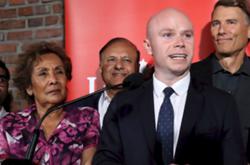
“Nobody is getting a gold star for repealing DRIPA,” said Conservative Party of BC leadership candidate Iain Black. “But the real question is… then what?”
It is a pointed question that Black asked at Wednesday’s candidates’ debate, but in answering it himself, he inadvertently exposes the runaway uncertainty at the heart of his entire party’s approach to the Declaration on the Rights of Indigenous Peoples Act, also known as DRIPA.
DRIPA is a law adopted by British Columbia in 2019 that commits the provincial government to align its laws with the UN Declaration on the Rights of Indigenous Peoples. It is intended to create a more structured approach to consultation and cooperation with First Nations on decisions affecting their rights and land, in part to reduce conflict and costly litigation.
Acknowledging the enthusiastic agreement among all five Conservative leadership candidates that “DRIPA must be repealed,” Black went further to admit the political fallout this would trigger, while offering no coherent response plan. Instead, he proposed a strategy to protect private property rights in British Columbia that — if by some miracle was implemented — would risk plunging the entire country into a constitutional crisis.
In promising clarity and certainty for British Columbia’s land base, Black’s plan would instead create political instability and destabilizing legal uncertainty.
Scrapping DRIPA creates new problems
At the Conversations Live Conservative Party of BC leadership candidate panel, Iain Black laid out a realistic assessment of the political fallout that could follow a B.C. Conservative government repealing DRIPA:
Five thousand people protesting at the B.C. legislature. The CEOs of mining, forestry and oil and gas companies pleading with the Premier’s Office to act on blockades. Union leaders fuming as their members are unable to work. Municipalities brought to a standstill as local economies are “ground to a halt.”
It is a telling admission from Black: repealing DRIPA would trigger sustained protests and blockades, stall economic activity and ignite political firefights.
Black, a former BC Liberal cabinet minister who held labour and business files, posits himself as the B.C. Conservative leadership candidate best suited to field phone calls from the C-suites, union bosses and municipal officials in the scenario he predicts. But while he identifies the risk of widespread conflict, he refuses to define the tools he would use to resolve it.
Presumably, he would rely on police enforcement, court injunctions and emergency legislation, but each carries significant legal and practical risks, from court challenges and delayed rulings to escalation on the ground and even more disruption to projects and communities.
Instead, Black deflects and points to Site C, LNG Canada, Coastal GasLink and the Trans Mountain Expansion Project as examples of developments built on negotiated agreements with First Nations. His solution (to the very conflict he predicts would follow repealing DRIPA) is to consult the Indigenous leaders who supported those projects and seek their guidance.
Somehow, Black does not recognize the irony. His response to the chaotic fallout of scrapping a framework meant to structure consultation with First Nations is to… consult with First Nations.
A constitutional fix that would unravel the law
Even more problematic than Black’s plan to repeal DRIPA is his approach to protect private property rights in British Columbia.
“There’s not a western country in the world that doesn’t have private property rights enshrined in their constitution, except ours,” Black asserted, using this as the basis for his proposal to protect private property rights.
“We have to approach the other premiers in this country and we have to engage them in a conversation around reopening Section 35 of our Constitution that specifically deals with Indigenous rights and title. And using the lawyer-speak that is required, add in a phrase that says, ‘except private property rights.’”
His premise is incorrect. Neither New Zealand nor Australia has broad, entrenched constitutional guarantees of private property rights. Like Canada, both countries rely on statutes and common law to protect property, although Australia’s Constitution does include limited protections against uncompensated federal (but not state) property acquisitions.
Also, the United Kingdom does not have a single codified constitution. Its private property rights are protected through common law, the Human Rights Act 1998, and other legislation.
More importantly, reopening Canada’s Constitution is a political non-starter. Since Section 35 applies to all of Canada, amending it requires the House of Commons, Senate and at least seven provinces representing at least 50 per cent of the population to pass it.
In political terms, amending the Constitution around Section 35 would open a Pandora’s box of competing demands across the country. Quebec sovereignty, Alberta autonomy, Senate reform and pressure from business, environmental and civil liberties groups would turn a targeted amendment into a national bargaining session.
Even if Black could overcome the political barriers, the legal consequences would upend decades of settled law, leaving courts to redefine the relationship between private property rights and Aboriginal title.
If private property rights were to automatically supersede Indigenous rights and title, courts would be thrust into a legal quagmire: past decisions would be reopened and reinterpreted, conflicting rulings would emerge as courts sort out the law and years of additional litigation would be layered on top of an already complex justice system.
The uncertainties would not end there.
Leases, for example, are legal rights to occupy land and, in many cases, transferable interests. Even in countries with constitutional property protections, the qualification of leases as “property” is contested, forcing courts to decide case by case. If constitutional protection only applied to landowners, it could trigger its own wave of litigation.
Crown tenures present a similar problem. While they do not confer ownership, they are recognized interests and rights to use land owned by the government, making it unclear if they, too, would qualify as property.
There is also a risk of significant compensation claims if such a constitutional amendment were applied retroactively. If it were not retroactive, the legal system would effectively split into two parallel systems: one for old cases and another for new cases.
Ongoing land claims and existing treaties could be disrupted, as courts would be forced to apply new rules to disputes and agreements that were designed under a different legal framework altogether.
It may seem straightforward to borrow another country’s property rights regime to address these issues. But British Columbia and Canada are fundamentally different.
About 95 per cent of B.C.’s territory is unceded land, where Aboriginal title was never surrendered or signed away. That title is protected under Section 35 of Canada’s Constitution.
Moreover, there are existing treaties, ongoing negotiations and unresolved claims across the country. In effect, property rights in Canada are too complex and contested to just simply adopt another country’s rules.
The opposite of clarity
What Iain Black is proposing is a generational-defining legal project to reinterpret land rights in Canada that would actually create more uncertainty. It would destabilize legal frameworks, invite more litigation and further delay economic activity — the exact opposite of the modest constitutional tweak he portrays it as.
Even more absurdly, Black naively says that once such a sweeping overhaul is complete, “we can start regaining the trust with the First Nations people going forward.” As an experienced leader in Canadian commerce, he is remarkably reckless to assume that trust can be built with anyone after spearheading a movement to rewrite the rules without them.
On issues as complex and contested as Aboriginal title and private property, Black’s proposals promise clarity but will deliver the opposite: more uncertainty, more litigation and a dangerous flirtation with constitutional brinkmanship.
Every candidate to be the next leader of the B.C. Conservatives is for killing DRIPA.
In trying to answer “Then what?” Black has gone further than his rivals, only to expose the fundamental flaws at the heart of his entire party’s approach. ![[Tyee]](/design-article.thetyee.ca/ui/img/yellowblob.png)
Read more: Indigenous, BC Politics








Tyee Commenting Guidelines
Please note that email notifications for replies are not currently working due to a software issue which may be resolved in a future update.
Comments that violate guidelines risk being deleted, and violations may result in a temporary or permanent user ban. Maintain the spirit of good conversation to stay in the discussion and be patient with moderators. Comments are reviewed regularly but not in real time.
Do:
Do not: