

 SHARE:
Are we redeemable? Humans, I mean. Up until the last few years, if you asked me this question, I would have answered, “Of course!”
But now, the certainty of this response has been whittled down into uneasy silence. I’m not so sure anymore.
Any student of history will tell you with alacrity the multiple and ongoing atrocities humans have engaged in over the millennia. Almost from the beginning of organized society, we have been murdering and torturing our fellow sapiens with glee. I’m sure hominids and neanderthals also took to clobbering each other whenever the opportunity arose.
But despite the recorded evidence, I’ve always believed that deep in its heart of hearts, humanity wanted to be good, helpful, kind, considerate. I’m not sure I believe this any longer.
Art hasn’t changed this. It has cemented it more firmly.
A new exhibition at the Vancouver Art Gallery takes the relationship between art and the environment as its animating idea. But in examining the concept, something else surges to the fore. Namely, that we’ve made a nightmare of things.
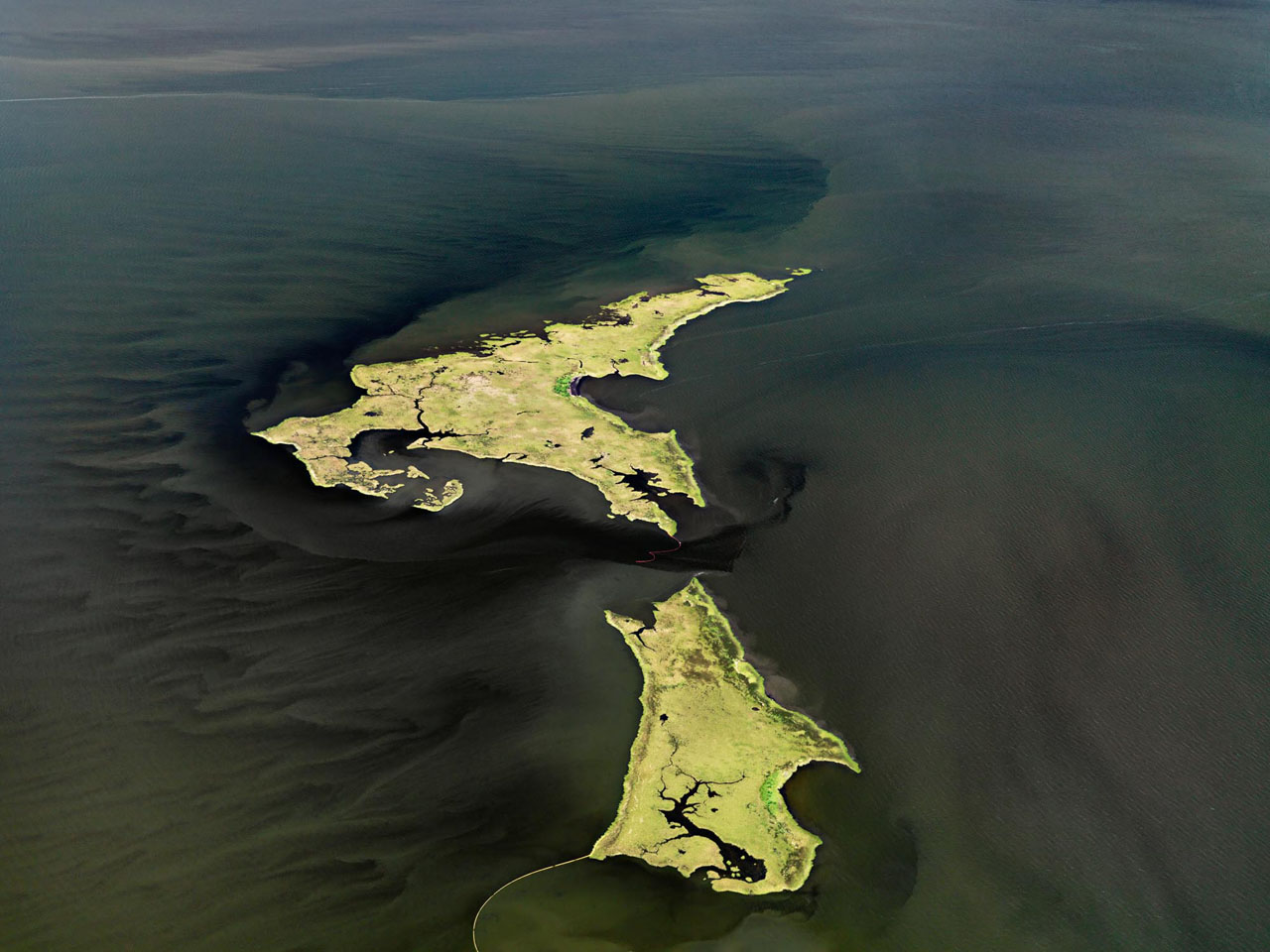
Future Geographies: Art in the Century of Climate Change features 35 works drawn from the last quarter century. It is a big show — the ideas it tackles are global in their implications and impact.
It’s also big in another more literal sense, encompassing some of the most influential folks in the art biz, one of whom is John Akomfrah. The Ghanaian and British artist works in a number of creative disciplines, including documentary film.
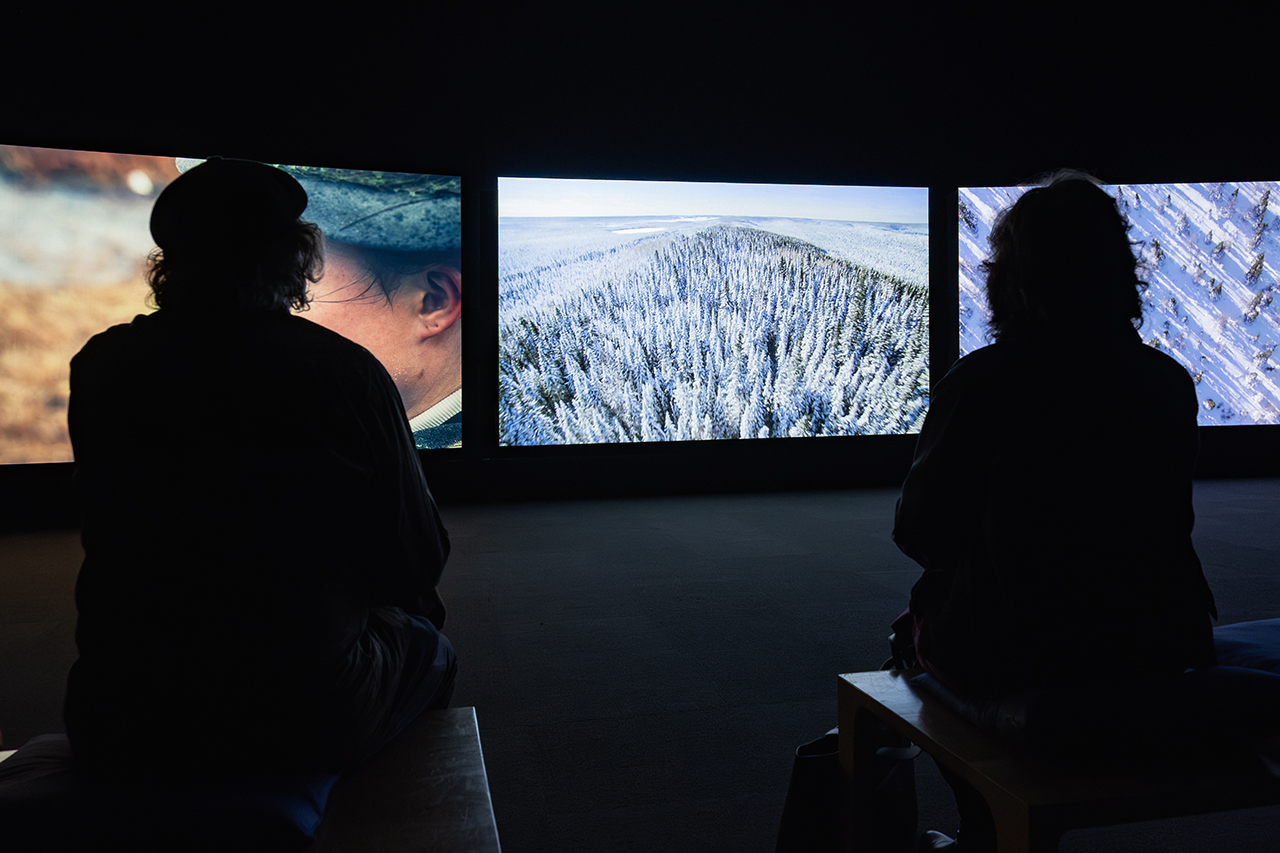
Vertigo Sea, Akomfrah’s large-scale three panel installation, takes pride of place in the VAG show. First, a gentle word of warning. There is something about the convergence of beauty and horror in the piece that pierces the senses in the most profound fashion.
Just as one is beguiled by the staggering beauty of the natural world, be it a whirling murmuration of seabirds or a pod of whales moving sleekly through the ocean, other elements enter, pulling you under the dark water.
Beauty makes you vulnerable to the larger message of the work, sinking the experience so deeply into the conscious and unconscious mind that it refuses to budge. Even when you really want it to.
There are so many things at work in the piece that one viewing probably isn’t sufficient to take it all in, even in a practical way. The triptych of screens, moving independently of each other in the narrative flow and sometimes in concert, means that you spend time whipping your head back and forth so that you don’t miss anything.
Ideally, one should be able to see an artwork of this magnitude and power a great many times, but that too comes with some caveats of the emotional variety.
In ‘Vertigo Sea,’ an unforgettable tale of grief
On the surface, 2015’s Vertigo Sea is a three-channel video installation. It makes ample use of archival footage from the BBC Studios’ Natural History Unit, as well as images captured in different places around the globe, including the Faroe Islands and the Isle of Skye.
Over the course of its running time, it makes tidal shifts, moving from nature documentary to literary exploration to something far greater than the sum of its parts.
The literary works cited include Virginia Woolf's To the Lighthouse, Herman Melville’s Moby-Dick, and Heathcote Williams’s epic poem “Whale Nation.” The latter two are both central to the work.
Other key elements include the transatlantic slave trade and Argentina’s Dirty War. While the whaling industry might not seem entirely related to the atrocities committed in the slave trade, the connective tissue between them is just that, tissue, flesh flayed out in enormous ribbons of muscle, sinew and veritable oceans of blood.
In an extended interview with curator Johanne Løgstrup entitled Co-existence of Times — a Conversation with John Akomfrah, the artist explains his ideas:
“My aim is not to create just this melange where nothing has any authenticity or uniqueness. For instance, I don't think I’m saying that the killing of humpback whales in the North Atlantic Ocean has either the same weight, value, political narrative or otherwise, as the drowning at sea of Africans at the height of the trade.
“What I am saying, though, is that there are overlaps and there are almost certainly proximities, affective or emotional, intellectual or otherwise, which you can only maintain, which don’t exist if you have a ‘hierarchy,’ which I don’t.
“This hierarchy can only be maintained if you think the humpback whale is just an ‘animal’ with no feeling, no brains, which I don’t believe.
“I’m not saying the humpback whale is a human being, but I’m also not saying it’s a mere ‘animal.’”
The connection between the whaling industry and industrialized, extractive capitalism is a direct line. The hunt for whales and their oil formed the basis of modern fortunes and helped fuel empires in the U.S. and Britain.
A section of Vertigo Sea makes use of archival footage of the whaling trade, from harpooning fleeing cetaceans to the process of reducing them to enormous sections of meat and blubber.
In one film sequence, the camera hones in on the eye of a whale as it is hauled aboard a vessel. It is hard to encompass the emotion contained in this one image. Grief doesn’t quite do it justice.
The connections between the whaling industry and the slave trade also offer a fascinating slice of history.
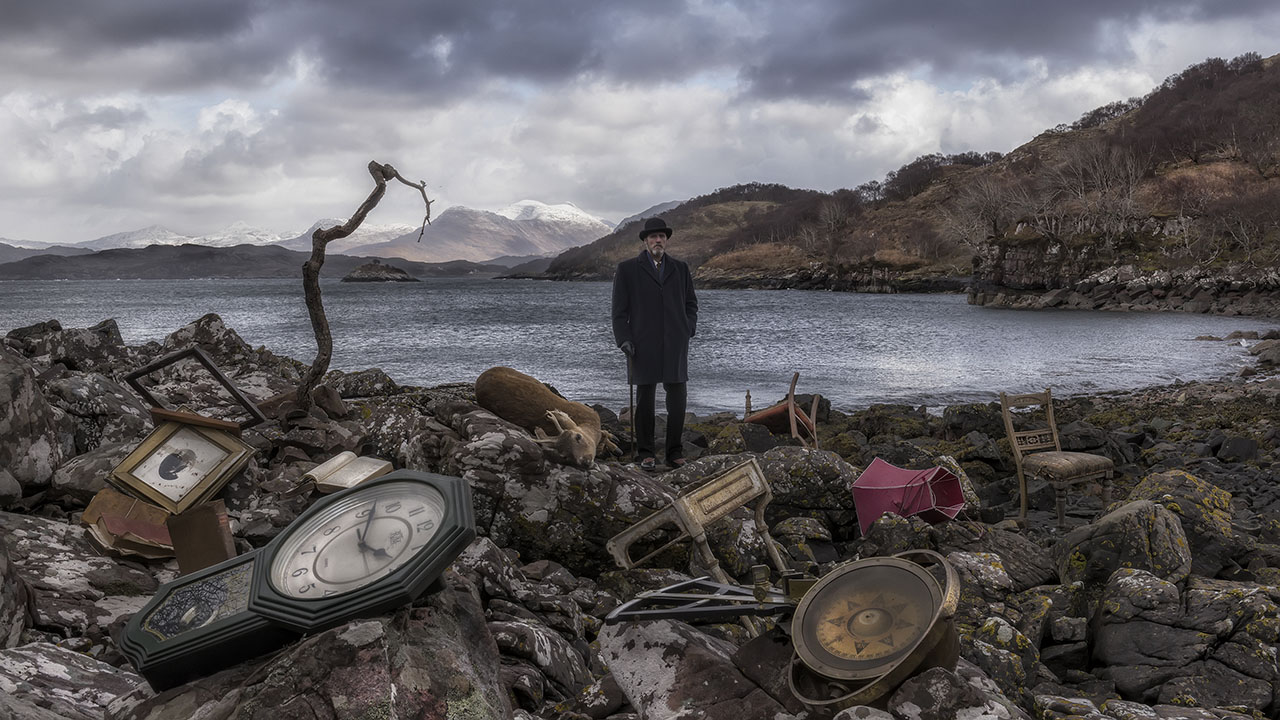
There are references in Akomfrah’s work to the colonialist practises that defined the modern age in the form of staged reenactments, with actors in period dress depicted at the ocean’s edge, surrounded by objects from the early industrial era. Ornate furniture, grandfather clocks, wrought-iron bedframes and old-fashioned baby prams are caught in the film’s net like a bycatch from hell.
While the sea itself is the uniting element in the work, cruelty is at the dark heart of many of the images contained in the work.
Here’s where I get stuck. One section about Argentina’s “Dirty War,” named for the period of government-supported violence from 1976 to 1983 that targeted political dissidents, and anyone believed to hold socialist, communist or otherwise left-leaning political beliefs, has lodged itself inside my head.
I wish it hadn’t, so that I could stop thinking about it.
The period of state-sanctioned violence involved a horrific practice of extrajudicial execution known as death flights. Government agents kidnapped political dissidents, including pregnant women, as political prisoners. The pregnant women were kept alive until they gave birth. Their babies were then taken, adopted out to military families and the women themselves killed.
In Vertigo Sea, the following passage describes what took place:
“Every Wednesday, on average between 20 and 30 people were designated to die. They were taken to the planes. During the flight they were undressed. Once the captain of the flight said we were in the right area — they were thrown out into the waters of the South Atlantic.”
Black and white images of bodies, hands tied, covered in sand and detritus, float into view, alongside mugshots of unnamed political dissidents.
I can’t stop thinking about what happened to the human beings who practised acts of unspeakable cruelty.
Not just the men who flew the planes, but also the medical professionals who helped the women give birth, knowing their future fate.
And that’s where my brain stops, because it feels impossible to understand.
No degree of compartmentalization can explain how this is possible.
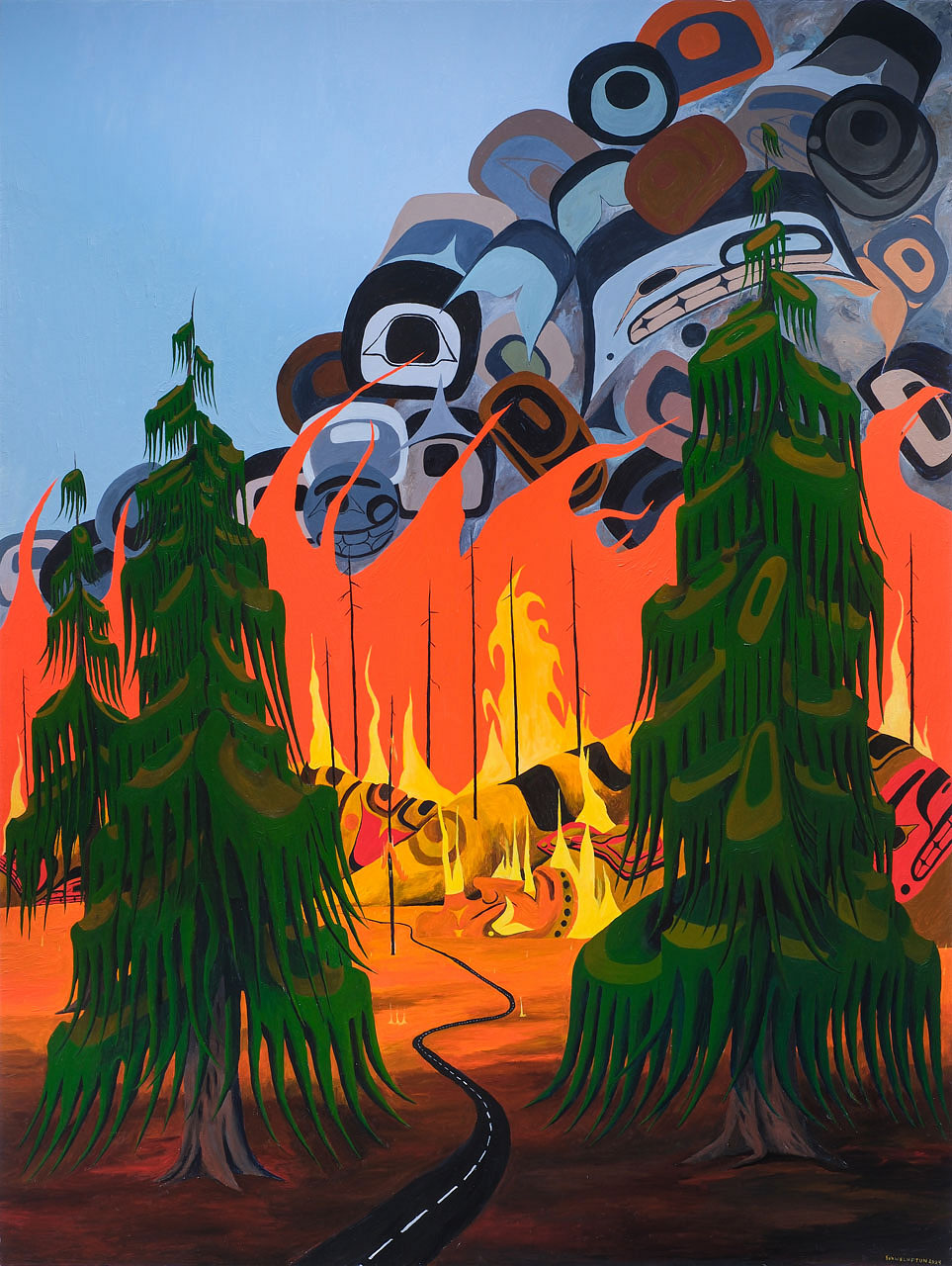
But not all is darkness and suffering in Future Geographies. Artists like Jeffrey Gibson, Teresita Fernández, Brian Jungen, Gabrielle L’Hirondelle Hill and Lawrence Paul Yuxweluptun Lets’lo:tseltun offer ripostes to the harsher aspects of the exhibition.
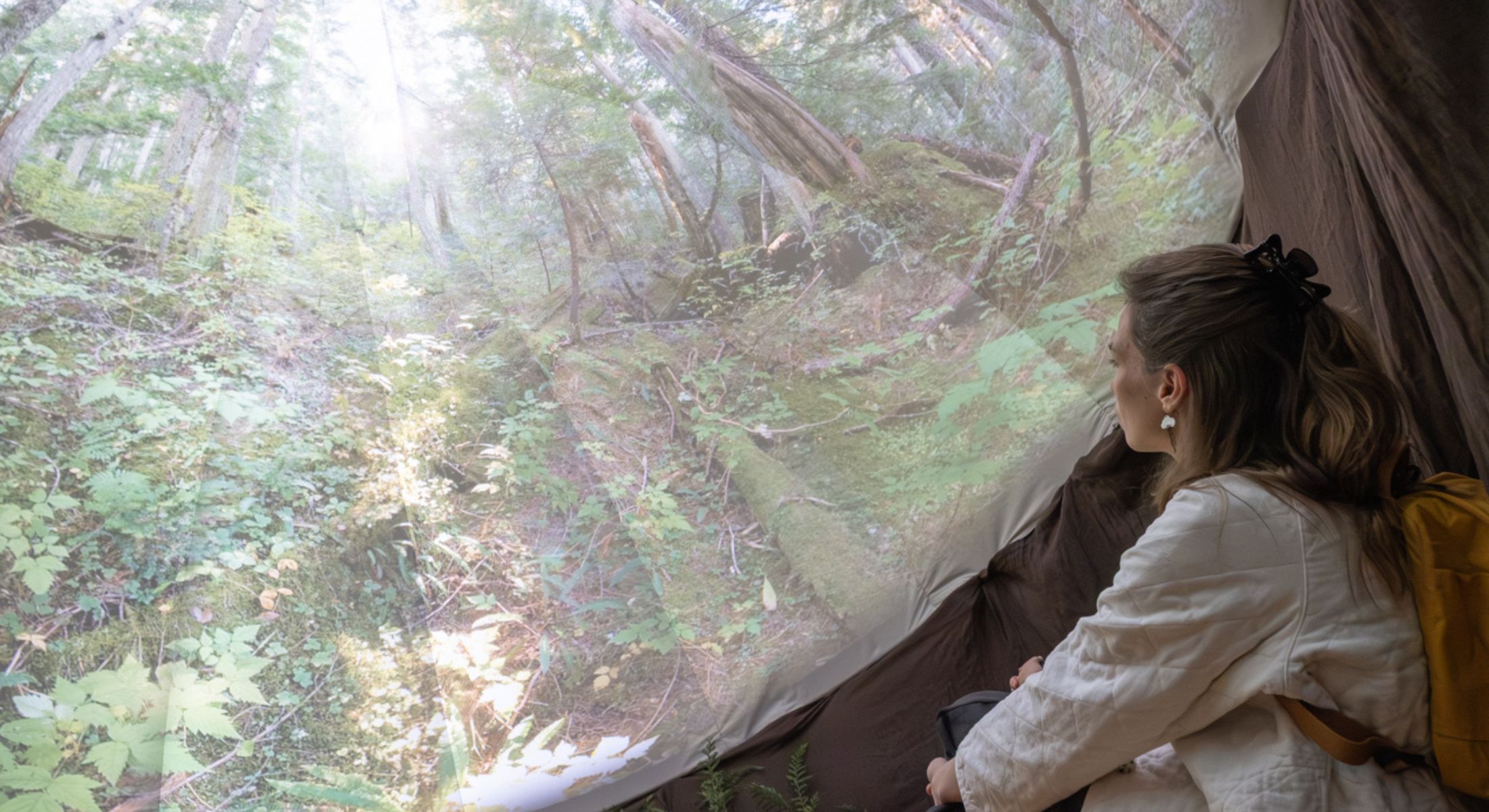
SANCTUARY: The Ancient Forest Experience from T’uy’t’tanat Cease Wyss, Damien Gillis and Olivier Leroux, is a particular place of joy and respite. I wrote about Sanctuary when it premiered at the PuSh International Performing Arts Festival in 2021, so it is a pleasure to see it again.
Of all the artists included in the show, there is one who is missing. Vancouver-based Sylvia Grace Borda’s work continues to blow my mind with its commitment to beauty, complexity and community. It also offers real-world solutions to seemingly intractable problems like drought, deforestation and the dark harvest of ills, environmental and societal, that climate change thrusts upon us.
It feels like we’re living through an intersectional moment in human history. Future Geographies does not offer a definitive path forward, but it provides a map of where we’ve been and where we might go as a species.
‘Future Geographies: Art in the Century of Climate Change’ is on view at the Vancouver Art Gallery until Jan. 10, 2027. The VAG has partnered with the University of British Columbia’s Climate Action Lab and the National Observer to provide access to the exhibition online. ![[Tyee]](/design-article.thetyee.ca/ui/img/yellowblob.png)
Read more: Art, Film, Environment


Tyee Commenting Guidelines
Please note that email notifications for replies are not currently working due to a software issue which may be resolved in a future update.
Comments that violate guidelines risk being deleted, and violations may result in a temporary or permanent user ban. Maintain the spirit of good conversation to stay in the discussion and be patient with moderators. Comments are reviewed regularly but not in real time.
Do:
Do not: