


 SHARE:
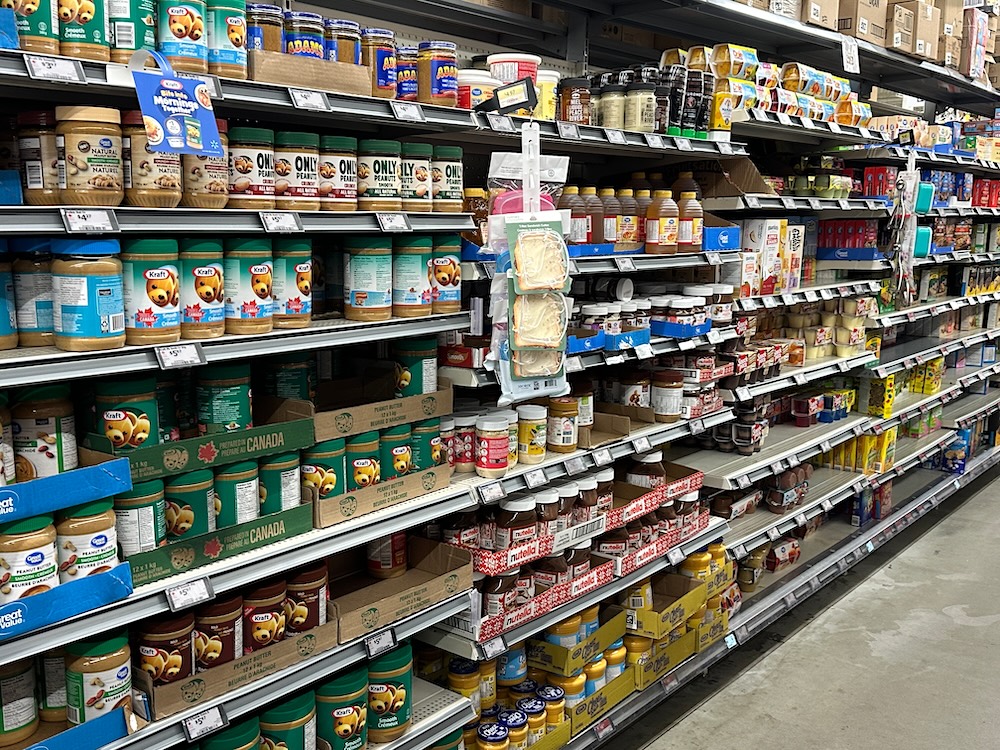
A quarter of Canadian families are facing food insecurity even when most have a breadwinner working a permanent, full-time job, new research suggests.
Researchers from the University of Toronto’s food insecurity research program analyzed Statistics Canada income data to better understand how Canadians’ jobs affect their access to food.
Their study, published last December in the journal Canadian Public Policy, found that the main earner in two-thirds of all households experiencing food insecurity held a permanent, full-time job.
Study co-author Tim Li said the findings suggest wages aren’t keeping up with the cost of living.
“This really pushes back against any narrative that this is only about precarious work and this idea that if people just had a full-time, permanent job, then they would not be food insecure,” Li said. “We're showing that that's not the case.”
The study comes while food prices are a top issue for Ottawa. The Liberal government recently announced a new tax benefit to help low- and modest-income Canadians afford groceries. Meanwhile, experts say the University of Toronto research shows Ottawa needs to develop a long-term policy response to help Canadians get access to affordable food.
“The Canadian government cannot continue to rely on the food bank and charity model to solve food insecurity,” said Tammara Soma, research director of Simon Fraser University’s Food Systems Lab. “It's simply insufficient.”
Food insecurity — characterized as limited or uncertain access to food — is on the rise.
The most recent Statistics Canada data shows 25.5 per cent of all Canadians experienced food insecurity in 2023 — up from 16.8 per cent five years prior.
Researchers have known for decades that holding a job is a primary factor determining whether a person has access to food.
Still, the majority of food-insecure households have a working member. Li said the research team wanted to know more about the jobs those “main earners” held.
The researchers analyzed data from Statistics Canada’s 2021 Canadian Income Survey, which included an 18-question module that classifies entire households as either food secure or marginally, moderately or severely food insecure.
The study found that among households that rely on a main earner, households where that earner involuntarily had a part-time job were more likely to be food insecure than those where the main earner had a full-time job — defined by Statistics Canada as working more than 30 hours per week.
Researchers also took a deeper look at households where the main earner had a full-time job. Among those, households where the breadwinner had a low-skilled occupation, lower hourly wages and shorter employment tenure had higher odds of food insecurity.
They also found households with older main earners were less likely to be food insecure. Researchers wrote in the study that this may reflect older workers’ savings and assets.
Soma said that while the study backs up “common sense,” it’s still important to shed light on how job quality and other factors affect food insecurity in Canada.
“We don't really talk enough about the quality of jobs, income and how income is proportional to housing,” Soma said.
The findings challenge a misconception that only unemployed or precariously employed Canadians are struggling to afford food, she said.
“You probably hear a lot of ‘They just need to work harder’ or ‘They shouldn't be lazy,’” Soma said. “The fact is our money is just not worth the same anymore. It's not covering the cost of housing and food and everything else.”
Soma added the data was from 2021 — and food insecurity has likely become more prevalent since then.
In its annual food price report, Dalhousie University’s Agri-Food Analytics Lab found the cost of food is up 27 per cent compared with five years ago and expected to rise by up to six per cent this year.
Meanwhile, food affordability is taking centre stage at all levels of government. BC Green Party Leader Emily Lowan and NDP leadership candidate Avi Lewis have pitched the idea of public grocery stores to stimulate competition and help keep food prices low.
Last week, the federal government announced the Canada Groceries and Essentials Benefit, which would enhance the quarterly GST/HST tax credit to give about 12 million Canadians an additional $410 to $790, depending on family size.
On Monday, the federal Conservative Party of Canada agreed to fast-track the benefit through Parliament.
Li said that while the income transfers are helpful for families struggling to afford food, his team’s research suggests improving employment standards and policies that ensure employers are paying fair wages would help improve access to food.
“The high rate of food insecurity in Canada is really about wages and the social safety net,” Li said. “Employment and the social safety net aren’t working well for a lot of Canadians.”
Jasmine Ramze Rezaee, director of policy at national food advocacy organization Right to Food, welcomed the tax benefit. But she said policies that would help workers keep up with rising food costs, like improving minimum wages and preventing private businesses from lowering wages, could be long-term policy solutions.
“If we have this rise of the working poor... and we're recognizing that full-time workers are not able to meet their basic needs, then the government has to incentivize employers,” she said.
“It's very bizarre and ridiculous that people are working and not able to make ends meet. That needs to stop.” ![[Tyee]](/design-article.thetyee.ca/ui/img/yellowblob.png)
Read more: Politics, Labour + Industry












Notice about commenting changes
The Tyee’s commenting system will be moving to a new platform on Nov. 12. If you’re already a Tyee commenter you must register with the new system on or after Nov. 12 with your preferred username.More information can be found here.