


 SHARE:
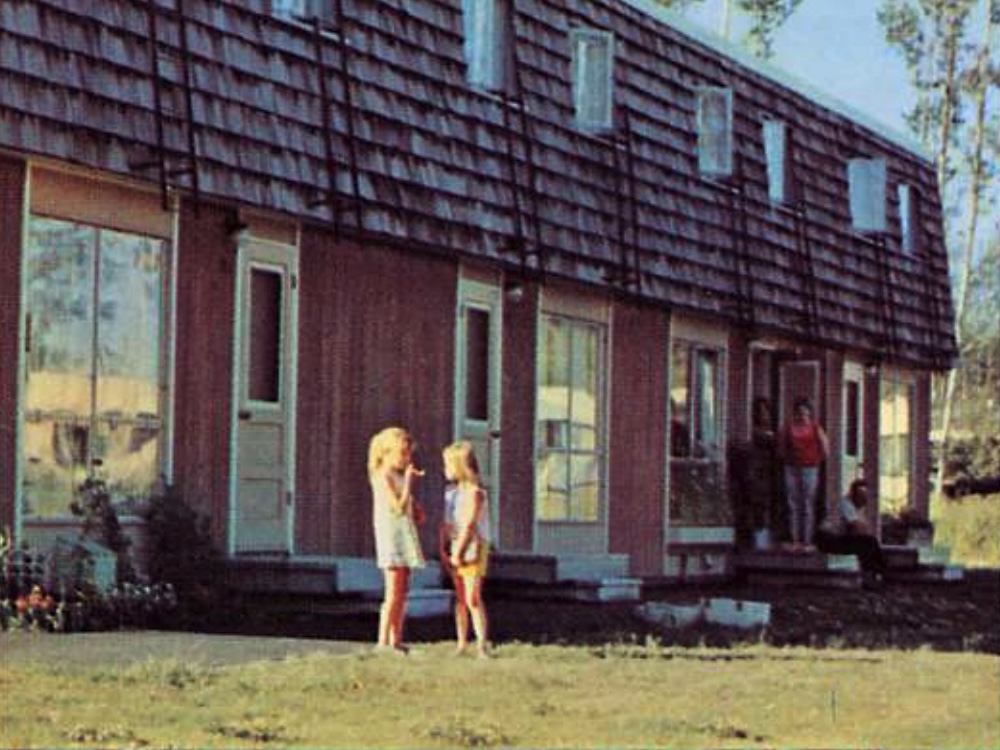
When Mark Parker was growing up in Fraser Lake in the 1970s and early ’80s, the Endako molybdenum mine was breathing life into the northern B.C. community.
Within five years of the mine opening in 1965, Fraser Lake’s population ballooned from 150 people to 1,300. The mine’s operator, Endako Mines Ltd., built housing and recreational facilities in the town, which sits about 150 kilometres west of Prince George. Employees lived in those homes and contributed to the community fabric. They stopped by the local grocery store after work and coached hockey and volleyball in the evenings.
“The mine manager and the superintendents lived in the community,” Parker remembers. “I dated the mine manager’s daughter.”
It was a time when industry was seen by government as a tool for developing the north. B.C.’s “instant towns” — communities purpose-built to service local mines or, in the case of Kitimat, an aluminum smelter — offered amenities in the province’s most remote areas. Some company towns boasted ski hills, swimming pools, curling arenas and even shopping malls.
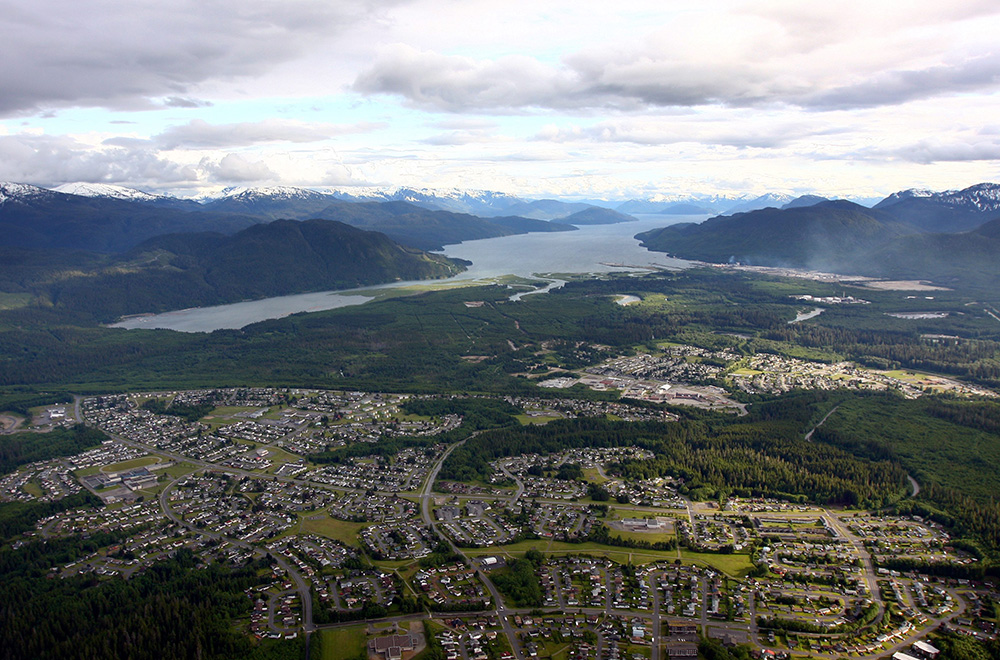
Although some, such as Cassiar and Kitsault, were later dismantled or mothballed when their mines closed, others persist and have grown into resilient centres for their regions. Over the past two decades, Tumbler Ridge in northeast B.C. has reinvented itself as a tourism destination.
But times have changed. Today, employees who come to the north to work at mines or energy projects are often accommodated in industrial work camps — self-contained facilities housing hundreds of employees who cycle through on rotation while living elsewhere.
When the work wraps up, the camps are removed.
“Now there isn’t anything going into the infrastructure. It’s ‘We’re going to put a camp here and we’re going to fly people in and out,’” Parker says. “We've lost that fabric of the communities.”
Parker, who is now the director for the Regional District of Bulkley-Nechako’s Electoral Area D, a rural area surrounding Fraser Lake, is calling on provincial regulators to ensure that industries operating in the region are investing into communities like they once did.
In particular, he says, companies could work with local decision-makers to plan staff accommodation that would boost the housing supply. A 2024 housing needs assessment found that the regional district issued about 40 building permits annually in recent years — well below the 65 annual new builds needed to keep up with anticipated demand.
Parker recently wrote to B.C.’s minister of energy and climate solutions, Adrian Dix, asking that large industrial projects work “proactively” with local governments to plan infrastructure that is mutually beneficial for both communities and industry.
“A significant portion of the workforce associated with this new industrial activity is supported by work camps,” Parker wrote in a March 20 letter. Although industry is required to consult local governments early in the environmental assessment process, Parker wrote that previous attempts to work with them on detailed planning have “achieved limited success.”
He fears that the province’s plans to speed up permitting for some major projects could further cut local governments out of the decision-making process.
Parker says he hasn’t had a response from the energy minister.
The Tyee emailed B.C.’s Ministry of Energy and Climate Solutions with questions about whether the ministry is considering Parker’s letter but didn’t receive a response prior to publication. A Tyee reporter also sought to ask Dix and B.C. Premier David Eby about the letter at a Tuesday press conference but wasn’t called upon to ask a question.
Parker says local governments like the Regional District of Bulkley-Nechako don’t currently learn about project details, including work camp placement, “until they’re basically a done deal.” Not only does that put pressure on local governments, but it’s a missed opportunity for industry to work with communities, he says.
“We’re saying why not put [work camps] on the outskirts of the communities where they want to develop and put in the water, the sewer, and then when you leave, you leave that legacy,” he says. “Because you’re not leaving anything else. You’re gone.”
The north saw a recent boom in industrial activity when the Coastal GasLink pipeline was constructed between 2019 and 2023.
The regional district is currently anticipating another wave of activity, with several wind farms, BC Hydro’s North Coast Transmission Line and the Prince Rupert Gas Transmission pipeline proposed for the region.
Coastal GasLink, whose pipeline passes five kilometres north of Fraser Lake, is also planning an expansion that will require building several new compressor stations within the regional district.
That economic development is good, Parker says, because it brings people to the region and workers into downtown businesses. But it also adds pressure to the local housing supply, waste disposal and emergency services.
Working collaboratively with industry to plan worker accommodation has been “like pulling teeth,” he says.
In 2023, the Regional District of Bulkley-Nechako produced a 10-page discussion paper examining B.C.’s environmental assessment process and how pipelines, mines and work camps engage with the regional district. The paper lays out several failed attempts by local governments to work with companies to boost housing supply and local infrastructure.
In two cases, local governments asked a pipeline company to use accommodation that could be repurposed as community housing, and to situate camps where service hookups could later be used for a housing development. In both cases, the company asked the local governments to pony up for the additional cost.
In another case, the regional district asked a pipeline company to place work camps in locations that could later be turned into campgrounds or recreation sites. That idea was “not entertained by the proponent,” according to the report.
Parker says that local decision-makers are consulted in the early stages but have little say over detailed planning that comes later.
“We’re there at the very beginning where there are very vague statements that are made. It was difficult to have any meaningful input,” he says. “We’re still trying to be involved at the right time, where our input and our feedback from the residents... is meaningful.”
While northwest B.C. is sparsely populated compared with other regions, its resource-based economy is a significant contributor to the provincial economy.
Over the past year, the federal government has referred four northwest B.C. projects considered to be of “national importance” to its newly launched Major Projects Office for fast-tracking. They include two LNG export facilities, the North Coast Transmission Line and a mine expansion.
In 2024, the provincial government recognized northern B.C.’s economic contribution by signing the Northwest B.C. Regional Funding Agreement, which provides $250 million over five years to 21 municipalities and regional districts in the north.
Parker says the funding has been a “game-changer” for the local governments that signed on.
But it’s not enough, he adds.
“That is a recognition from the province that, yes, we do have a lot of resource-based dollars go out of here,” he says. “It’s huge and helpful, but we still need more.”
The Endako mine shuttered a decade ago, 50 years after it first opened. There is discussion about reopening the project — economic development that is desperately needed after the local mill closed two years ago.
But with existing infrastructure aging and little recent investment into housing, Parker isn’t sure where workers would live even if the jobs did reappear.
“It’d be really nice if Endako mine fired up and we could put 300 people back into the community... but we just don’t have the housing,” he says.
If industry were to work collaboratively with local governments to solve the issue, it could provide a benefit for both their employees and the entire region, he says.
“We want to work with them. We want to support them, as well,” Parker says. “We’re going to have a stronger region and better living conditions for employees and people to come to the region. It’s a win-win.” ![[Tyee]](/design-article.thetyee.ca/ui/img/yellowblob.png)
Read more: Labour + Industry, Housing









Tyee Commenting Guidelines
Please note that email notifications for replies are not currently working due to a software issue which may be resolved in a future update.
Comments that violate guidelines risk being deleted, and violations may result in a temporary or permanent user ban. Maintain the spirit of good conversation to stay in the discussion and be patient with moderators. Comments are reviewed regularly but not in real time.
Do:
Do not: