



 SHARE:
The tensions between Alberta and Ottawa are as old as the prairie province itself.
Alberta entered Confederation in 1905 in the wake of an immigration boom and the threat of the United States’ expansionist spirit. Many expected the province to become as autonomous as Ontario, Quebec and British Columbia, but the Dominion of Canada retained control of the new province’s natural resources until 1930.
Revenues from the timber and coal extracted from the Rocky Mountain foothills, as well as the grains of gold panned out of the North Saskatchewan River’s silty stream, didn’t reach Albertans until 1930, when the Alberta Natural Resources Act came into effect.
Because Alberta’s oil-and-gas bonanza was yet to come, the long-awaited legislation didn’t shield the province from the havoc wreaked by the Great Depression, nor the relentless drought that followed and impoverished tens of thousands of workers and farmers.
As Ottawa delayed relief, Alberta’s identity as a rugged underdog took root in the Albertan psyche.
Women’s rights advocate Irene Parlby conveyed this sentiment as a member of the Alberta legislature in 1921.
“I do not think I should be very wide off the mark if I said that the older parts of Canada have for years regarded Alberta as a rather peculiar place, favourable to the breeding of extreme radicals and peculiar political phenomena, and let it go at that,” Parlby said. “One wonders if it ever occurs to them that there are always causes and conditions which breed those things.”
In his 2025 documentary Peggy & Balmer, Edmonton filmmaker Tom Radford presents the complex events that shaped the ethos of Alberta as experienced by his grandparents, journalists Peggy and Balmer Watt, who arrived in Edmonton from Ontario in 1905.
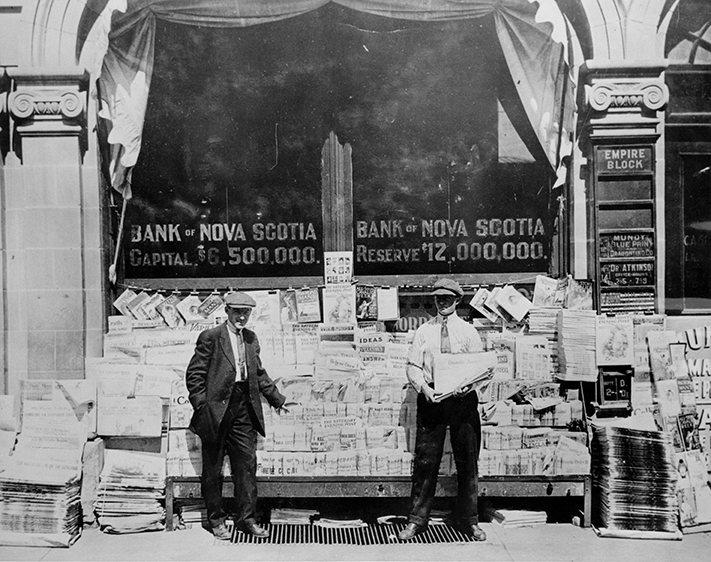
“The purpose of the film is to show how history casts a light on the present,” the award-winning documentarian told The Tyee in a recent call. “To understand the move towards separatism today, we have to go all the way back to the 1930s.”
Alberta, the ‘Last Best West’
Like most newcomers to the Last Best West, Peggy and Balmer had big dreams but shallow pockets.
“On the frontier, papers were being bought up by the big eastern chains,” Radford narrates in the 75-minute feature, produced by Clearwater Documentary with funding from TELUS originals.
“But Peggy and Balmer were convinced they could be the exception.”
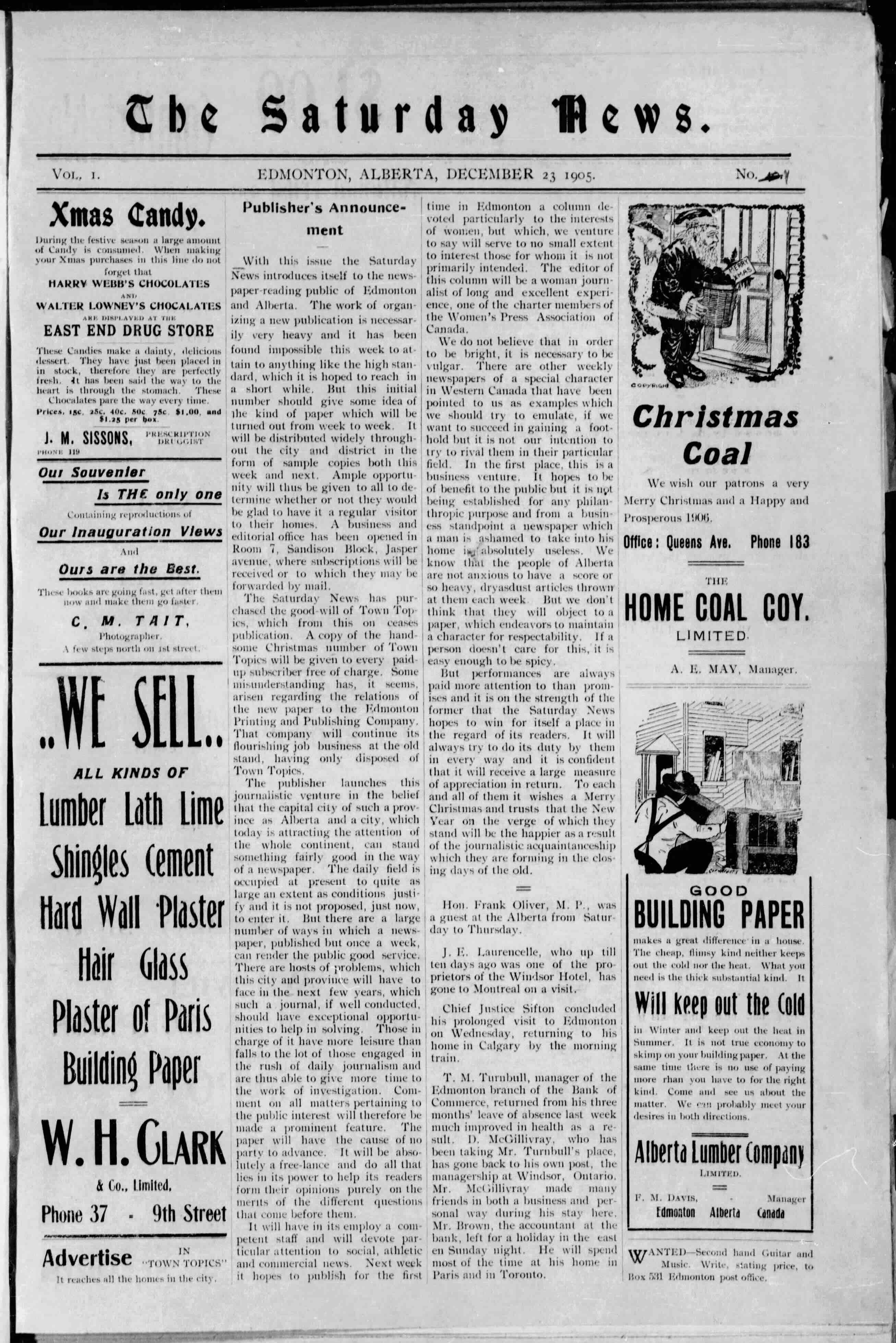
One an idealist and the other a pragmatist, the pair set out to establish the Saturday News as an independent weekly.
“If they didn’t find advertisers, they were in big, big trouble,” Radford said. “They were always trying to pay the bills.”
Peggy and Balmer combed the 10,000-person town, soon to become Alberta’s capital, knocking on the doors of local businesses and acquaintances in search of funding for their ambitious venture.
Ever persevering, Balmer went on to found three newspapers: the Saturday News, the Edmonton Daily Capital, and the Alberta Homestead. However, staying true to the pair’s ideal of journalistic independence would prove a difficult task.
At the time, newspapers were often backed by politicians whose interests populated daily newspaper spreads such as the Edmonton Bulletin, Alberta’s first newspaper, published by Frank Oliver, who served as superintendent of Indian Affairs and federal Minister of the Interior.
Balmer’s enterprises were no exception. He would find a reliable backer in Charles Cross, Alberta’s first attorney general, but this came with a hefty price tag, much to Peggy’s anguish.
“Peggy had come from an establishment world in Ontario,” Radford said. “So she was a rebel from the beginning. She wanted to do things differently.”
‘Fighting for a new vision of Canada’
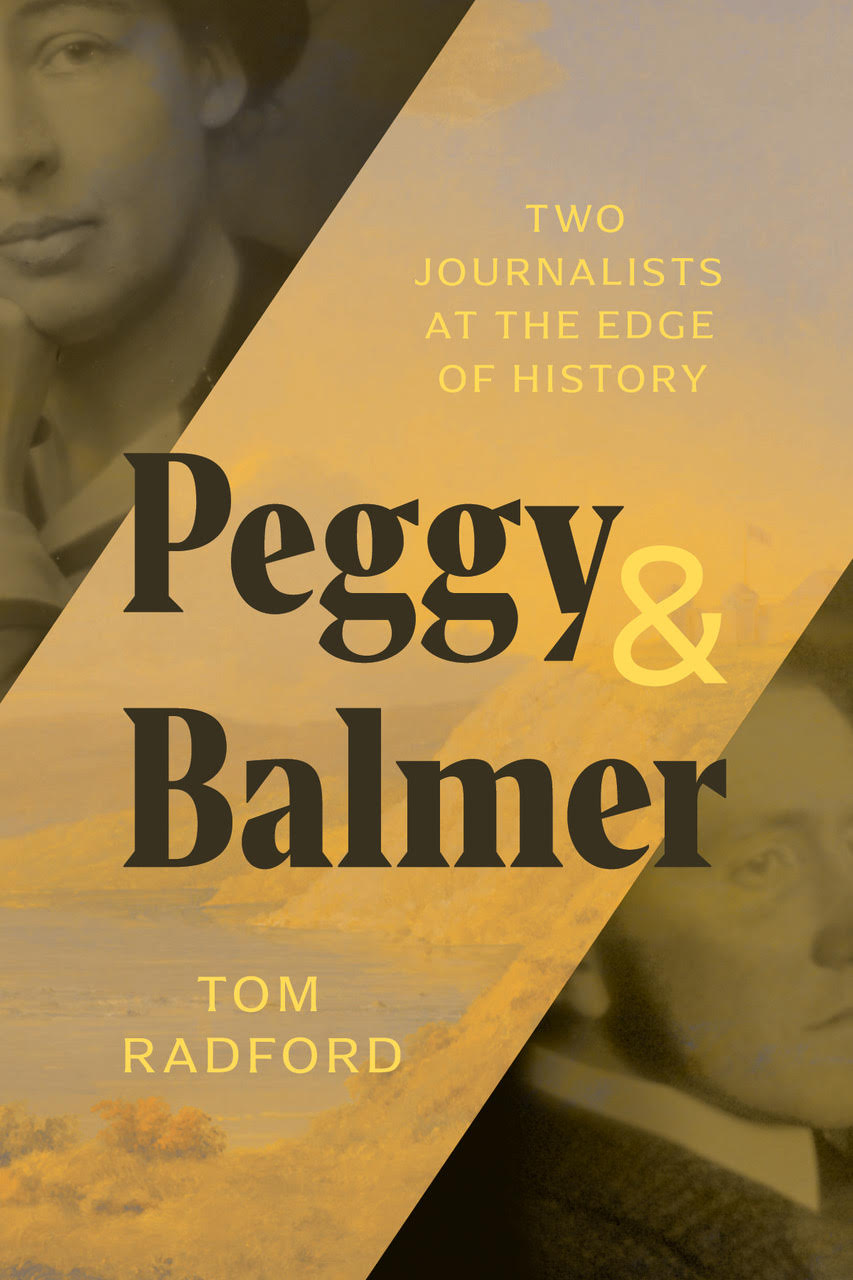
Radford’s film is preceded by a 2024 book, Peggy & Balmer: Two Journalists at the Edge of History, where snippets of Peggy’s personal diaries, letters and newspaper columns make it clear that she didn’t leave her life behind to replicate the ills of an elitist east.
From the get-go, she sought to nurture a more equitable society in the West and surrounded herself with like-minded people, including Parlby, the outspoken women’s rights advocate and politician.
“‘We were here at the making of things,’” Radford quoted Peggy, adding that the sunny promises of the frontier heavily influenced his grandmother’s outlook. “In the frontier you had to fight the big government people, the establishment and the banks — you were fighting for a new vision of Canada.”
Peggy wrote a column called “The Mirror” in the Saturday News as part of Edmonton’s first women’s section. The section featured more than fashion, housekeeping and soirées. Sometimes, the journalist’s incisive observations got under the skin of the weekly paper’s investors.
“You see, I’m only a woman, as I said last week, a Voteless Being,” Peggy writes in a 1910 column. “And as such I have strict orders from the editor of my paper to let politics alone.”
A week prior, she had described the hollowness of debate at the provincial legislature.
“Why, too, can anyone tell me, do these learned gentlemen so much repeat themselves? Is William Shakespeare’s example to go for nothing? Are we so stupid that man must treat us thus?”
A long fight for press freedom
In a publishing industry ruled by the interests of the rich and powerful, pursuing journalistic independence 100 years ago was as challenging as it is today.
For Peggy and Balmer, this meant the demise of the Saturday News in 1912, just six-and-a-half years since the weekly’s first issue ran.
The journalists had reported on a railway scandal that forced the premier, Alexander Rutherford, to resign.
Defeated, Balmer joined the Edmonton Journal, where he worked until his retirement in 1945, while Peggy’s zeal took her to explore the prairie province.
Reporting for the Alberta Homestead, she witnessed the difficulties facing rural Albertans. Not only did the Great War tear many families apart — adding to the already heavy burden placed on rural women — but grain marketing companies and railroad monopolies consistently shortchanged farmers.
“Knocking on doors in search for new subscriptions, Peggy hears complaint after complaint, rumblings of discontent that don’t bode well for the government,” writes Radford in his 2024 book.
Although the Watts seldom saw eye to eye on politics, in 1937, when the Alberta Social Credit party tabled a legislation to obliterate the limited independence newspapers still had, the pair travelled across the province to organize editors and publishers, and fight the misguided act.
Fighting for freedom of the press in Alberta earned the Edmonton Journal a Pulitzer Prize in 1938 — but, as is often the case, victory was bittersweet.
“The prize had the irony that the press they were fighting for was getting taken over by Bay Street in Toronto,” Radford told me. “Even the Edmonton Journal, very important in the fight, was owned by Southam Press, which was very closely allied with the banks in Bay Street, the Supreme Court in Ottawa, and the federal government.”
Were Peggy and Balmer alive today, they would be dismayed to learn the current state of newspapers in Alberta.
Not only is the lauded Edmonton Journal now owned by Postmedia, an American media conglomerate whose majority stake belongs to a predatory hedge fund, but the publisher’s newsrooms have all but disappeared in the prairie province.
“It gives me existential despair to be downtown now and see the Edmonton Journal building closed,” Senator Paula Simons, a former journalist, says in the film.
“I’m not sure how many Edmontonians understand that nobody works in that building anymore; that reporters who work from home will never know the joy of working in a newsroom full of people arguing amongst themselves to get that diversity of voices and perspectives. We have lost something tremendous in this province.”
To combat the rise of fascism, the weaponization of freedom and the wielding of the old injuries that continue to alienate Albertans from Ottawa, independent media is as important as ever.
‘Peggy & Balmer’ is streaming online via TELUS originals. ![[Tyee]](/design-article.thetyee.ca/ui/img/yellowblob.png)











Tyee Commenting Guidelines
Please note that email notifications for replies are not currently working due to a software issue which may be resolved in a future update.
Comments that violate guidelines risk being deleted, and violations may result in a temporary or permanent user ban. Maintain the spirit of good conversation to stay in the discussion and be patient with moderators. Comments are reviewed regularly but not in real time.
Do:
Do not: